
GCC Travel Safety 2026: Saudi Arabia and Kuwait Border Zones Remain High-Risk After Conflict
Despite the cessation of major hostilities in early 2026, critical regions in Saudi Arabia and Kuwait remain unsafe for international travel due to unexploded ordnance and border volatility.
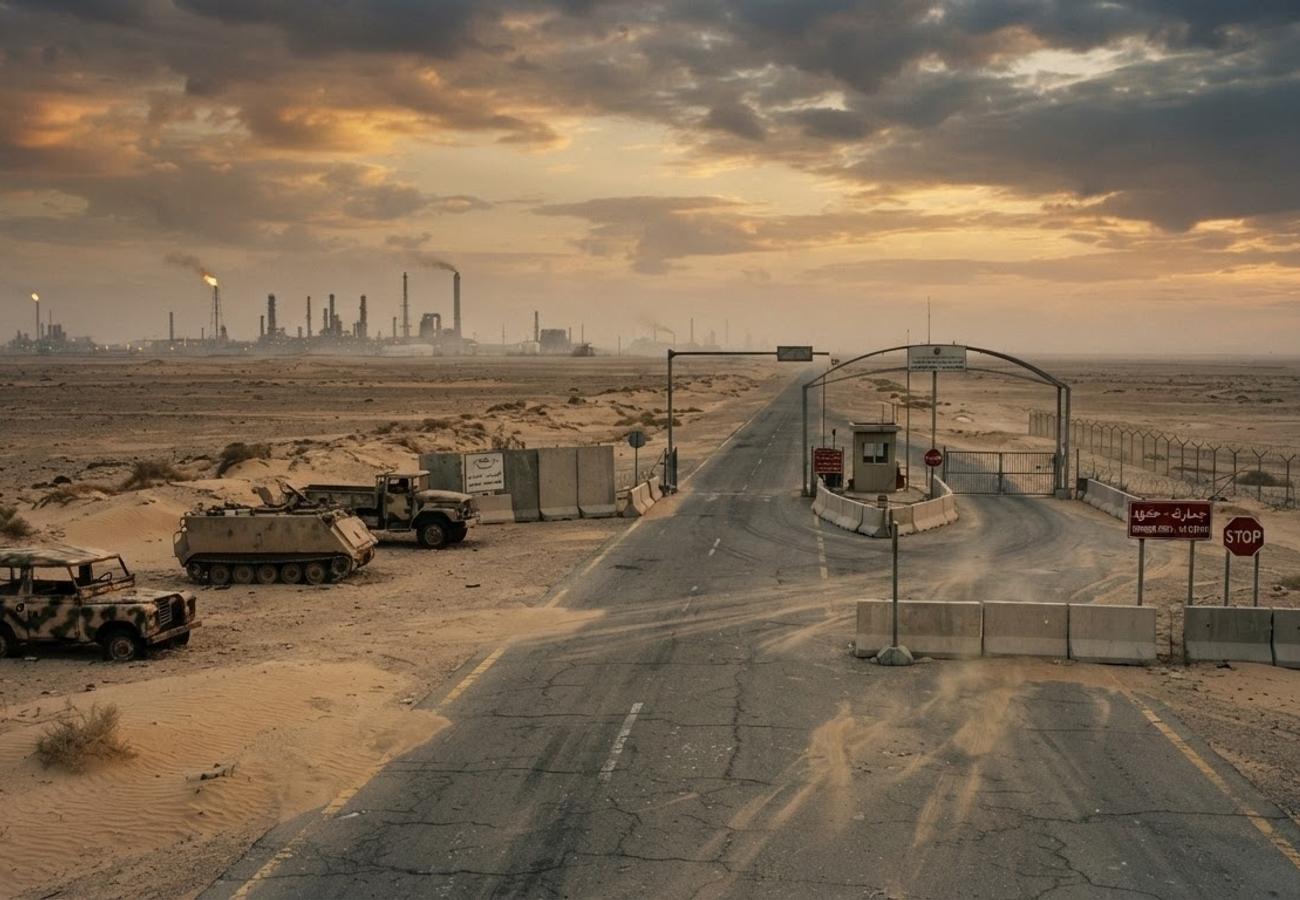
Image generated by AI
Major military conflicts in the Gulf may have officially ended, but lethal remnants of war and border volatility keep several key cities strictly off-limits to foreigners.
The Ministry of Foreign Affairs has issued critical travel alerts as of 29 August 2026, warning that the cessation of large-scale fighting has not equated to civilian safety. Specific regions—most notably Najran and Jizan in Saudi Arabia and Mina Al Ahmadi in Kuwait—remain closed to international travel.
These zones are currently plagued by unexploded ordnance (UXO), crippled critical infrastructure, and sporadic cross-border clashes. For international business travelers and tourists, these areas represent extreme risks that outweigh any potential for visitation.
The 2026 Regional Conflict: A Brief Overview
The security architecture of the Gulf Cooperation Council (GCC) underwent a violent transformation in the first quarter of 2026. An intense outbreak of hostilities involving international coalitions and regional proxy groups placed the Middle East on high alert.
Between February and March 2026, coordinated strikes targeted energy facilities, border outposts, and civilian airports. The conflict was characterized by the heavy use of ballistic missiles and unmanned aerial vehicles (UAVs), which frequently bypassed traditional air defense systems.
While back-channel diplomacy and international intervention led to a ceasefire by May 2026, the "macro" peace has not reached the "micro" level. The physical and political remnants of the war continue to make specific industrial and border zones uninhabitable for civilians.
Global Government Travel Advisories (August 2026)
International state departments have updated their guidance between 12 August and 28 August 2026 to reflect the persistence of rogue militia factions and the danger of unexploded devices.
United States Department of State
The U.S. maintains a Level 4: “Do Not Travel” advisory for any area within 50 miles (80 kilometers) of the Saudi-Yemeni border, specifically including Najran and Jizan. Additionally, the Overseas Security Advisory Council (OSAC) renewed a Level 3: “Reconsider Travel” advisory for Kuwait on 28 August 2026, citing the risks of armed conflict remnants.
UK Foreign, Commonwealth & Development Office (FCDO)
The FCDO strongly advises against all travel within 10 kilometers of the Saudi-Yemen border. For the zone between 10 and 80 kilometers from the border, the UK warns against all but essential travel. In Kuwait, while the capital is more accessible, the FCDO warns against visiting unmarked desert regions north of the Mutla’a Ridge and areas near energy infrastructure.
Australian Smartraveller (DFAT)
Updated on 12 August 2026, Australian guidance instructs citizens to reconsider all travel to Saudi Arabia and explicitly mandates “Do not travel” to areas within 30 kilometers of the Yemen border. In Kuwait, tourists are urged to avoid government buildings, military sites, and energy hubs due to the risk of reprisal attacks and sudden airspace closures.
High-Risk Zone Analysis: Najran and Jizan
Despite the long-term goals of Saudi Vision 2030 to open these culturally rich provinces to eco-tourism, the current security environment makes this impossible.
- Border Porosity: These provinces share a long border with Yemen and were the primary targets of cross-border aggression. The proximity to hostile territory means there is virtually no warning time for incoming projectiles.
- Interception Debris: While Patriot missile batteries have been deployed, the sheer volume of attacks during the 2026 conflict resulted in debris falling on civilian centers.
- Militarized Infrastructure: These cities are currently functioning as garrison towns. Local administration is prioritizing military logistics over civilian services, meaning emergency medical or security support for foreigners is virtually non-existent.
Industrial Vulnerability: Mina Al Ahmadi, Kuwait
Located 40 kilometers south of Kuwait City, Mina Al Ahmadi is the industrial core of the nation's petroleum refining sector, operated by the Kuwait National Petroleum Company (KNPC).
As one of the largest refineries in the Middle East, it remains a high-value target. The risk of unexploded ordnance and the volatility of the surrounding security climate make this critical energy hub a restricted zone for all non-essential personnel.
Summary of Restricted GCC Zones 2026
| Location | Country | Risk Level | Primary Hazard | Official Status |
|---|---|---|---|---|
| Najran | Saudi Arabia | Extreme | Cross-border clashes / UXO | Closed to Int'l Travel |
| Jizan | Saudi Arabia | Extreme | Projectile debris / Militaria | Closed to Int'l Travel |
| Mina Al Ahmadi | Kuwait | High | Energy infrastructure target | Restricted Access |
| North of Mutla’a Ridge | Kuwait | High | Unmarked UXO / Security volatility | Discouraged |
Key Takeaways for Travelers
- Strict Avoidance: Do not enter areas within 80km of the Saudi-Yemen border.
- Infrastructure Risks: Avoid all energy refineries and military installations in Kuwait.
- Official Guidance: Always check the latest OSAC or FCDO updates before planning travel to the GCC, as airspace and zone restrictions can change without notice.
- Emergency Limitations: Local emergency services in border provinces are currently reserved for military use.
FAQ
Is it safe to visit Kuwait City in 2026? Generally, yes, but travelers must avoid the outskirts, specifically the areas north of Mutla’a Ridge and the industrial zones near Mina Al Ahmadi.
Why are Najran and Jizan still unsafe if the war ended? The presence of unexploded ordnance (UXO) and the continued activity of rogue militia factions that do not recognize the ceasefire make these areas lethal for civilians.
What is the current U.S. travel level for the Saudi-Yemeni border? As of August 28, 2026, it is a Level 4: "Do Not Travel" zone for areas within 50 miles of the border.
Travelers are urged to prioritize official government advisories over outdated tourism brochures when visiting post-conflict zones.
Related Travel Guides
Disclaimer
This article is for informational and educational purposes only. It does not constitute legal, financial, or professional advice. While we strive to provide accurate and up-to-date information, travel policies, regulations, and conditions change rapidly. Always verify information with official sources before making travel decisions. Nomad Lawyer makes no representations about the accuracy, reliability, completeness, or suitability of the information provided. Readers should consult qualified professionals for advice specific to their circumstances. The views expressed in this article are those of the author and do not necessarily reflect the views of Nomad Lawyer.