
Blood Moon Night Hikes 2026: Best Dark Sky Destinations from Grand Canyon to Hawaii
Travelers are flocking to International Dark Sky Parks across the US, including the Grand Canyon and Haleakalā, for rare Blood Moon night hikes and celestial tourism in 2026.

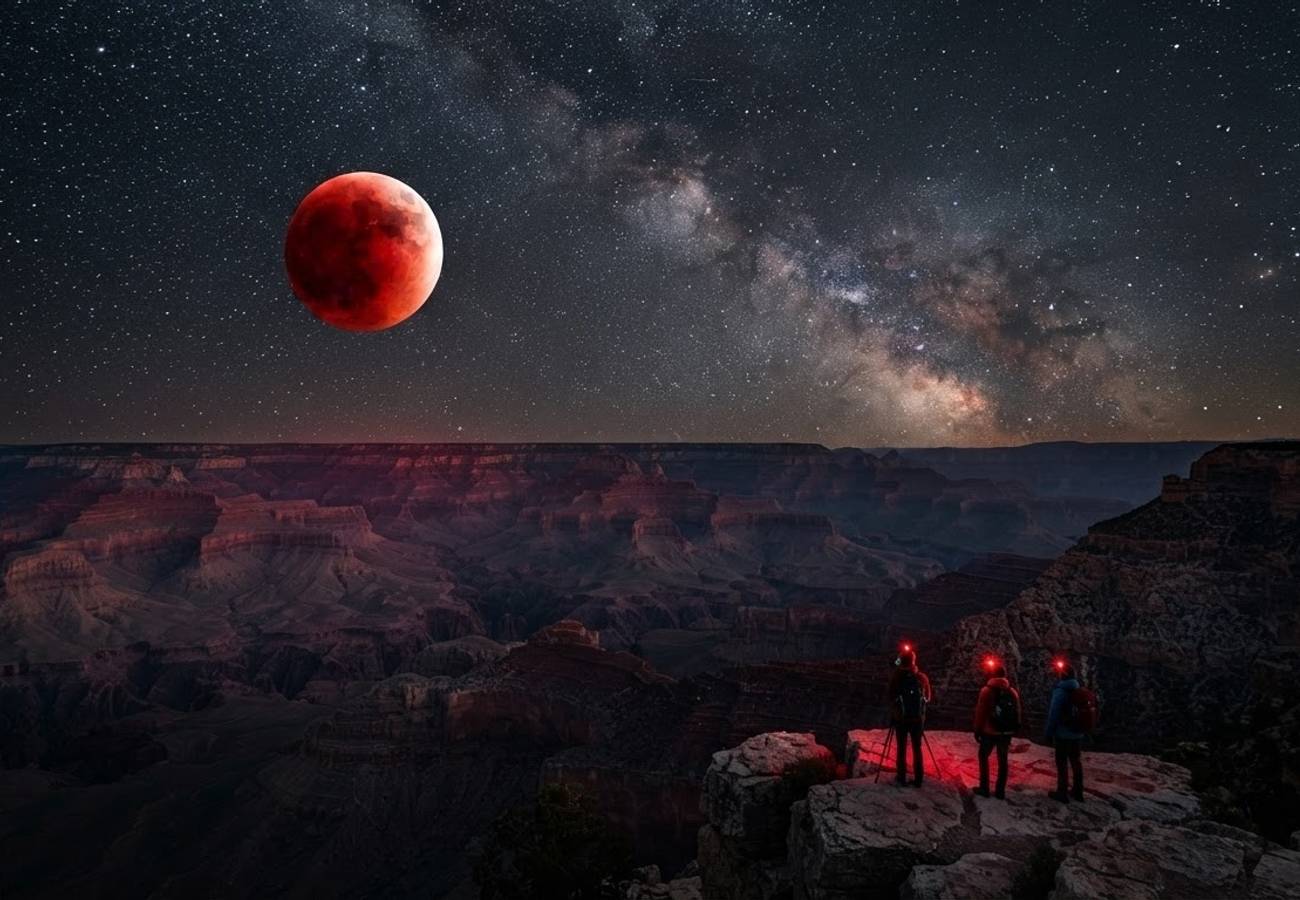
Image generated by AI
Travelers are preparing to explore America’s most remote dark sky destinations for a rare lunar spectacle, combining high-adventure night hiking with professional astronomy.
The intersection of adventure travel and celestial observation has triggered a surge in "dark-sky tourism" across the United States. As the 2026 Blood Moon event approaches—occurring when the Moon passes through Earth’s shadow and filters sunlight through the atmosphere to create a distinct reddish hue—national and state parks are seeing increased demand for night-hiking permits and astrophotography guides.
From the volcanic peaks of Hawaii to the arid basins of the Southwest, these destinations are selected based on low light pollution and unobstructed horizons, often certified by DarkSky International or managed under strict National Park Service (NPS) conservation protocols.
Primary US Blood Moon Viewing Destinations
The following locations are recognized for their exceptional astronomical conditions and accessibility for night-time excursions.
| State | Location | Primary Viewing Advantage |
|---|---|---|
| Arizona | Grand Canyon National Park | Wide canyon horizons and International Dark Sky Park status |
| California | Joshua Tree National Park | Rugged desert landscapes far from urban light bleed |
| CA/Nevada | Death Valley National Park | Extreme darkness and vast open desert basins |
| Utah | Dead Horse Point State Park | Certified dark-sky location with Colorado River vistas |
| Colorado | Great Sand Dunes National Park | High elevation and open alpine landscapes |
| Hawaii | Haleakalā National Park | World-class astronomical conditions and altitude |
| Florida | Big Cypress National Preserve | Key dark-sky destination for the Eastern US |
| Montana | Glacier National Park | Pristine mountain air and clear northern skies |
| Texas | Big Bend National Park | Among the darkest natural skies in the continental US |
| New Mexico | Chaco Culture National Historical Park | Integration of astronomy and indigenous cultural heritage |
Regional Site Analysis
Grand Canyon National Park, Arizona
As an International Dark Sky Park, the Grand Canyon is a primary hub for lunar viewing. The South Rim is the most utilized sector due to its infrastructure. Key vantage points include Mather Point for wide-angle views, the Rim Trail for mobile observation, and Hermit Road for those seeking more remote, less crowded environments.
Joshua Tree National Park, California
Located within reach of Los Angeles and San Diego, Joshua Tree offers a blend of accessibility and isolation. Hidden Valley and Keys View are high-traffic spots for photographers, while the Cottonwood area provides a deeper dark-sky experience for those willing to venture further into the desert.
Death Valley National Park, California/Nevada
Death Valley provides some of the most stark contrasts for a Blood Moon. The Mesquite Flat Sand Dunes and Badwater Basin offer wide, flat horizons that prevent terrestrial obstructions from blocking the lunar path.
Traveler Logistics Guide: Navigating Night Hikes
From a ground-level perspective, the best way to navigate these events is to treat a night hike as a technical excursion rather than a casual walk. Many of these parks have limited services after sunset, meaning self-sufficiency is mandatory.
Essential Gear & Safety
- Lighting: Use red-light headlamps. White light disrupts night vision and is often discouraged in dark-sky preserves to protect wildlife and other observers.
- Navigation: Do not rely solely on GPS. Download offline maps (via AllTrails or NPS apps) and carry a physical map, as cellular service is non-existent in areas like Big Bend or Death Valley.
- Climate Control: Desert temperatures drop precipitously after sunset. Layering is mandatory, even in summer months.
Booking and Access
- Permits: Check for "Night Use" permits. Some parks require specific authorization for overnight stays or access to remote backcountry trails after dark.
- Timing: Arrive at your chosen viewpoint at least two hours before the eclipse begins to secure a position and allow your eyes to adjust to the darkness (which takes approximately 20-30 minutes).
- Transportation: Use high-clearance vehicles for locations like Chaco Culture or Big Bend, where access roads can be unpaved and rugged.
Infrastructure and Regional Impact
The rise of celestial tourism is driving a shift in how regional parks manage their infrastructure. There is an increasing investment in "dark-sky compliant" lighting—fixtures that shield light from pointing upward—to maintain certifications. This trend not only benefits astronomers but also supports local biodiversity by reducing the impact of light pollution on nocturnal wildlife.
For regional economies, these events create "spike tourism," where remote towns in Utah and Arizona experience sudden influxes of visitors. This has led to a growth in specialized guiding services, where local experts lead "astro-hikes" that combine geological history with lunar science.
The red glow of a Blood Moon over a silent canyon is a reminder of the scale of the cosmos and the importance of preserving the few truly dark places left on Earth.
Related Travel Guides
Disclaimer
This article is for informational and educational purposes only. It does not constitute legal, financial, or professional advice. While we strive to provide accurate and up-to-date information, travel policies, regulations, and conditions change rapidly. Always verify information with official sources before making travel decisions. Nomad Lawyer makes no representations about the accuracy, reliability, completeness, or suitability of the information provided. Readers should consult qualified professionals for advice specific to their circumstances. The views expressed in this article are those of the author and do not necessarily reflect the views of Nomad Lawyer.
Kunal K Choudhary
Co-Founder & Contributor
A passionate traveller and tech enthusiast. Kunal contributes to the vision and growth of Nomad Lawyer, bringing fresh perspectives and driving the community forward.
Learn more about our team →