
Aviation Updates: Southwest Airlines WN1693 Executes Emergency Diversion to Baltimore as Severe Airport Disruptions Strike the East Coast
As unexpected operational constraints trigger sudden travel chaos across the US East Coast, a Southwest Boeing 737 MAX 8 executes a highly coordinated safety diversion to Baltimore/Washington International.

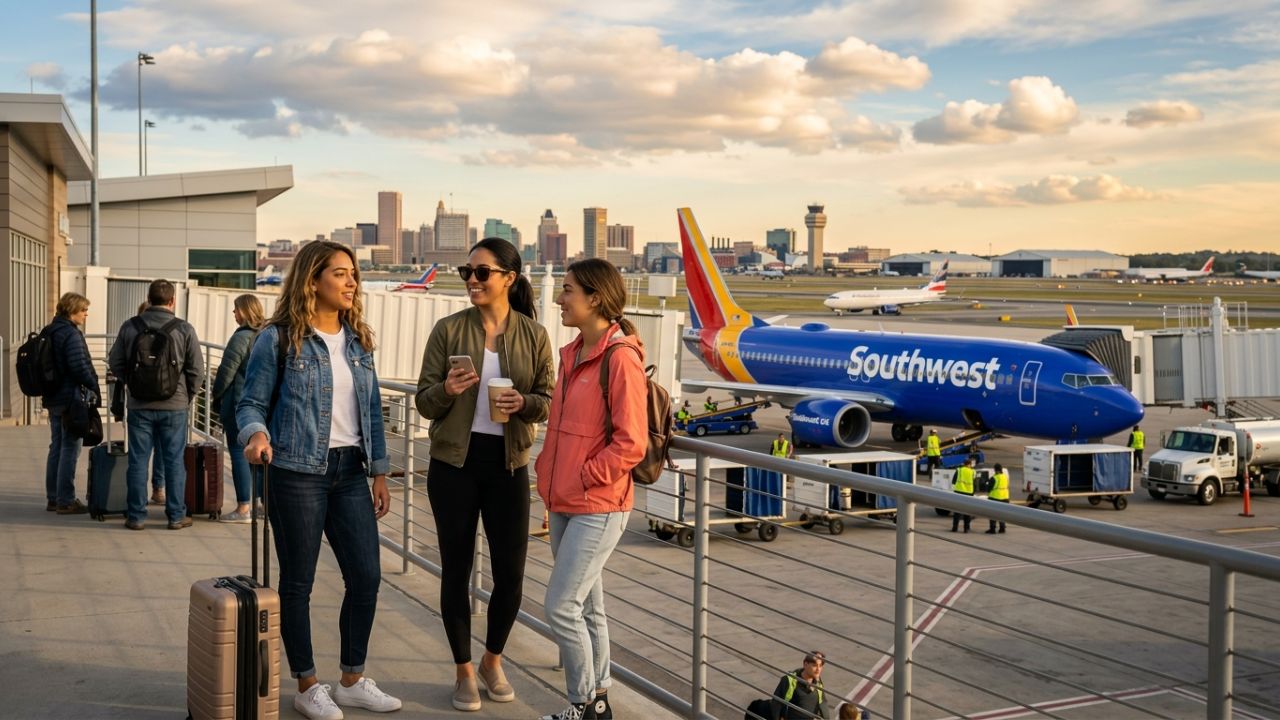
Image generated by AI
Aviation Updates: Southwest Airlines WN1693 Executes Emergency Diversion to Baltimore as Severe Airport Disruptions Strike the East Coast
As severe operational bottlenecks suddenly paralyze the critical US Mid-Atlantic airspace, a Southwest Airlines flight crew decisively aborts their Richmond approach, shielding passengers from a compromised landing and widespread regional travel chaos.
Image generated by AI
As high-impact airline news platforms rapidly disseminate urgent aviation updates regarding the intense volatility of the American domestic transit grid, a critical East Coast diversion has highlighted the sheer complexity of modern air traffic management. On 28 June 2026, Southwest Airlines Flight WN1693 was subjected to a massive mid-air rerouting. The flight, originating from Denver International Airport (DEN) and bound for Richmond International Airport (RIC), encountered severe operational constraints during its critical descent phase. Rather than forcing an approach into an unsafe or highly congested environment, the flight was aggressively diverted to Baltimore/Washington International Thurgood Marshall Airport (BWI). In heavily congested airspace, sudden drops in runway availability or rapid weather shifts routinely trigger massive localized flight cancellations and severe airport disruptions. By executing this flawless diversion to Baltimore, the Southwest crew effectively protected their passengers from airborne danger, even as the rerouting plunged their itineraries into sudden, frustrating travel chaos.
Expanded Overview: The Density of East Coast Airspace
To fully comprehend the logistical necessity of this specific diversion, aviation strategists must analyze the extreme density of the US East Coast aviation corridor.
The airspace enveloping Richmond, Baltimore, and Washington D.C. is one of the most highly congested, complex transit grids on the planet. When a primary airport like Richmond suffers from sudden operational limitations—whether driven by acute air traffic congestion, restrictive flow management, or localized weather disruptions—approaching aircraft must be instantly redirected. In such high-stakes environments, airlines operate with absolute operational flexibility. Rerouting a massive commercial jet on short notice is a highly controlled maneuver designed to relieve pressure on the compromised destination airport. By diverting to BWI, Southwest Airlines prevented the Richmond constraints from cascading into a systemic failure, proving that real-time adaptability is the ultimate defense against regional gridlock.
Section-Wise Breakdown: The Denver Departure
The flight originated from one of the busiest, high-altitude transit hubs in the American West before navigating toward the dense East Coast grid.
Southwest Airlines Flight WN1693 commenced operations at Denver International Airport (DEN), pushing back from Gate C65 after an initial, minor ground delay. The cross-country route was serviced by a highly capable Boeing 737 MAX 8 aircraft, officially registered as N8823Q. The Boeing 737 MAX 8 is the absolute workhorse of the Southwest fleet, heavily utilized for transcontinental routes due to its exceptional fuel efficiency and extended range. The aircraft proceeded completely normally along its planned high-altitude routing across the continental United States. It was only during the critical descent phase into the Mid-Atlantic corridor that air traffic control confirmed that landing conditions in Richmond had deteriorated beyond acceptable operational thresholds.
Section-Wise Breakdown: The Baltimore/Washington Recovery
Faced with an unviable approach into Richmond, the Southwest flight crew immediately executed a flawless diversion to the region's primary alternate hub.
Baltimore/Washington International Thurgood Marshall Airport (BWI) serves as a massive, highly strategic diversion hub for flights compromised within the Mid-Atlantic region. Due to its close proximity to Richmond and its massive infrastructure, BWI provides essential capacity to manage sudden, unscheduled arrivals. The Boeing 737 MAX 8 was efficiently redirected through the East Coast airspace, executing a highly controlled landing at Baltimore at approximately 7:42 PM Eastern Daylight Time (EDT). BWI’s multiple runways and highly flexible gate availability ensured that the massive aircraft was accommodated instantly, entirely without causing disruption to Baltimore's own intense schedule of evening flight operations.
Flight Details: Southwest WN1693 Operational Diversion Matrix
To fully comprehend the specific operational telemetry, the exact aircraft deployed, and the precise timeline of this East Coast diversion, the verified flight data has been consolidated into the mandatory matrix below.
| Operational Metric | Verified Flight Data |
|---|---|
| Operating Airline | Southwest Airlines |
| Flight Number | WN1693 |
| Aircraft Type | Boeing 737 MAX 8 (Registration: N8823Q) |
| Scheduled Route | Denver (DEN) Gate C65 to Richmond (RIC) |
| Incident Date | 28 June 2026 |
| Diversion Location | Baltimore/Washington International (BWI) |
| Recovery Landing | Approx. 7:42 PM Eastern Daylight Time |
Passenger Impact: Ground Logistics and Last-Mile Travel
For the passengers originally bound for Virginia, the sudden diversion into Maryland required rapid, highly organized airline ground logistics.
While the diversion flawlessly protected the physical safety of the aircraft, it inevitably resulted in a massively delayed arrival and localized travel chaos for those onboard. Instead of touching down in Richmond, passengers disembarked at BWI reflecting a delay of over two hours from their original schedule. Upon landing, Southwest Airlines ground staff immediately coordinated complex onward travel arrangements. Because the aircraft remained at BWI, passengers were transitioned onto dedicated bus transfers or offered immediate rebooking options for subsequent flights into Richmond. While this caused significant logistical inconvenience and disrupted evening plans, the airline's aggressive operational handling ensured that passengers were safely processed rather than being left stranded on a tarmac.
Industry Analysis: The Resilience of Domestic Networks
From a macro-logistical perspective, diversions like WN1693 reveal the absolute necessity of robust, highly integrated airline scheduling networks.
While diversions introduce massive operational complexity, domestic carriers like Southwest Airlines are specifically structured to absorb these exact disruptions. Aircraft rotations, crew duty limits, and passenger logistics are adjusted in real time by centralized operations centers to minimize the downstream impact on the broader network. In this specific case, the diversion to Baltimore required intense, temporary adjustments to ground operations, but it completely preserved the overall safety and structural integrity of the flight. The Boeing 737 MAX 8 remained in fully operational condition, instantly ready for its next assignment following the completion of the diversion protocols.
Conclusion: Controlled Adaptability in Modern Aviation
Ultimately, the diversion of Southwest Airlines Flight WN1693 stands as a perfect example of standard, safety-first domestic aviation operations. By aggressively abandoning a compromised approach into Richmond on 28 June, the crew of the Boeing 737 MAX 8 decisively prioritized passenger safety over schedule adherence. While the sudden rerouting to Baltimore/Washington International Airport caused unavoidable travel chaos, resulting in an arrival time of 7:42 PM EDT and forcing passengers to rely on multi-hour bus transfers, it actively prevented a potential logistical disaster in the highly congested Mid-Atlantic corridor. As unpredictable operational constraints continue to routinely trigger severe airport disruptions and sudden flight cancellations, incidents like WN1693 prove that highly trained crews and massive alternate airport infrastructure remain the ultimate defense against regional aviation gridlock.
Key Takeaways
- Critical East Coast Diversion: Southwest Airlines Flight WN1693 from Denver to Richmond was aggressively diverted due to operational constraints at the destination airport.
- Aircraft Deployed: The flight was operated by a Boeing 737 MAX 8 (Registration: N8823Q), which departed from Denver's Gate C65 after a minor delay on 28 June 2026.
- Alternate Hub: The aircraft was safely rerouted to Baltimore/Washington International (BWI), touching down securely at approximately 7:42 PM EDT.
- Ground Logistics: Following the diversion, Southwest ground staff coordinated intensive bus transfers and rebooking options to physically transport stranded passengers onward to Richmond.
- Network Resilience: The diversion highlights the massive flexibility required to operate safely within the highly congested US Mid-Atlantic airspace, prioritizing safety over schedule.
FAQ: Southwest Flight WN1693 Diversion
Why did the flight from Denver divert to Baltimore instead of landing in Richmond? The flight was diverted due to sudden operational constraints affecting Richmond International Airport. In highly congested airspace, issues such as air traffic congestion, runway availability, or weather disruptions require immediate rerouting to an alternate hub like BWI.
Where and when did the aircraft eventually land? The Boeing 737 MAX 8 safely diverted to Baltimore/Washington International Thurgood Marshall Airport (BWI), landing at approximately 7:42 PM Eastern Daylight Time (EDT).
How did the passengers get to Richmond? Upon safely disembarking in Baltimore, Southwest Airlines ground staff coordinated onward travel arrangements, which typically include dedicated bus transfers or rebooking options onto subsequent regional flights.
Was the aircraft damaged during the flight? No. The diversion was a strictly logistical decision based on destination airport conditions. The aircraft remained completely safe and in fully operational condition for its next scheduled assignment.
Related Travel Guides
SkyWest SKW4700 LAX Aspen Diversion Travel Chaos 2026
North America Regional Flight Disruption Survival Guide 2026
Delta Airlines LAX A321neo Expansion Travel Chaos 2026
Disclaimer: This article is strictly for informational and aviation safety analysis purposes. The specific operational telemetry (Southwest WN1693, Boeing 737 MAX 8 N8823Q), route schedules (DEN Gate C65 to Richmond), and diversion metrics (BWI landing at 7:42 PM EDT on 28 June 2026) are based on verified flight tracking data and airline operational reports available at the time of publication. High-density aviation environments, airport traffic constraints, and specific diversion protocols are highly dynamic and subject to immediate, unannounced modification by Air Traffic Control or the operating flight crew. Passengers traveling through congested airspace corridors should explicitly prepare for potential delays and verify their exact flight status directly with Southwest Airlines prior to departure.
Disclaimer
This article is for informational and educational purposes only. It does not constitute legal, financial, or professional advice. While we strive to provide accurate and up-to-date information, travel policies, regulations, and conditions change rapidly. Always verify information with official sources before making travel decisions. Nomad Lawyer makes no representations about the accuracy, reliability, completeness, or suitability of the information provided. Readers should consult qualified professionals for advice specific to their circumstances. The views expressed in this article are those of the author and do not necessarily reflect the views of Nomad Lawyer.
Preeti Gunjan
Contributor & Community Manager
A passionate traveller and community builder. Preeti helps grow the Nomad Lawyer community, fostering engagement and bringing the reader experience to life.
Learn more about our team →