
Southwest Aligns With Wizz United And More As 5% Wizz Capacity Cuts And US Airline Adjustments Signal New Travel Era
Southwest Aligns With Wizz United And More As 5% Wizz Capacity Cuts And US Airline Adjustments Signal New Travel Era

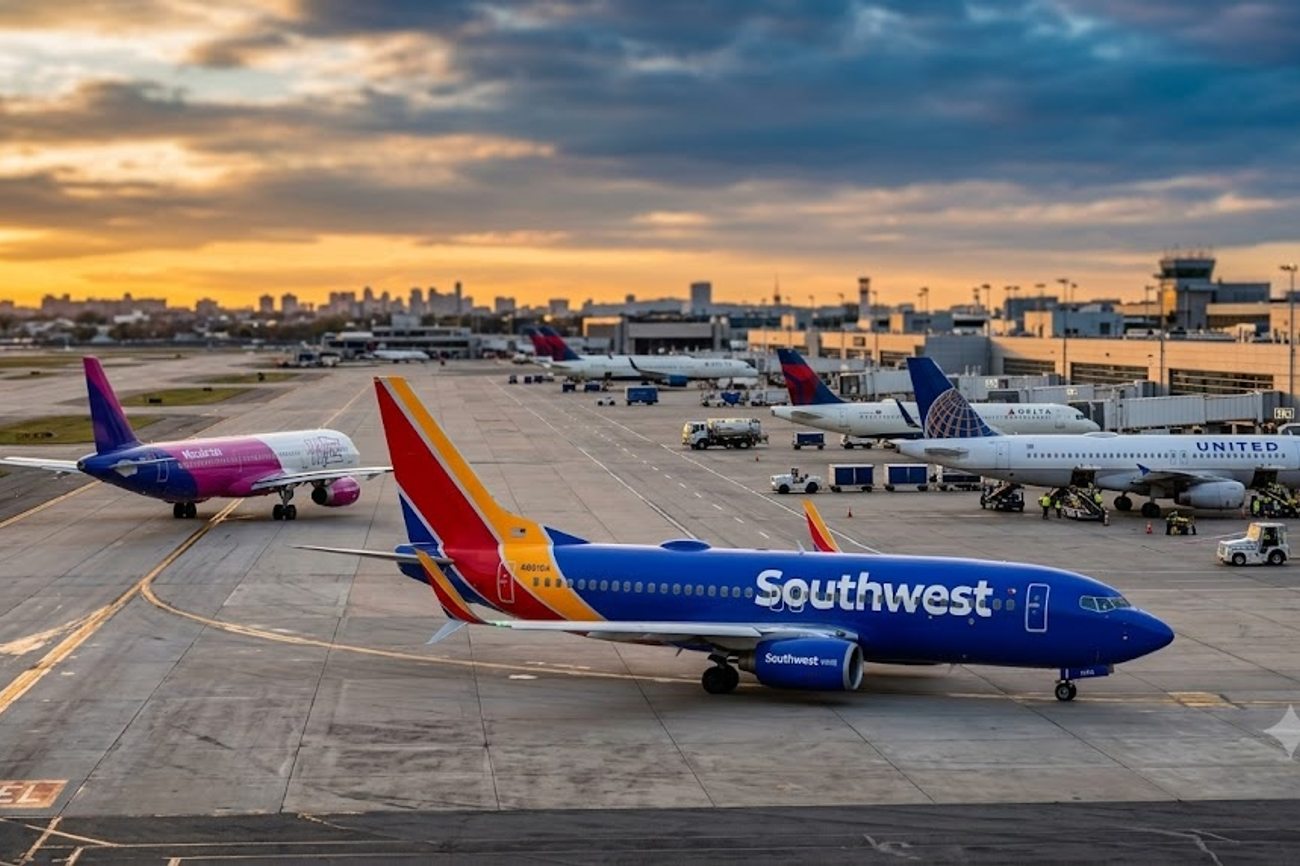
Image generated by AI
While global air traffic has seen a robust post-pandemic recovery, the current shift toward selective capacity management marks a pivot from volume-driven growth to margin-driven stability. The recent decision by Wizz Air to slash its planned winter capacity by 5% serves as a primary indicator that the era of aggressive, unchecked expansion has collided with the reality of volatile operating costs. This is not an isolated European phenomenon; it is a synchronized global realignment where US majors like Southwest, United, and American are mirroring this caution to protect profitability against rising jet fuel expenses.
The Fuel-Capacity Correlation in Numbers
The aviation industry is currently navigating a period of "selective capacity management." This is a strategic pivot where carriers are no longer measuring success by the number of seats added to a network, but by the yield per available seat kilometer (ASK). The most striking data point is the 5% reduction in winter capacity planned by Wizz Air, a move that signals a broader European trend of tightening supply to offset fuel overheads.
In the United States, the response is more nuanced but equally significant. Southwest Airlines has officially reduced its planned capacity growth, shifting away from its historical trajectory of rapid fleet and route expansion. Similarly, United Airlines has begun removing specific planned flights from its schedule, while American Airlines is conducting rigorous reviews of its weaker routes. According to data trends often tracked by IATA, fuel typically represents one of the top three operating expenses for any commercial carrier. When these costs spike, the mathematical response is to eliminate "marginal" routes—those that are flown at high capacity but low profit margins due to fuel burn.
The current industry movement focuses on three specific levers:
- Route Performance Reviews: Analyzing which city-pairs generate enough revenue to cover the increased cost of fuel.
- Aircraft Utilization: Ensuring that every flight hour maximizes the efficiency of the airframe.
- Sustainable Growth: Prioritizing markets with proven, high-yield demand over speculative new destinations.
Comparative Capacity Responses: US vs. Europe
The divergence in how airlines are handling these pressures reveals a regional difference in market structure. European low-cost carriers (LCCs) like Wizz Air and Ryanair are taking more direct action on capacity volume to manage exposure. In contrast, US legacy and hybrid carriers are focusing on "optimization"—adjusting schedules and reviewing route economics rather than announcing flat percentage cuts across the board.
The following table breaks down the specific capacity responses across the major carriers currently adjusting their operational footprints:
| Airline | Primary Region | Strategic Capacity Response | Primary Driver |
|---|---|---|---|
| Wizz Air | Europe | 5% Reduction in Winter Capacity | Fuel Cost Exposure |
| Ryanair | Europe | Limited Expansion / Lowered Traffic Expectations | Fuel Cost Management |
| Southwest | United States | Reduced Planned Capacity Growth | Fuel Price Pressure |
| United Airlines | United States | Removal of Planned Flights / Schedule Review | Route Economics |
| American Airlines | United States | Reviewing Capacity / Adjusting Weak Routes | Fuel Cost Pressure |
This shift suggests a broader movement toward "yield management." By restricting the number of seats available on less profitable routes, airlines can maintain higher fare levels on their most popular corridors, effectively using a scarcity model to offset the increased cost of jet fuel. This pattern is consistent with broader industry data available via OAG, which tracks global flight schedules and capacity shifts in real-time.
Practical Traveler Advisory and Strategic Insights
For the individual traveler, the transition from a "growth era" to an "efficiency era" manifests as a reduction in convenience and an increase in cost. The data indicates that the impact will not be felt uniformly across all destinations, but will be concentrated on specific types of routes.
If you are planning travel for the upcoming winter season or Q1 of next year, the following data-driven adjustments to your booking strategy are recommended:
- Anticipate Reduced Frequency: On secondary routes—those that are not primary hubs—you will likely see fewer daily flights. This means that if a flight is canceled, the "next available" option may be 24 to 48 hours later rather than a few hours.
- Book 8-12 Weeks in Advance: Because airlines are limiting capacity (as seen with the 5% Wizz cut), the "last-minute deal" is becoming a rarity. With fewer seats available, the pricing algorithms will trigger fare hikes much earlier in the booking window.
- Monitor Hub Volatility: Travelers routing through major hubs—specifically Dallas/Fort Worth (DFW), O’Hare (ORD), George Bush Intercontinental (IAH), Denver (DEN), Charlotte (CLT), Phoenix (PHX), and Miami (MIA)—should be aware that these networks are under intense review. While these hubs remain strategically vital, the connecting flights feeding into them are the most likely to be adjusted.
- Expect Seasonal Fare Surges: In markets like Florida or the Western US, where leisure demand is high but route efficiency is sensitive to fuel costs, expect higher premiums during peak holiday windows.
Forward Projection: The Shift to High-Yield Aviation
The trajectory of the aviation industry is moving toward a "Selective Growth Model." We are exiting the period of post-pandemic desperation where airlines added capacity simply to capture any available demand. The new mandate is financial stability over market share.
Based on current movements, we can project that the industry will move toward a "hub-and-spoke" reinforcement. Airlines will likely double down on their most profitable fortress hubs while abandoning "thin" regional routes that do not meet strict profitability thresholds. This will lead to a bifurcated travel experience: seamless, high-frequency service between major global cities, and a more restricted, expensive experience for regional or secondary destinations.
Furthermore, this fuel-driven contraction will likely accelerate the retirement of older, less fuel-efficient aircraft. The pressure to reduce operating costs makes the business case for newer, more efficient models (like the A321neo or 737 MAX) even more compelling. Carriers that fail to modernize their fleets will find themselves unable to compete as fuel costs continue to dictate route viability. Data from Statista on aviation fuel trends suggests that volatility is the new baseline, meaning these capacity adjustments will likely become a permanent part of airline seasonal planning rather than a one-time reaction.
FAQ: Airline Capacity Shifts 2024-2025
Will ticket prices increase because of these capacity cuts? Yes, likely on specific routes. When airlines reduce capacity by 5% or more while demand remains steady, the supply-demand imbalance typically drives fares upward, particularly during peak travel windows and on "thin" routes.
Is this a good time to book winter travel? Yes. Because carriers like Wizz Air and Southwest are limiting growth and reducing planned flights, waiting until the last minute increases the risk of facing significantly higher fares or zero availability on preferred dates.
Which US cities are most affected by these changes? Major hubs are under the most scrutiny. Travelers using Dallas (DFW), Chicago (ORD), Houston (IAH), Denver (DEN), Charlotte (CLT), Phoenix (PHX), and Miami (MIA) should expect more frequent schedule adjustments.
Are airlines canceling existing flights or just stopping new ones? It is a mix of both. While some are simply reducing "planned growth," others, like United and American, are actively reviewing and adjusting existing weaker routes to improve overall network profitability.
The era of cheap, abundant flight capacity is yielding to a disciplined age of operational efficiency.
Tags: WizzAir-Capacity-Reduction-2024, US-Airline-Fuel-Costs, Jet-Fuel-Price-Volatility, Airline-Route-Optimization, Aviation-Yield-Management
Related Travel Guides
- Madidi Aligns With Sajama and More in Bolivia’s Dazzling Tourism Revolution
- Cartagena Matches Orlando and More as Four Seasons, New Flights and Island Adventures Beckon Holidaymakers
- Malaysia Joins Singapore and Thailand as Airport Ground Transport Changes Bring New Fees, Pick Up Zones and Rules for Travellers: All You Need to Know
Disclaimer
This article is for informational and educational purposes only. It does not constitute legal, financial, or professional advice. While we strive to provide accurate and up-to-date information, travel policies, regulations, and conditions change rapidly. Always verify information with official sources before making travel decisions. Nomad Lawyer makes no representations about the accuracy, reliability, completeness, or suitability of the information provided. Readers should consult qualified professionals for advice specific to their circumstances. The views expressed in this article are those of the author and do not necessarily reflect the views of Nomad Lawyer.
Naina Thakur
Contributor & Travel Specialist
Travel enthusiast and legal writer covering visa regulations, responsible tourism, and cultural journeys across global destinations.
Learn more about our team →