
Southwest Airlines Refuses to Drop Fares Amidst Falling Fuel Prices, Sparking Outrage and Travel Chaos for British, Canadian, and Indian Tourists Flying from Heathrow and Delhi: Latest Airline News
Despite plummeting jet fuel costs, Southwest Airlines' relentless fare increases are severely impacting global inbound tourism and causing massive booking disruptions for travelers worldwide.

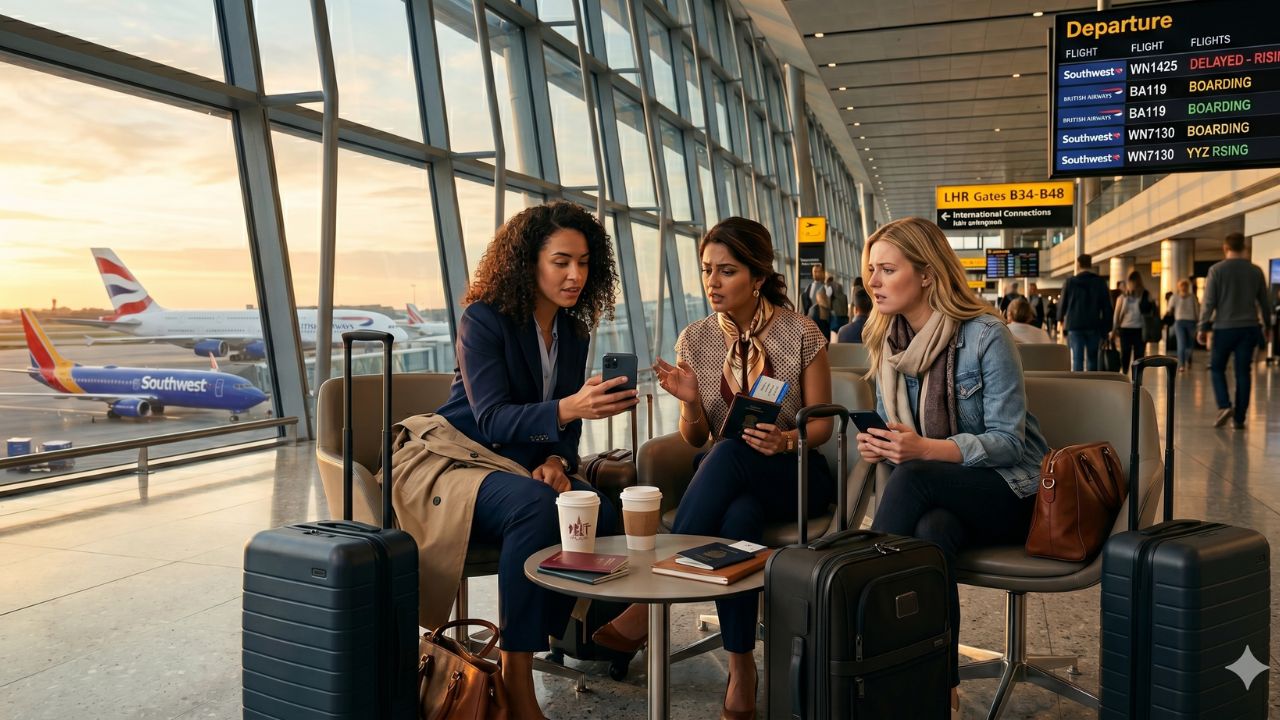
Image generated by AI
While global passengers desperately battle exhausting flight cancellations and relentless terminal overcrowding, one of America’s largest carriers is officially pouring gasoline on the fire of international travel chaos. Delivering highly controversial airline news, Southwest Airlines has confirmed a ruthless pricing strategy for 2026: they absolutely will not drop ticket prices, even as global jet fuel costs plummet. Having already executed seven consecutive fare increases since February 2026, the airline is fiercely prioritizing corporate margins over passenger affordability. This highly aggressive stance is sending shockwaves through the global tourism sector, drastically altering the booking behaviors of high-volume travelers originating from the United Kingdom, Canada, India, Australia, and Germany, and forcing massive re-evaluations at major departure hubs like Heathrow, Toronto Pearson, and Delhi.
Rising Airfares and the Global Pricing Crisis
The overarching narrative driving this unprecedented pricing strategy is incredibly complex. Historically, airline ticket prices perfectly mirrored the global commodities market; when oil plummeted, passengers immediately saw cheaper flights. However, 2026 is brutally rewriting the rules of aviation economics.
Earlier in the year, severe geopolitical instability across the Middle East, specifically involving terrifying disruptions to critical energy supply routes like the Strait of Hormuz, triggered massive spikes in Brent crude. Legacy carriers including Emirates and Air India were instantly forced to slap heavily inflated fuel surcharges onto their international tickets just to survive. However, as those specific crude pressures finally begin to moderate, carriers like Southwest Airlines are fiercely refusing to pass those savings down to the consumer. Because corporate demand for premium seating remains incredibly resilient, airlines realize they possess terrifying pricing power, effectively abandoning the budget-conscious traveler. When massive weather systems trigger sudden airport disruptions, the combination of non-refundable, ultra-expensive tickets creates an environment of total financial devastation for the average middle-class family.
Section-Wise Breakdown: The Impact Across Major Hubs
To truly comprehend how this highly controversial pricing strategy is brutally impacting the global travel ecosystem, we must break down the specific regional fallout across the world’s busiest aviation hubs.
Heathrow Airport (LHR): The British Squeeze
For British tourists departing from London's intensely congested Heathrow Airport, the dream of an affordable American summer vacation is rapidly evaporating. The relentless inflation of U.S. domestic connectivity flights operated by carriers like Southwest means that even if transatlantic fares dip slightly, the total trip cost remains mathematically unviable. This specific economic barrier is actively forcing British families to heavily pivot their travel spend toward alternative, highly cost-competitive destinations like Spain or Southeast Asia, entirely bypassing the U.S. market.
Toronto Pearson International (YYZ): The Canadian Collapse
The Canadian market is officially bearing the absolute brunt of this pricing crisis. Canadian travelers utilizing Toronto Pearson historically represent the absolute largest demographic of inbound tourists to the United States. However, recent data explicitly confirms that Canada experienced the absolute largest drop in visitors heading south. The brutal combination of a weak Canadian dollar and relentlessly high domestic U.S. airfares has completely annihilated the weekend getaway market, generating catastrophic revenue losses for American border-state economies.
Indira Gandhi International (DEL): The Indian Pivot
Indian business travelers and massive extended families departing from Delhi are highly sensitive to aggressive pricing volatility. Because massive carriers like Air India are already passing on heavy geopolitical fuel surcharges for ultra-long-haul routes, the added burden of hyper-inflated U.S. domestic flights makes multi-city American tours financially impossible. Consequently, Indian tourists are fiercely recalculating their itineraries, resulting in fewer total visitors to the United States and a massive reallocation of tourism dollars into the Middle East and European markets.
Harry Reid International Airport (LAS): The Destination Decline
The devastating consequences of these fare hikes are highly visible at major U.S. arrival hubs. Harry Reid International Airport in Las Vegas, a facility heavily dependent on steady inbound tourism, shockingly recorded a massive, nearly 6% drop in total passenger volume during 2025. When budget travelers are entirely priced out of the skies, massive destination economies that rely heavily on casino revenues, hotel occupancy, and live entertainment are instantly pushed toward the brink of recession.
Flight Details and Global Tourism Metrics
To fully quantify the massive divergence between global travel trends and the specific decline of the U.S. tourism sector, the following mandatory table explicitly details the core statistical data surrounding this unprecedented pricing crisis:
| Aviation & Tourism Metric | 2025-2026 Data Points |
|---|---|
| Southwest Fare Strategy | 7 consecutive increases since February 2026 |
| Global Tourist Arrivals | 1.52 billion (up ~4% in 2025) |
| U.S. Foreign Visitor Drop | ~4 million fewer visitors in 2025 vs 2024 |
| Las Vegas (LAS) Traffic Decline | ~6% drop in total passengers in 2025 |
| Economy Airfare Inflation | >20% massive average increase |
| Premium Airfare Inflation | ~7% moderate average increase |
Passenger Impact: The Annihilation of the Economy Class
For the everyday passenger, the impact of these pricing strategies is mathematically devastating. Current aviation updates confirm a terrifying reality: economy airfares have violently skyrocketed by more than 20%, while premium and business class fares only experienced a moderate ~7% hike.
This highly aggressive pricing structure completely weaponizes affordability against the middle class. While high-net-worth individuals easily absorb the moderate premium hikes, middle-income families are actively being priced out of commercial aviation entirely. The financial threat is compounded during massive operational meltdowns; when severe weather triggers thousands of flight cancellations, travelers who drained their savings just to purchase a basic economy ticket simply cannot afford to secure a last-minute hotel room, forcing them to sleep on filthy terminal floors while awaiting rebooking.
What This Means for Travelers: Actionable Advice
As Southwest Airlines and other major carriers aggressively refuse to lower ticket prices, international travelers from the UK, Canada, India, Germany, and France must immediately adapt their booking strategies to survive 2026:
- Execute Early Bookings: Never assume prices will drop closer to departure; fiercely lock in your fares months in advance to mathematically shield yourself from further airline price hikes.
- Leverage Alternative Hubs: When flying from Delhi or London, aggressively compare routes that bypass major U.S. coastal hubs; flying through Frankfurt or Dubai may yield massive financial savings.
- Monitor Fare Alerts: Utilize highly aggressive digital tracking software to instantly detect incredibly rare, short-lived airline flash sales.
- Pivot to Shoulder Seasons: Completely abandon peak summer travel and fiercely target mid-week, shoulder-season departures to secure the lowest possible fare class.
FAQ: Southwest Airlines Fare Strategy 2026
Will Southwest Airlines eventually lower fares if crude oil prices crash? The CEO has explicitly indicated that fare drops are highly unlikely in the near term. The airline is fiercely leveraging robust demand in the premium sector to maintain artificially high ticket prices across the board.
Is international travel declining globally due to high ticket prices? No. Incredibly, global international tourist arrivals actually rose by roughly 4% in 2025 (reaching 1.52 billion). However, the United States completely bucked this trend, suffering a devastating loss of roughly 4 million foreign visitors compared to 2024.
Which international source markets are avoiding the U.S. the most? Canada recorded the absolute largest drop in visitors, heavily followed by massive declines from Germany, India, and France.
Industry Analysis: A Dangerous Game of Corporate Greed
From a macroeconomic perspective, the airline industry is playing a highly dangerous game of financial chicken. While airlines publicly blame geopolitical tensions and Middle East supply chain issues for high ticket prices, their outright refusal to lower fares when those pressures ease reveals a ruthless commitment to margin protection.
By actively driving economy airfares up by over 20%, U.S. carriers are mathematically choking off the massive pipeline of inbound international tourists. The catastrophic ripple effect is already devastating the broader American hospitality sector; U.S. hotel occupancy rates and critical revenue forecasts are currently being violently adjusted downward. If major carriers prioritize short-term yield over long-term passenger volume, they risk permanently shifting highly lucrative international travel routes away from the United States and directly into the hands of fiercely competitive European and Asian markets.
Conclusion: A Paradigm Shift in Global Tourism
The incredibly stubborn pricing strategy confirmed by Southwest Airlines marks a permanent, highly volatile paradigm shift in the economics of international travel. By aggressively refusing to pass massive fuel savings down to the consumer, U.S. carriers are directly fueling a terrifying era of travel chaos and financial exclusion. As furious international tourists from London, Toronto, and Delhi rapidly cancel their American itineraries and pivot toward more affordable global destinations, the U.S. tourism industry faces a catastrophic, multi-billion-dollar reckoning. In 2026, air travel is no longer a globally accessible commodity; it has been ruthlessly transformed into an exclusive, highly guarded luxury.
Key Takeaways
- Relentless Fare Hikes: Southwest Airlines executed seven massive fare increases since February 2026 and fiercely refuses to drop prices despite plummeting jet fuel costs.
- U.S. Tourism Collapse: The aggressive pricing strategy directly contributed to a massive loss of ~4 million foreign visitors to the United States in 2025.
- Economy Class Destroyed: Basic economy airfares have skyrocketed by over 20%, effectively pricing middle-income international travelers completely out of the market.
- Global Shift: Furious tourists from Canada, India, Germany, France, and the UK are aggressively abandoning U.S. vacations for more cost-competitive global destinations.
- Hospitality Fallout: Major U.S. hubs, like Harry Reid International Airport, recorded a devastating 6% passenger drop, violently suppressing American hotel and casino revenues.
Related Travel Guides
Pacific Coastal Airlines Triggers Regional Travel Chaos by Suspending Vancouver to Quesnel Flights
Delta Air Lines and Amazon LEO Partner to Revolutionize High-Speed In-Flight Wi-Fi
United Airlines Slashes Domestic Capacity to Combat Massive Pilot Shortage
Disclaimer
This article is for informational and educational purposes only. It does not constitute legal, financial, or professional advice. While we strive to provide accurate and up-to-date information, travel policies, regulations, and conditions change rapidly. Always verify information with official sources before making travel decisions. Nomad Lawyer makes no representations about the accuracy, reliability, completeness, or suitability of the information provided. Readers should consult qualified professionals for advice specific to their circumstances. The views expressed in this article are those of the author and do not necessarily reflect the views of Nomad Lawyer.
Kunal K Choudhary
Co-Founder & Contributor
A passionate traveller and tech enthusiast. Kunal contributes to the vision and growth of Nomad Lawyer, bringing fresh perspectives and driving the community forward.
Learn more about our team →