
Southern Railway Warns of Major Disruptions for Eastbourne Airshow After Lewes Derailment in 2026
Southern Railway issues urgent travel warnings for Eastbourne Airshow visitors as a derailment near Lewes keeps the line to Haywards Heath closed, forcing diversions via Brighton.

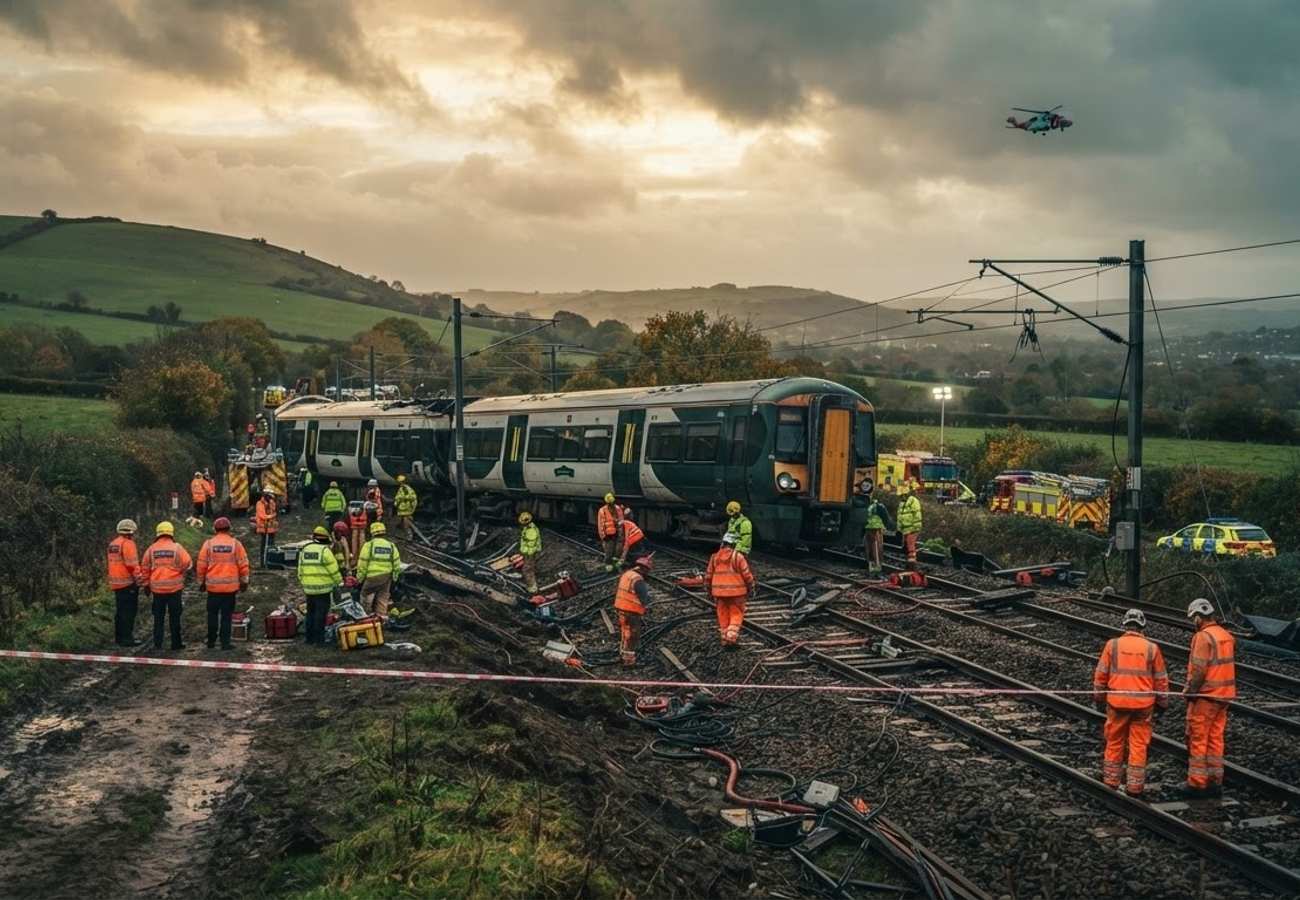
Image generated by AI
UK rail passengers face severe congestion this weekend as a critical infrastructure failure near Lewes coincides with the high-traffic Eastbourne Airshow.
Southern Railway has issued a formal warning to all passengers traveling across Sussex. A train derailment that occurred on Wednesday has forced the total closure of the railway line between Lewes and Haywards Heath. This closure remains in effect as specialist teams conduct emergency recovery and forensic investigations.
The timing is particularly problematic for the Eastbourne Airshow, one of the region's largest tourism draws. With the primary route blocked, thousands of visitors are being funneled through alternative corridors, creating extreme pressure on the remaining operational network.
Critical Travel Disruptions and Diversions
Southern Railway is currently directing all Eastbourne-bound traffic via Brighton. While the operator has added additional carriages to specific services to boost capacity, the network is struggling to absorb the surge in demand.
Passengers should expect the following:
- Route Changes: All travel between Lewes and Haywards Heath is suspended.
- Station Congestion: Extreme crowding is expected at Brighton and Eastbourne stations.
- Crowd Control: Queueing systems will be implemented at key hubs to manage passenger flow.
- Increased Travel Time: Significant delays are expected due to diversions and high volumes.
Recovery Operations and Safety Mandates
The line between Lewes and Haywards Heath will remain closed until Network Rail and Southern Railway can guarantee the infrastructure is safe. The recovery process involves complex derailment clearance and a formal investigation to determine the cause of the incident.
John Whitehurst, CEO of Greater Thameslink Railway (the operator of Southern Railway), emphasized that safety takes precedence over timetable restoration. He noted that four railway staff members—including the driver, onboard supervisor, a spare driver, and an off-duty staff member—were instrumental in the safe evacuation of passengers during the initial emergency.
Impact on Sussex Tourism and Logistics
The current infrastructure failure highlights a systemic vulnerability in Sussex's transport geography. The region relies heavily on a few key rail arteries to move tourists between Brighton, Lewes, and Eastbourne. When a primary link like the Haywards Heath line fails, the ripple effect disrupts not only leisure travel but essential commuter services.
For the Eastbourne Airshow, the disruption transforms a standard high-volume event into a logistical challenge. The reliance on the Brighton diversion means that any further incident on the Brighton line could effectively sever rail access to the event entirely.
Passenger Guidance for the Weekend
Southern Railway strongly advises passengers to ignore standard schedules and check real-time service updates immediately before departure. Relying on previous journey patterns is discouraged, as recovery work and crowd management tactics may change hourly.
| Impact Area | Status | Action Required |
|---|---|---|
| Lewes to Haywards Heath | Closed | Use alternative routes via Brighton |
| Eastbourne Station | Extremely Busy | Allow extra time; expect queues |
| Train Capacity | Augmented | Additional carriages added where possible |
| Service Updates | Dynamic | Check live data before leaving home |
Why This Matters: Industry Analysis
From a logistical perspective, this incident underscores the "single point of failure" risk inherent in the UK's regional rail networks. When a derailment occurs on a primary artery during a peak tourism event, the capacity of diversionary routes (like Brighton) is quickly exhausted.
For travelers, the real impact is a shift from "scheduled travel" to "managed flow." The introduction of queueing systems indicates that the railway has moved from a transport service to a crowd-management operation. This suggests that for future major events in the region, a more diversified transport plan—including increased shuttle bus integration—is necessary to mitigate the impact of rail infrastructure failure.
Forward Outlook
The railway will not reopen until a full technical assessment is completed. Passengers should not expect a return to normal scheduling in the immediate short term. The focus remains on the investigation into the derailment's cause and the stabilization of the track.
In the coming days, the industry will likely analyze how the "staff-led recovery" mentioned by John Whitehurst can be standardized to improve passenger welfare during similar transport emergencies.
Responsible recovery must take precedence over the pressure to restore normality.
Related Travel Guides
Disclaimer
This article is for informational and educational purposes only. It does not constitute legal, financial, or professional advice. While we strive to provide accurate and up-to-date information, travel policies, regulations, and conditions change rapidly. Always verify information with official sources before making travel decisions. Nomad Lawyer makes no representations about the accuracy, reliability, completeness, or suitability of the information provided. Readers should consult qualified professionals for advice specific to their circumstances. The views expressed in this article are those of the author and do not necessarily reflect the views of Nomad Lawyer.
Kunal K Choudhary
Co-Founder & Contributor
A passionate traveller and tech enthusiast. Kunal contributes to the vision and growth of Nomad Lawyer, bringing fresh perspectives and driving the community forward.
Learn more about our team →