
India Bullet Train Accelerates: 2027 Surat-Vapi Launch Confirmed
India's first bullet train project moves forward with a confirmed 2027 partial launch on the Surat-Vapi corridor, powered by Japanese Shinkansen technology and reshaping high-speed rail connectivity across the nation.

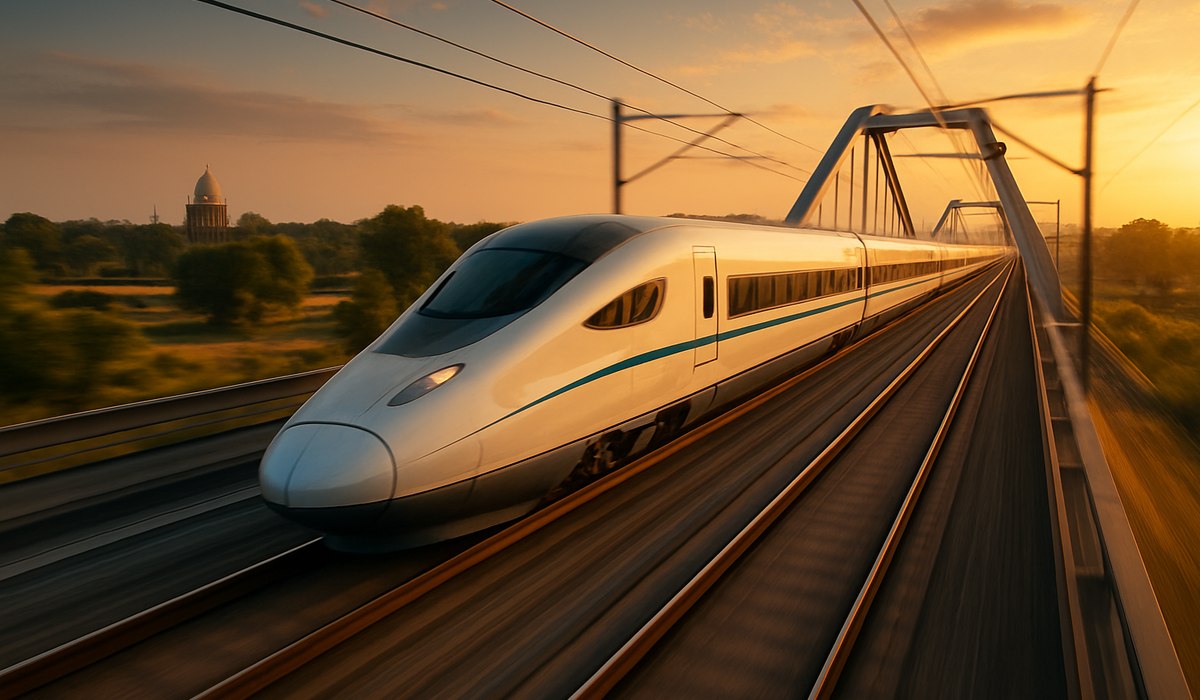
Image generated by AI
India's First Bullet Train Finally Moves Forward: 2027 Surat-Vapi Launch Announced
India's long-awaited India bullet train project is accelerating toward reality with an official 2027 partial launch confirmed for the Surat-Vapi corridor in Gujarat. This milestone represents the nation's first operational high-speed rail line, utilizing cutting-edge Japanese Shinkansen technology to dramatically reduce travel times. The project, backed substantially by Japanese investment and expertise, signals a transformative shift in India's transportation infrastructure and positions the country as a regional leader in railway modernization.
2027 Launch Timeline: What to Expect
The inaugural phase of India's bullet train will connect Surat and Vapi, two strategically important cities in Gujarat's industrial heartland. This 60-kilometer corridor will serve as a proof-of-concept for the broader national high-speed rail vision. Travelers can expect journey times to plummet from approximately 90 minutes by conventional rail to just 20 minutes aboard the new high-speed service.
The 2027 timeline represents a critical juncture for India's transportation sector. Completion of this segment will validate the technical and operational frameworks governing subsequent expansions. Infrastructure teams are currently finalizing station architecture, signaling systems, and safety protocols aligned with international high-speed rail standards. The partial launch demonstrates commitment despite previous delays, with planners targeting full fleet deployment and extended routes by 2030.
For travelers, this means booking options will open progressively through 2027. Early adopters should monitor official Indian Railways announcements for ticket release dates and pricing structures. The service will operate initially during daylight hours with planned evening extensions once operational stability is achieved. Learn more about India's railway modernization efforts at the Ministry of Railways official portal.
Japanese Shinkansen Technology Powers India's Rail Future
Japan's Shinkansen system, renowned globally for reliability and safety, forms the technological backbone of India's bullet train initiative. This partnership leverages decades of operational excellence from the Tokyo-Osaka corridor and other proven Asian networks. The technology transfer includes advanced wheel-rail interfaces, tilting mechanisms for curved sections, and regenerative braking systems that reduce energy consumption by up to 30%.
High-speed rail infrastructure demands exceptional precision in track alignment, electrical overhead systems, and signaling coordination. Indian engineers are collaborating with Japanese counterparts to adapt Shinkansen specifications for tropical climate conditions, including enhanced cooling for monsoon seasons and heat management during summer peaks. The locomotives themselves feature aerodynamic designs that minimize air resistance while maintaining safety margins on shared corridor segments.
The 320 kilometers-per-hour maximum design speed of Surat-Vapi trains exceeds typical Indian express services by a factor of five. Passenger experience enhancements include suspended seat assemblies that dampen vibration, pressurized cabins for thermal comfort, and Wi-Fi connectivity throughout consist. Emergency braking systems can achieve full stops within 3 kilometers from maximum velocity, exceeding international safety benchmarks established by European and Asian rail authorities.
Discover how Japan's railway innovations compare with other high-speed systems by visiting the International Union of Railways comparative database.
Economic Impact and National Connectivity
The Surat-Vapi India bullet train segment carries profound economic implications for Gujarat and India's broader infrastructure narrative. Initial projections estimate 8 million annual passengers by year three of operation, generating substantial revenue for reinvestment in secondary high-speed corridors. The project is expected to catalyze industrial growth in surrounding regions through improved labor mobility and supply chain efficiency.
Business travel will experience revolutionary transformation. Executives currently spending 2+ hours commuting between these manufacturing hubs can now complete round-trip journeys within a single working day. This accessibility strengthens Gujarat's competitive positioning for foreign direct investment in automotive, pharmaceutical, and textile sectors. Real estate dynamics will shift dramatically, with property values appreciating along the corridor as commute times collapse.
The railway modernization blueprint extends beyond Surat-Vapi to encompass eventually connecting major metros including Mumbai, Delhi, and Bangalore. Phase two planning already incorporates the Mumbai-Ahmedabad corridor, which would integrate with Surat-Vapi seamlessly. This interconnected high-speed network promises to reconfigure India's economic geography by enabling same-day business interactions across previously isolated regional markets.
Employment generation during construction and operations phases will exceed 50,000 direct and indirect jobs. Train manufacturing, station maintenance, hospitality services, and transportation logistics will create sustainable career opportunities in Gujarat and adjoining states. The project validates India's capacity to execute complex infrastructure initiatives matching developed-nation standards.
Overcoming Cost and Construction Challenges
India's bullet train project confronted significant obstacles that delayed earlier timelines. Initial budget estimates exceeded $20 billion USD, prompting debate about fiscal prudence and opportunity costs. Land acquisition in densely populated Gujarat districts required sophisticated negotiation frameworks balancing farmer compensation, industrial relocation, and environmental protection protocols. The government ultimately restructured financing through Japanese concessional loans and domestic capital allocation to achieve fiscal viability.
Technical challenges centered on maintaining track geometries that Shinkansen systems demand across India's varied terrain. Soil conditions, seismic risk assessments, and drainage requirements necessitated extensive geotechnical studies. Construction teams pioneered innovative foundation systems suited to Gujarat's seasonal water table fluctuations while minimizing environmental disruption.
Climate adaptation proved crucial to project credibility. Monsoon rains can destabilize conventional rail substructures, yet high-speed operations demand unprecedented precision. Engineers designed redundant drainage systems, weather-monitoring sensors, and automated maintenance protocols that preempt weather-induced degradation. Track expansion joints accommodate temperature variations spanning 60 degrees Celsius between monsoon and summer extremes.
Political coordination across state and central authorities resolved jurisdictional ambiguities regarding station development, land rights, and operational licensing. The multi-year approval process ultimately yielded a consensus framework replicable for future high-speed corridors. This institutional development proves as valuable as the physical infrastructure itself.
Key Data Table: India Bullet Train Project Specifications
| Metric | Value |
|---|---|
| Corridor Length | 60 kilometers |
| Route Endpoints | Surat to Vapi, Gujarat |
| Operational Start Date | 2027 (Partial Launch) |
| Maximum Speed | 320 km/h |
| Journey Time (Surat-Vapi) | 20 minutes |
| Conventional Rail Time | 90 minutes |
| Technology Source | Japan Shinkansen |
| Projected Annual Passengers (Year 3) | 8 million |
| Design Life Span | 60+ years |
| Environmental Emissions | Zero direct greenhouse gas |
What This Means for Travelers
The 2027 India bullet train launch fundamentally reshapes travel planning between Surat and Vapi. Here are actionable steps for prospective passengers:
-
Monitor booking windows closely – Official ticket sales typically open 60-90 days before service launches. Subscribe to Indian Railways email notifications to secure early-bird pricing on premium reserved seats.
-
Plan business trips with confidence – The 20-minute transit time enables same-day round-trip meetings between Gujarat's major industrial centers. Budget 3-4 hours total for terminal arrival, security, and connection time.
-
Book hotels near Surat and Vapi stations – Properties within walking distance or short cab rides will command premium pricing post-launch. Reserve accommodations 3-6 months ahead during peak business seasons.
-
Expect premium fares initially – First-year ticket prices likely exceed conventional express rates by 30-50% as operators recover capital costs. Budget accordingly or consider conventional alternatives until price stabilization occurs around 2029-2030.
-
Prepare for operational evolution – Service frequency and route extensions will increase through 2028-
Disclaimer
This article is for informational and educational purposes only. It does not constitute legal, financial, or professional advice. While we strive to provide accurate and up-to-date information, travel policies, regulations, and conditions change rapidly. Always verify information with official sources before making travel decisions. Nomad Lawyer makes no representations about the accuracy, reliability, completeness, or suitability of the information provided. Readers should consult qualified professionals for advice specific to their circumstances. The views expressed in this article are those of the author and do not necessarily reflect the views of Nomad Lawyer.
Kunal K Choudhary
Co-Founder & Contributor
A passionate traveller and tech enthusiast. Kunal contributes to the vision and growth of Nomad Lawyer, bringing fresh perspectives and driving the community forward.
Learn more about our team →