
Canada Overhauls Railway Worker Training Rules: Transport Canada Replaces 1987 Standards with New Crew Resource Management and Safety-Critical Role Requirements
Transport Canada published sweeping railway personnel training regulations replacing 1987 standards with expanded safety-critical roles, Crew Resource Management requirements, and strengthened certification to reduce rail incidents and boost passenger and freight confidence.

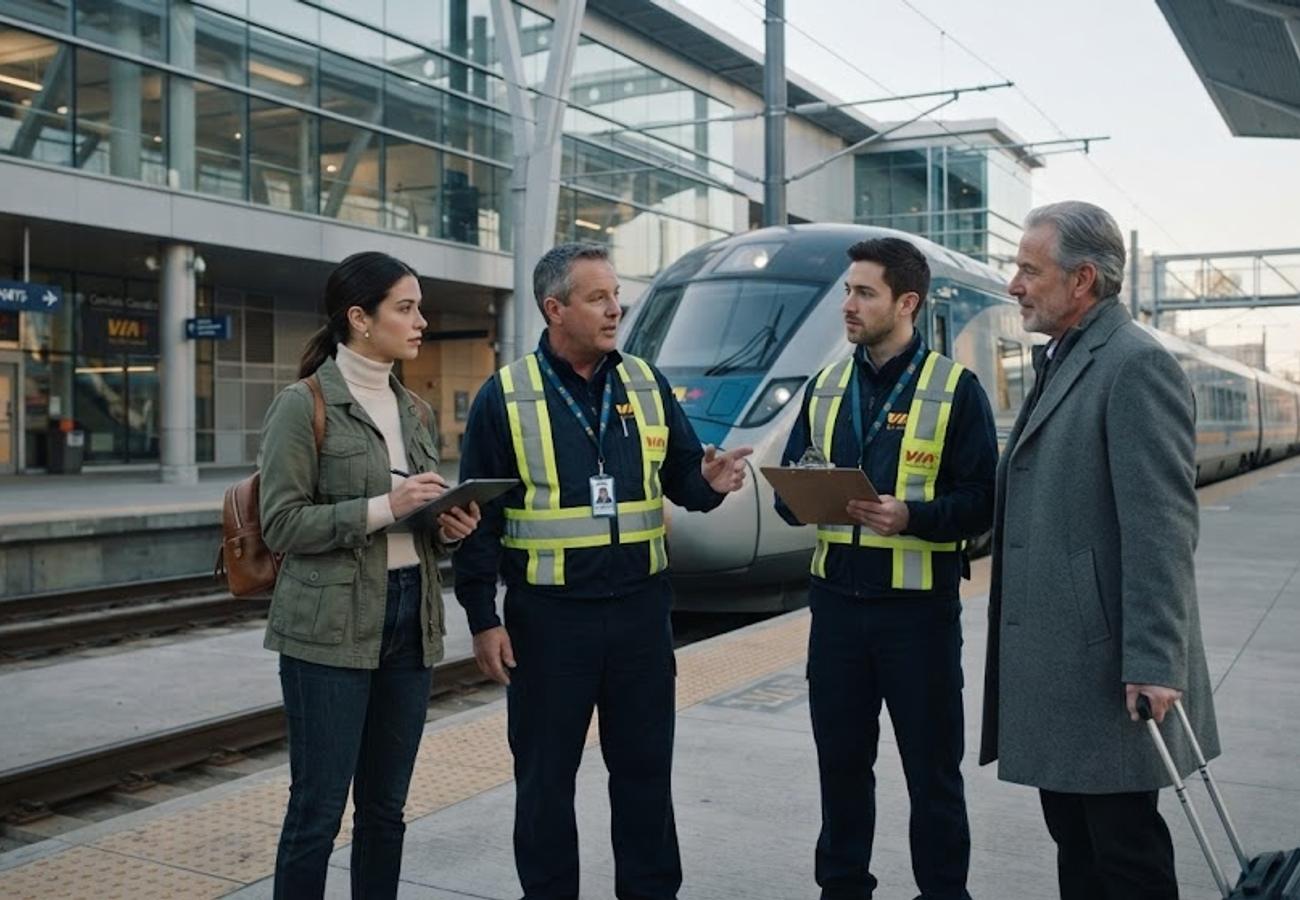
Image generated by AI
Canada's Railway Safety Gets a Major Regulatory Overhaul
Transport Canada has confirmed a watershed moment for Canadian rail operations. The federal regulator published the new Railway Personnel Training and Qualifications Regulations in the Canada Gazette, Part II on July 4, 2026—marking the end of an era defined by the Railway Employee Qualification Standards Regulations that came into force in 1987.
This is not a timetable adjustment or a tourism marketing campaign. This is a structural workforce competency reform designed to transform how rail safety operates across Canada's federally regulated network.
The new framework takes effect after a two-year transition period and introduces three game-changing elements: expanded safety-critical role definitions, mandatory Crew Resource Management training, and stronger certification and support structures for less-experienced workers. For travel operators, freight companies, and tourism businesses that depend on rail reliability, the implications are significant.
Why a 39-Year-Old Regulation Finally Had to Go
The 1987 regime was built for a different era of railway operations.
The outgoing standards focused narrowly on locomotive engineers, transfer hostlers, conductors, and yard foremen. They required basic training and examination records, but operated in a pre-digital, pre-automation environment that bore little resemblance to modern rail operations.
Transportation Safety Board investigations repeatedly highlighted the gap. Modern railways now deploy remote control locomotive systems, use rail traffic controllers in complex coordination roles, and operate under crew structures that the 1987 rules never contemplated. The previous framework had no specific operational category for remote control operators and required no role-specific training for that emerging function.
Reddit: "My grandfather was a conductor on this system. The rules haven't been updated since before I was born. No wonder there's been safety gaps." — r/Canadian_Rail
The regulatory gap between historic job categories and current operating practice had become a documented risk factor. Transport Canada's consultation material showed that the 1987 regime had never been meaningfully amended, leaving a 39-year accumulation of operational change unaddressed in federal safety standards.
The Three Pillars of Canada's New Rail Safety Framework
Expanded Safety-Critical Role Coverage
The new regulations dramatically widen the net of positions requiring formal training and certification. Remote control locomotive operators and rail traffic controllers now have explicit regulatory standing—a direct response to Transportation Safety Board investigations that identified these roles as safety-sensitive but historically under-regulated.
This matters operationally because modern yard environments are complex ecosystems where remote operations, movement coordination, and dispatch decisions carry direct safety implications. A remote control operator working in a busy freight yard influences movements that ripple across shared infrastructure. A rail traffic controller manages safe route coordination across multiple corridors. Better training for these roles means fewer operational errors and more predictable rail network performance.
Crew Resource Management Becomes Mandatory Training
Crew Resource Management (CRM) is now a required component of railway worker qualification and requalification training—a major structural change that fills a documented gap in the previous framework.
The Transportation Safety Board issued Recommendation R22-05 in August 2022, explicitly calling for modern CRM training focused on threat and error management, communication, situational awareness, decision-making, and leadership in safety-critical contexts. The TSB's consultation material recorded that no separate CRM module existed under the 1987 rules, which led to inconsistent adoption across the industry.
For passenger rail and tourism-dependent services, this change has direct commercial weight. Rail tourism depends on public confidence that long-distance trains, regional services, and rail-linked holiday packages operate within a disciplined safety culture. CRM creates that culture by design—structuring how crews communicate, manage resources, and make decisions under pressure.
Support Systems for Less-Experienced Workers
The new framework explicitly requires that safety-critical workers with fewer than two years of experience have access to more experienced personnel and structured mentoring arrangements. This addresses a known operational vulnerability: early-career deployment of undertrained staff in safety-critical roles.
It's a counterintuitive inclusion because it acknowledges that regulation alone doesn't build competency—mentorship and supervised experience do. The framework now makes this a formal requirement rather than leaving it to individual operator discretion.
The Regulatory Context: Why Canada Needed This
The safety numbers tell a revealing story. According to the Transportation Safety Board's latest validated annual statistics:
- 1,198 rail occurrences in 2024 (down 3% from 1,241 in 2023)
- 896 rail accidents in 2024 (down from 918 in 2023)
- 69 rail fatalities in 2024 (up from 67 in 2023)
- 87 dangerous goods rail accidents (stable year-over-year)
- 43 uncontrolled movement occurrences in 2024
The overall trend is mixed. Accident numbers improved, but fatalities climbed despite lower occurrence volumes—a troubling divergence that suggests the accidents that do occur are becoming more severe. Dangerous goods safety remains a persistent concern for freight operations, and uncontrolled movement risks threaten operational discipline across the network.
Transport Canada's framing links stronger training and certification standards directly to three safety outcomes: lower workplace injury risk, safer railway operations, and fewer incidents and accidents. The practical meaning for travel operators is unmistakable. A safer rail workforce supports more reliable passenger movement, lowers disruption exposure, and strengthens confidence in rail-linked itineraries.
What Changes for Operators and Travel Businesses
The two-year transition period gives railway companies and operators time to adapt training systems and staffing plans. But the scope of change is substantial.
Companies will need to expand training modules to include Crew Resource Management and remote control operation protocols. They will need to implement stronger certification tracking and evaluation records. They will need to formalize mentorship and supervision arrangements for workers below two years of experience.
For travel operators that rely on rail services—whether offering long-distance rail itineraries, cruise-rail packages, or regional tourism corridors—the regulatory shift reduces operational uncertainty. A more consistent, auditable, and competency-based approach to rail worker training across the federally regulated network means more predictable service delivery and fewer disruptions tied to workforce knowledge gaps.
The Bigger Picture: Regulatory Modernization Across Transport
This railway training overhaul fits a broader pattern of Canadian regulatory modernization across the transport sector. Transport Canada's ongoing modernization agenda reflects federal recognition that infrastructure, safety, and operational standards must evolve as technology and operating environments change.
The shift from prescriptive minimum standards to competency-based frameworks with mandatory training modules mirrors similar changes in aviation and maritime regulation. It reflects a regulatory philosophy that emphasizes structured safety culture over checklist compliance.
For the travel trade, the message is clear: Canadian rail operations are becoming more deliberately managed at the workforce level. That should translate to better reliability, more consistent safety practices, and strengthened confidence in rail-dependent travel products over the next decade.
Canada's railway safety rulebook finally caught up to the 21st century—and that matters more than most travelers realize.
Related Travel Guides
Disclaimer
This article is for informational and educational purposes only. It does not constitute legal, financial, or professional advice. While we strive to provide accurate and up-to-date information, travel policies, regulations, and conditions change rapidly. Always verify information with official sources before making travel decisions. Nomad Lawyer makes no representations about the accuracy, reliability, completeness, or suitability of the information provided. Readers should consult qualified professionals for advice specific to their circumstances. The views expressed in this article are those of the author and do not necessarily reflect the views of Nomad Lawyer.
Raushan Kumar
Founder & Lead Developer
Full-stack developer with 11+ years of experience and a passionate traveller. Raushan built Nomad Lawyer from the ground up with a vision to create the best travel and law experience on the web.
Learn more about our team →