
Southeast Asia Border Crisis: Singapore-Malaysia Checkpoints Struggle While Thai Crossings Thrive
New 2026 data reveals a stark contrast in Southeast Asian border efficiency, with Singapore-Malaysia checkpoints facing 3-hour delays while Thai crossings clear
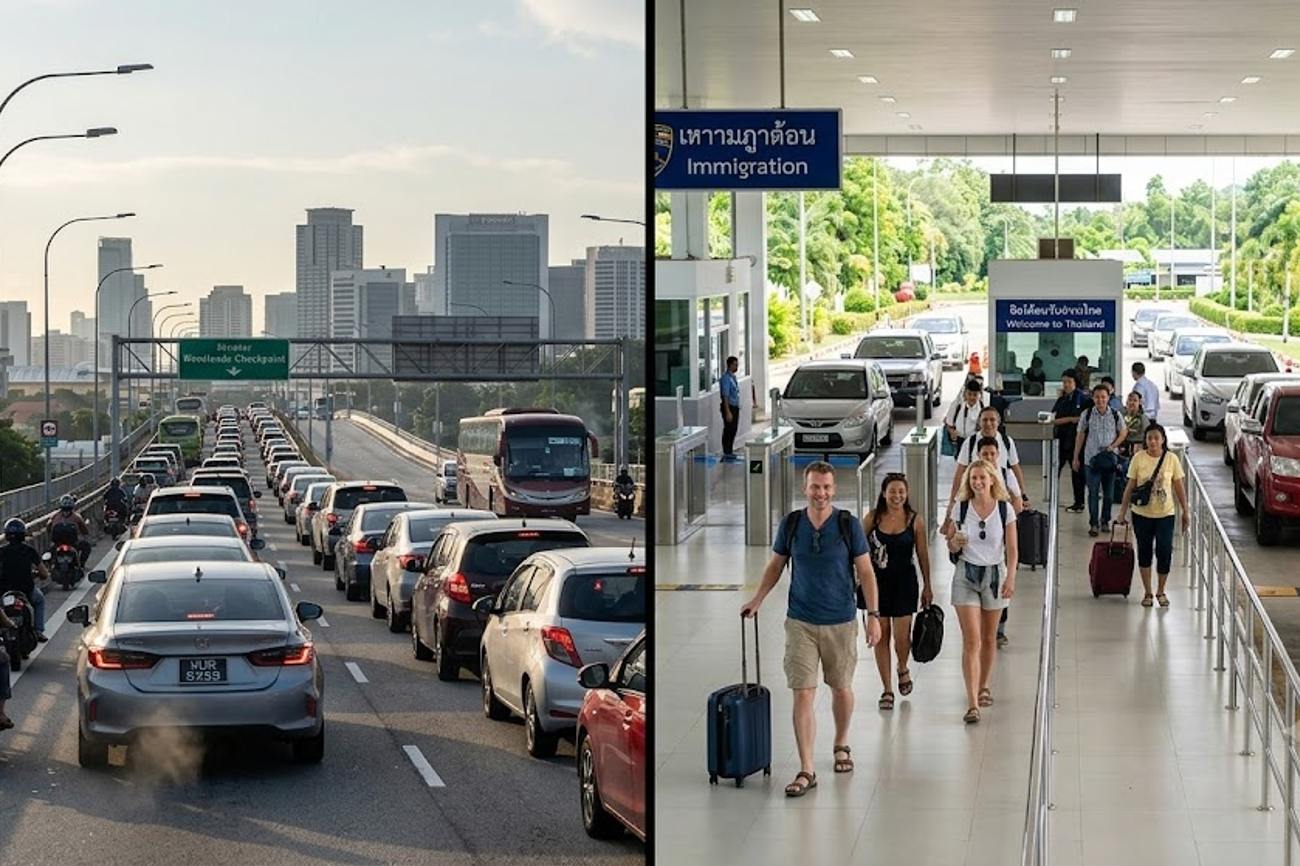
Image generated by AI
The Divergence of Southeast Asian Border Efficiency
The landscape of cross-border mobility in Southeast Asia is currently defined by a sharp contrast in operational efficiency. As of September 2026, a significant performance gap has emerged between the land checkpoints connecting Singapore, Malaysia, and Thailand.
While the region has seen massive infrastructural investments to modernize Immigration, Customs, Quarantine, and Security (ICQS) complexes, the results are uneven. In Thailand, the Sadao and Bukit Kayu Hitam crossings have achieved remarkable fluidity, with vehicle clearance times averaging just 30 seconds.
Conversely, the primary arteries between Singapore and Malaysia—the Woodlands Checkpoint and Tuas Second Link—continue to struggle. Despite the integration of digital clearance tools, these nodes remain prone to severe bottlenecks, particularly during peak travel windows.
Singapore-Malaysia Congestion Analysis
The land borders between Singapore and Malaysia are among the most heavily trafficked in the world. The volume of daily commuters, commercial logistics drivers, and tourists frequently exceeds the physical capacity of the infrastructure.
The impact of this volume was most evident during the National Day weekend (August 7–10, 2026). Data from the Immigration & Checkpoints Authority (ICA) of Singapore reveals the following:
- Total Volume: Over 2.1 million travelers utilized Woodlands and Tuas checkpoints during the four-day period.
- Peak Day: August 7 recorded a single-day high of 593,000 individuals.
- Maximum Delay: Travelers departing Singapore faced wait times of up to three hours, largely driven by tailbacks on the Malaysian side of the border.
Strategic Response and Traffic Forecasts
To manage these surges, authorities have shifted toward a model of real-time situational awareness. The ICA and Land Transport Authority (LTA) now rely on a network of digital advisories to flatten the congestion curve.
Travelers are currently warned of "very heavy traffic" for the September school holiday window, running from September 4 to 14, 2026. Authorities are directing commuters to the One Motoring website and official ICA social media channels to coordinate off-peak travel.
Digital Transformation: The "New Clearance Concept"
Singapore is attempting to solve these systemic delays through a technological overhaul known as the New Clearance Concept. The goal is to remove the friction of manual passport handling.
Key Technological Implementations:
- QR Code Integration: Eligible travelers pre-register via the MyICA mobile app. Encrypted QR codes are scanned at automated booths to verify vehicle occupants instantly.
- Biometric Expansion: The ICA has begun rolling out advanced facial recognition systems, specifically targeting motorcyclists to reduce manual checkpoints.
Despite these advancements, the data suggests that technology alone cannot override the geographical constraints and sheer human volume of the Johor-Singapore corridor.
Border Performance Comparison 2026
| Checkpoint Location | Average Peak Wait Time | Primary Clearance Method | Status |
|---|---|---|---|
| Woodlands / Tuas | Up to 3 Hours | QR Code / Biometric / Manual | Heavily Congested |
| Sadao / Bukit Kayu Hitam | 30 Seconds | Integrated Digital Clearance | Fluid |
Key Takeaways
- Efficiency Gap: A massive disparity exists between Thai border efficiency (30 seconds) and Singapore-Malaysia peak delays (3 hours).
- Volume Pressure: The Singapore-Malaysia corridor saw nearly 600,000 travelers in a single day during the August 2026 peak.
- Digital Shift: The MyICA app and QR code systems are now the primary tools for reducing manual processing times.
- Upcoming Risk: High congestion is forecasted for the September 4–14, 2026, school holiday period.
FAQ
Which checkpoints are currently experiencing the longest delays? The Woodlands Checkpoint and Tuas Second Link between Singapore and Malaysia remain the most congested.
How can travelers reduce their wait times at the Singapore border? Travelers should use the MyICA app to generate a QR code for faster clearance and monitor the LTA One Motoring website for real-time traffic updates.
What is the "New Clearance Concept"? It is a digital-first initiative by the ICA to replace physical passport stamping with QR codes and biometric verification to speed up vehicle processing.
Related Travel Guides
Disclaimer
This article is for informational and educational purposes only. It does not constitute legal, financial, or professional advice. While we strive to provide accurate and up-to-date information, travel policies, regulations, and conditions change rapidly. Always verify information with official sources before making travel decisions. Nomad Lawyer makes no representations about the accuracy, reliability, completeness, or suitability of the information provided. Readers should consult qualified professionals for advice specific to their circumstances. The views expressed in this article are those of the author and do not necessarily reflect the views of Nomad Lawyer.