
South Korea Travel Outlook Enters New Phase as Japan US Talks Highlight Asia Peace and Stability
South Korea Travel Outlook Enters New Phase as Japan US Talks Highlight Asia Peace and Stability

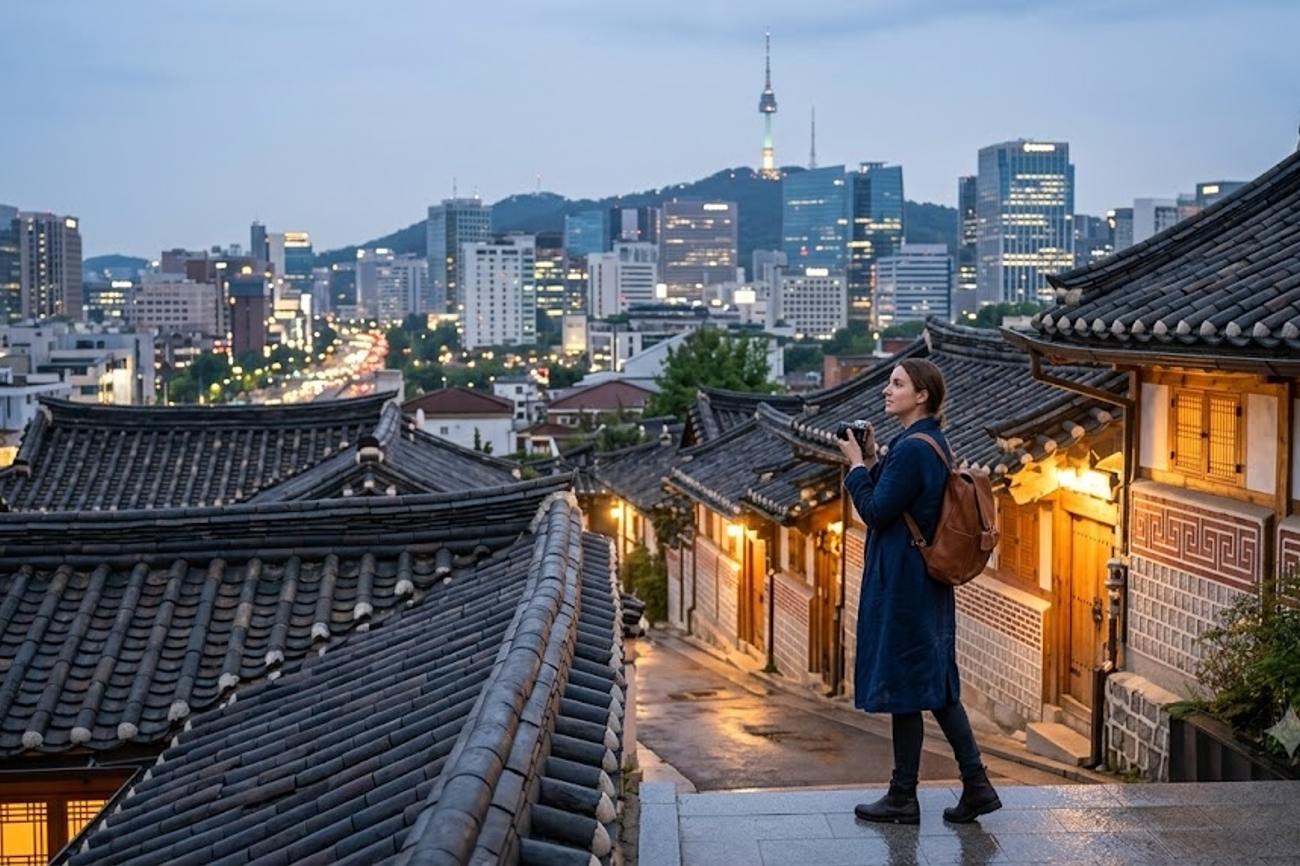
Image generated by AI
Three sovereign nations—South Korea, Japan, and the United States—convened on 21 September 2026 to formalize a security framework that directly underpins the viability of Northeast Asian tourism. While the summit in New York focused on the geopolitical architecture of the Indo-Pacific, the implications for the travel sector are profound. In a region where passenger confidence is inextricably linked to the perception of stability, the reaffirmation of trilateral cooperation serves as a critical hedge against the volatility that typically triggers sudden drops in international arrivals.
The Geopolitical Foundation of Travel Confidence
The trilateral meeting was not a tourism forum, yet it addressed the primary variables that dictate whether a traveler chooses Seoul or Tokyo over a destination in another hemisphere. The primary drivers of the discussion were the denuclearization of North Korea and the maintenance of peace across the Taiwan Strait. For the aviation industry, these are not merely diplomatic talking points; they are risk management factors.
When diplomatic tensions escalate in Northeast Asia, the immediate result is often a spike in insurance premiums for aircraft operating in the region and a subsequent increase in ticket prices. By coordinating on maritime security and freedom of navigation, the United States Department of State and its partners are essentially securing the "invisible infrastructure" of travel—the safe air and sea corridors that allow millions of tourists to move between the Indo-Pacific's primary hubs.
Security Parameters and Economic Interdependence
The discussions extended beyond military deterrence into the realm of economic security, a shift that has direct consequences for the logistical backend of the travel industry. Modern tourism is a high-dependency ecosystem; airports require a constant flow of aviation fuel, and airlines rely on a fragile global supply chain for aircraft parts.
The following table outlines the specific focus areas of the 21 September meeting and their indirect correlation to the travel and hospitality sectors:
| Key Discussion Area | Strategic Focus | Tourism/Travel Correlation |
|---|---|---|
| North Korea | Complete denuclearization and return to dialogue | Reduction in "security shocks" that trigger mass cancellations |
| Taiwan Strait | Opposition to force or pressure; peaceful solutions | Stability of critical flight paths and regional hub operations |
| Maritime Security | Protection of freedom of navigation | Ensuring the flow of goods/supplies to island nations (Japan) |
| Supply Chains | Early warning systems and resilience | Lowering the cost of aircraft maintenance and hotel procurement |
| Technology | AI, Quantum, and Biotechnology | Implementation of biometric boarding and smart airport logistics |
| Energy | Regional energy resilience and nuclear safety | Stabilization of jet fuel costs and airport utility overheads |
Expert Analysis: The "Stability Premium" in Asian Tourism
For travelers booking routes into Northeast Asia, the direct consequence of this trilateral alignment is the preservation of the "stability premium." In the travel industry, this refers to the confidence gap that exists between regions of perceived volatility and regions of perceived safety. When the US, Japan, and South Korea synchronize their security policies, they effectively lower the perceived risk for the Western traveler.
The pricing pressure created by regional instability usually manifests in two ways: increased fuel surcharges due to energy insecurity and higher insurance costs for carriers. By focusing on energy resilience and the cooperation of energy-producing and consuming nations, these governments are attempting to cap the volatility of operating costs for airlines. If energy supplies remain resilient, airlines are less likely to pass sudden cost spikes onto the consumer.
Furthermore, the commitment to advancing AI and digital infrastructure—as discussed in the New York talks—suggests a move toward a more integrated, "frictionless" travel experience. We are seeing a transition where security cooperation is no longer just about preventing conflict, but about building the technological rails (digital travel systems and smarter airports) that allow for higher passenger volumes without compromising safety. For the nomad or the business traveler, this means that the legal and logistical barriers to entry in South Korea and Japan will likely continue to decrease as their digital infrastructures align.
Key Takeaways
- Strategic Alignment: The 21 September 2026 meeting reaffirms that travel confidence in Northeast Asia is tied to the trilateral security bond between the US, Japan, and South Korea.
- Logistical Resilience: Agreements to strengthen supply chains and energy security act as a buffer against sudden spikes in airfares and hotel costs.
- Technological Integration: Cooperation on AI and quantum technology is expected to accelerate the rollout of smarter, more efficient airport and border systems.
- No Immediate Restrictions: Despite the focus on security threats, no new travel warnings, airport closures, or border restrictions were issued as a result of these talks.
- Risk Monitoring: Travelers should continue to monitor official updates via the Japan National Tourism Organization or the Korea Tourism Organization to stay informed on real-time safety conditions.
FAQ: Northeast Asia Travel 2026
Are there currently any travel warnings for South Korea or Japan due to these security talks? No. The diplomatic meetings in New York were focused on long-term regional stability and security coordination. There are no new restrictions, airport closures, or travel warnings resulting from these discussions.
How do these security agreements affect the price of flights to Asia? While the talks don't set prices, their focus on energy resilience and supply chain stability helps prevent the sudden cost spikes in fuel and parts that typically lead to higher ticket prices for passengers.
Will the focus on AI and technology change how I enter the country? Yes, the trilateral agreement to cooperate on digital infrastructure and AI is likely to lead to more streamlined biometric processing and "smart" airport systems, reducing wait times at immigration.
Is it safe to travel to the region given the focus on North Korea? The primary goal of the trilateral cooperation is to maintain peace and stability. Currently, the region remains a top global destination, and the coordination between the US, Japan, and South Korea is designed to ensure continued safety.
When diplomacy stabilizes the map, the traveler finds the path.
Tags: South-Korea-Japan-US-Trilateral-2026, Indo-Pacific-Security-Framework, Northeast-Asia-Aviation-Stability, Taiwan-Strait-Travel-Impact, Asia-Energy-Resilience-2026
Related Travel Guides
- Bahrain Partners With Uzbekistan And EU In UAE Tourism Strategic Push To Create New Travel And Investment Pathways
- Canada Issues Strict Travel Advisory For Russia Due To Security Risks And Fraud Threats Facing Travellers
- China Travel Surge Is Now Set to Unlock More Great Holidays as Seoul, Cebu and Phuket See Bookings Rise
Disclaimer
This article is for informational and educational purposes only. It does not constitute legal, financial, or professional advice. While we strive to provide accurate and up-to-date information, travel policies, regulations, and conditions change rapidly. Always verify information with official sources before making travel decisions. Nomad Lawyer makes no representations about the accuracy, reliability, completeness, or suitability of the information provided. Readers should consult qualified professionals for advice specific to their circumstances. The views expressed in this article are those of the author and do not necessarily reflect the views of Nomad Lawyer.
Raushan Kumar
Founder & Lead Developer
Full-stack developer with 11+ years of experience and a passionate traveller. Raushan built Nomad Lawyer from the ground up with a vision to create the best travel and law experience on the web.
Learn more about our team →