
Canada Issues Strict Travel Advisory For Russia Due To Security Risks And Fraud Threats Facing Travellers
Canada Issues Strict Travel Advisory For Russia Due To Security Risks And Fraud Threats Facing Travellers

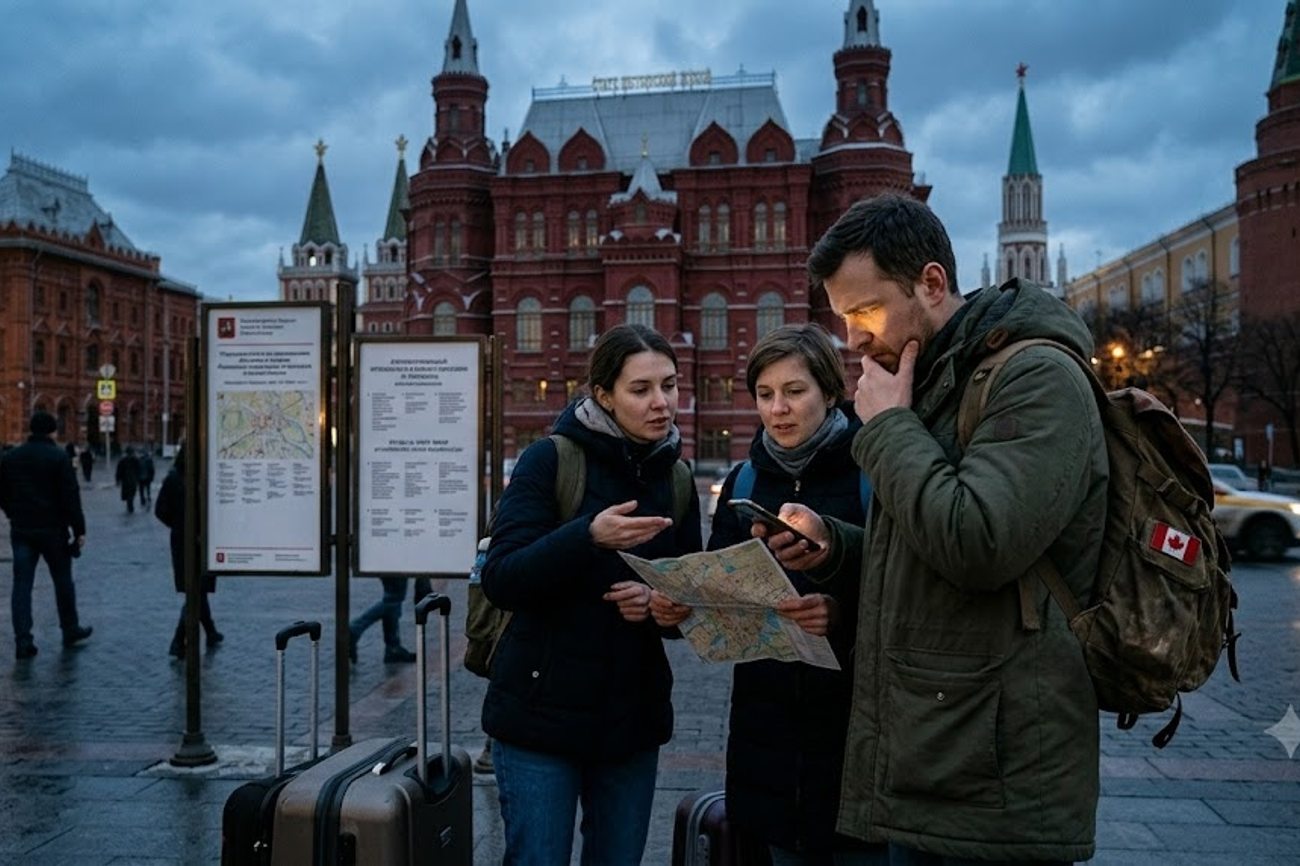
Image generated by AI
[Ottawa, May 2024] — The Government of Canada has issued a formal travel advisory urging all citizens to avoid all travel to Russia, citing an unstable security environment driven by the ongoing armed conflict with Ukraine and an elevated risk of terrorism.
The directive, released by Global Affairs Canada, warns that the intersection of military operations, drone strikes, and internal security threats has rendered the country unsafe for international visitors. Canadian authorities emphasize that the risk of sudden disruptions—ranging from airspace closures to the total failure of financial systems—is now a primary concern for any citizen remaining in or entering the Russian Federation.
Conflict-Driven Security Volatility
The immediate catalyst for this advisory is the spillover of the Russia-Ukraine war into Russian sovereign territory. Canadian officials report that shelling, drone incursions, and explosions are no longer confined to the immediate border zones but have penetrated deeper into the Russian interior.
Military interceptions of aerial threats now pose a direct risk of collateral damage to civilians. The advisory specifically warns that missile strikes and drone activity can trigger immediate and prolonged closures of airspace, potentially trapping travelers in cities or preventing emergency evacuations. In response, the Canadian government suggests that anyone currently in Russia identify the location of the nearest bomb shelters or seek refuge in reinforced structures away from windows during active air raid warnings.
High-Risk Zones and Affected Markets
The security threat is not uniform across the country, but the advisory identifies several "red zones" where the risk of violence is acute.
Primary Conflict Zones (Highest Risk):
- Border Oblasts: Bryansk, Kursk, and Belgorod.
- Black Sea Regions: Rostov Oblast and Krasnodar Krai.
- Strategic Hubs: Moscow and St Petersburg (subject to drone strikes and security operations).
Terrorism and Insurgency Zones:
- North Caucasus Region: Chechnya, Dagestan, Ingushetia, and Stavropol Krai.
- Bordering Caucasian States: Kabardino-Balkaria, Karachai-Cherkessia, and North Ossetia (due to tensions with Georgia and Azerbaijan).
Targeted Infrastructure: The advisory lists the following as high-probability targets for terrorist activity:
- International airports and airline hubs.
- Government buildings and cultural venues.
- Public transport networks and shopping centers.
- Hotels, nightclubs, and places of worship.
Practical Traveler Advisory and Strategic Insights
For the average Canadian traveler, this advisory translates to a near-total loss of the safety net typically provided by the state and the global financial system.
Financial Isolation Travelers cannot rely on the Bank of Canada or private Canadian financial institutions for support. Most international bank cards and ATM networks are non-functional within Russia. Those entering the country must carry sufficient physical cash for their entire stay, as digital payments from Western sources are largely blocked.
Consular Abandonment The most critical warning for passengers is the limitation of diplomatic support. The Embassy of Canada in Moscow has severely restricted capabilities. If a citizen is detained, injured, or caught in a military strike, the Canadian government explicitly warns that it may be unable to provide emergency assistance or coordinate an evacuation.
Movement and Logistics Travelers should expect:
- GPS Failure: Navigation systems are unreliable in several regions due to electronic warfare and military jamming.
- Martial Law: Strict movement restrictions are in place in Rostov, Bryansk, Kursk, Belgorod, Voronezh, and Krasnodar.
- Entry Permits: Specific regions in the North Caucasus now require formal permission from the Russian Ministry of the Interior.
The Terrorism Threat Matrix
Beyond the kinetic warfare with Ukraine, Canada is alerting citizens to a persistent and evolving terrorism threat. Various militant groups have openly called for attacks within Russian borders, targeting locations where large crowds gather.
In the North Caucasus, the threat profile shifts from conventional warfare to asymmetric violence. Travelers in these regions face specific risks of kidnapping for ransom, suicide bombings, and targeted assassinations. Furthermore, the presence of unexploded mines in these territories adds a layer of physical danger to any off-road or rural travel.
Next Steps for Canadians in Russia
The Canadian government is not currently organizing mass evacuations but strongly recommends that citizens leave via commercial means while those options remain available.
The Canadian government has issued a strict travel advisory for Russia due to increased security risks and fraud threats facing travellers, advising citizens to exercise a high degree of caution when travelling to the country. For the most up-to-date information on travel advisories, Canadians can visit the Government of Canada's travel advisory website for the latest guidance. This website provides essential information on safety and security, entry and exit requirements, and health measures for travellers.
For those unable to depart immediately, the government mandates the following actions:
- Immediate Registration: All citizens must sign up for the "Registration of Canadians Abroad" service to receive real-time security alerts.
- Low Profile: Travelers are instructed to avoid political gatherings, maintain a low public profile, and avoid any areas associated with military or government installations.
- Supply Stockpiling: Due to the volatility of the economy and potential for sudden lockdowns, travelers are advised to carry a surplus of essential medications and basic supplies.
FAQ: Russia Travel Advisory 2024
Can I still use my Canadian credit card in Russia? No. Most Canadian and international financial institutions are blocked. You will likely find that ATMs do not accept your cards and merchants cannot process Western digital payments. Carry sufficient cash in a stable currency.
Is it safe to visit Moscow or St Petersburg? The Canadian government advises against all travel. While these are major cities, they have been targets of drone strikes and are high-priority locations for potential terrorist attacks. Consular support in these cities is extremely limited.
What should I do if I am currently in a border region like Belgorod? The advisory strongly urges you to leave these areas immediately. If you cannot, seek out bomb shelters, stay away from windows, and follow all local authority instructions regarding air raid sirens.
Do I need a special permit for the North Caucasus? Yes, certain areas within Chechnya, Dagestan, and Ingushetia may require official permission from the Russian Ministry of the Interior. However, Canada advises against visiting these regions entirely due to kidnapping and terrorism risks.
Travelers are reminded that entering a high-risk zone may void certain travel insurance policies.
Related Travel Guides
Disclaimer
This article is for informational and educational purposes only. It does not constitute legal, financial, or professional advice. While we strive to provide accurate and up-to-date information, travel policies, regulations, and conditions change rapidly. Always verify information with official sources before making travel decisions. Nomad Lawyer makes no representations about the accuracy, reliability, completeness, or suitability of the information provided. Readers should consult qualified professionals for advice specific to their circumstances. The views expressed in this article are those of the author and do not necessarily reflect the views of Nomad Lawyer.
Preeti Gunjan
Contributor & Community Manager
A passionate traveller and community builder. Preeti helps grow the Nomad Lawyer community, fostering engagement and bringing the reader experience to life.
Learn more about our team →