
South Korea Encourages Regional Travel With Tourism Incentives as Visitors Discover Hidden Destinations: All You Need to Know
South Korea Encourages Regional Travel With Tourism Incentives as Visitors Discover Hidden Destinations: All You Need to Know

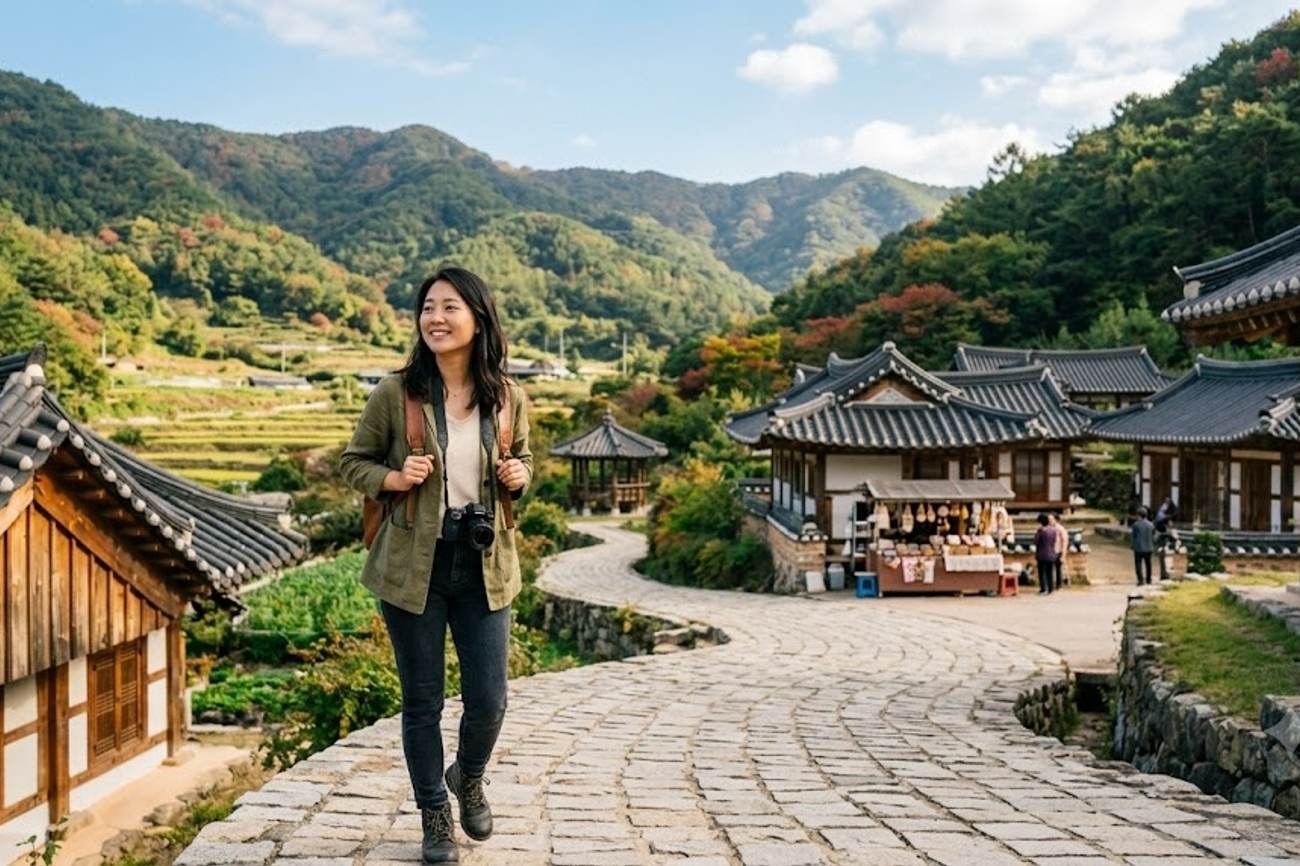
Image generated by AI
Three primary tourism hubs—Seoul, Busan, and Jeju—have historically absorbed the vast majority of international arrivals, creating a geographic imbalance that the South Korean government is now aggressively attempting to correct. This strategic pivot, orchestrated by the Korea Tourism Organization (KTO), marks a shift from passive destination marketing to an active redistribution of human and financial capital across the peninsula. By leveraging targeted incentives and digital infrastructure, South Korea is attempting to solve a classic "overtourism" dilemma: how to grow total visitor numbers without collapsing the infrastructure of its most famous urban centers.
The Mechanics of Geographic Redistribution
The current South Korean tourism model has long been characterized by a "Golden Triangle" effect, where the capital city, the southern port of Busan, and the volcanic Jeju Island act as the sole anchors for international itineraries. While these hubs provide the necessary scale for global aviation arrivals, they create an economic vacuum in the interior and coastal provinces. The Ministry of Culture, Sports and Tourism is now treating regional tourism not as a luxury for the adventurous traveler, but as a core economic priority.
The objective is to transition the visitor profile from the "surface-level" tourist—who visits Myeongdong for shopping and Gyeongbokgung Palace for photography—to the "deep-dive" traveler. This shift is designed to lengthen the average duration of stay. When a traveler is incentivized to move from Seoul to a heritage site like Gyeongju or a culinary hub like Jeonju, the multiplier effect on the local economy increases exponentially. Every additional night spent in a regional guesthouse or meal eaten at a family-owned restaurant in a rural province represents a direct transfer of wealth from global tourism spend to local community equity.
Regional Asset Mapping and Visitor Flow
To understand the scale of this redistribution, one must look at the specific assets the KTO is promoting to compete with the gravity of Seoul. The strategy involves diversifying the "product offering" of the country to include specialized niches: ancient history, wellness, and gastronomy.
| Destination | Primary Strategic Value | Key Infrastructure/Attractions |
|---|---|---|
| Seoul | International Gateway & Tech Hub | Hongdae, N Seoul Tower, Bukchon Hanok Village |
| Busan | Coastal Urbanism & Logistics | Haeundae Beach, Jagalchi Fish Market, Gamcheon Culture Village |
| Jeju Island | Nature & Wellness | UNESCO Natural Sites, Volcanic Hiking Trails |
| Gyeongju | Historical Legitimacy | UNESCO Heritage Sites, Ancient Silla Architecture |
| Jeonju | Gastronomy & Tradition | Hanok Village, Regional Culinary Arts |
| Andong | Confucian Heritage | Traditional Cultural Practices, Folk Villages |
| Gangneung | East Coast Integration | Coastal Culture, Local Arts |
The integration of "Smart Tourism" is the glue holding this regional strategy together. The South Korean government has recognized that the primary barrier to regional travel is not a lack of interest, but a friction of logistics. By deploying advanced digital maps, integrated translation services, and seamless mobile payment systems, they are lowering the "barrier to entry" for non-Korean speakers venturing into provinces where English proficiency may be lower than in the Gangnam district of Seoul.
Expert Analysis: The Economics of Incentive-Based Travel
For the modern traveler, the introduction of travel incentives—which may include subsidies for local transportation, accommodation offsets, or discounted cultural packages—is more than just a coupon; it is a signal of market repositioning. From an industry perspective, this is a calculated move to hedge against the volatility of "trend-based" tourism.
Much of South Korea's recent growth is tied to the "Hallyu" wave—the global explosion of K-pop, K-drama, and fashion. While this provides a massive influx of visitors, trend-based tourism is notoriously fickle. If the global appetite for a specific genre of entertainment shifts, destinations that rely solely on "pop culture" landmarks face a sudden decline. By pushing visitors toward Gyeongju’s ancient history or the volcanic landscapes of Jeju, the KTO is diversifying its "tourism portfolio." They are moving the value proposition from celebrity to culture.
The pricing pressure created by this shift is significant. As more visitors are funneled into smaller towns, we will likely see a stabilization of hotel prices in Seoul and Busan, while regional accommodation costs may rise to meet new demand. For the traveler booking a trip today, the direct consequence is a window of opportunity: regional experiences are currently more accessible and often more affordable than the hyper-inflated markets of the major hubs. However, as the World Tourism Organization (UNWTO) often notes regarding sustainable growth, this redistribution is the only way to prevent the degradation of the very sites tourists come to see.
Key Takeaways
- Strategic Pivot: South Korea is actively diversifying its tourism map to reduce congestion in Seoul, Busan, and Jeju.
- Economic Redistribution: Incentives are being deployed to shift visitor spending toward family-owned businesses and rural infrastructure in provinces like Jeolla and Gyeongsang.
- Digital Enablement: The rollout of smart tourism tools (translation, mobile payments) is specifically designed to remove the logistical friction of regional travel.
- Portfolio Diversification: The government is moving away from a reliance on "Hallyu" (pop culture) tourism toward heritage-based and nature-based tourism to ensure long-term stability.
- Incentive Structures: Travelers can expect support for regional transport, lodging, and cultural activities as part of new government-backed initiatives.
FAQ: South Korea Regional Travel 2025
How do I access the regional travel incentives mentioned? Incentives are typically distributed through the official Korea Tourism Organization platform or partnered travel agencies. These may appear as bundled packages, transportation discounts, or specific vouchers for regional accommodation and cultural experiences.
Is it easy to travel outside of Seoul without speaking Korean? Yes, due to the "Smart Tourism" initiative. The government has invested heavily in multilingual digital maps, translation apps, and mobile payment systems that function in rural areas, significantly reducing the language barrier for international visitors.
Which regional city is best for a first-time visitor? Gyeongju is highly recommended for those interested in history (the "museum without walls"), while Jeonju is the premier choice for those focusing on traditional food and architecture. Both are accessible from Seoul via high-speed rail.
Will visiting regional areas be cheaper than staying in Seoul? Generally, yes. While luxury options exist everywhere, the cost of local dining and boutique guesthouse stays in regional provinces is typically lower than the premium prices found in Seoul's central districts.
The shift from the neon lights of Myeongdong to the quiet eaves of a Jeonju hanok is not just a change in scenery—it is a calculated economic migration.
Tags: Korea Tourism Organization, Seoul-Busan-Jeju Triangle, Smart Tourism Korea, Gyeongju Heritage, Jeonju Gastronomy, Hallyu Economics
Related Travel Guides
- Latin America Travel Enters Golden Era as Regional Tourists Transform International Markets
- Malaysia Leads Southeast Asia Travel Revival as Repeat Visitors Drive Strong Tourism Momentum: All You Need to Know
- New York Stands With Orlando and More as USA Christmas Travel Rethinks Accessibility for Disabled Guests 2026
Disclaimer
This article is for informational and educational purposes only. It does not constitute legal, financial, or professional advice. While we strive to provide accurate and up-to-date information, travel policies, regulations, and conditions change rapidly. Always verify information with official sources before making travel decisions. Nomad Lawyer makes no representations about the accuracy, reliability, completeness, or suitability of the information provided. Readers should consult qualified professionals for advice specific to their circumstances. The views expressed in this article are those of the author and do not necessarily reflect the views of Nomad Lawyer.
Preeti Gunjan
Contributor & Community Manager
A passionate traveller and community builder. Preeti helps grow the Nomad Lawyer community, fostering engagement and bringing the reader experience to life.
Learn more about our team →