
South Korea Relaunches Historic Dorasan DMZ Peace Train From Seoul in 2026: Border Rail Access Returns After 6-Year Suspension
South Korea officially resumed the DMZ Peace Link Train service between Seoul and Dorasan Station this month, offering travelers rare rail access to the Korean Peninsula's demilitarized zone for the first time since 2019.

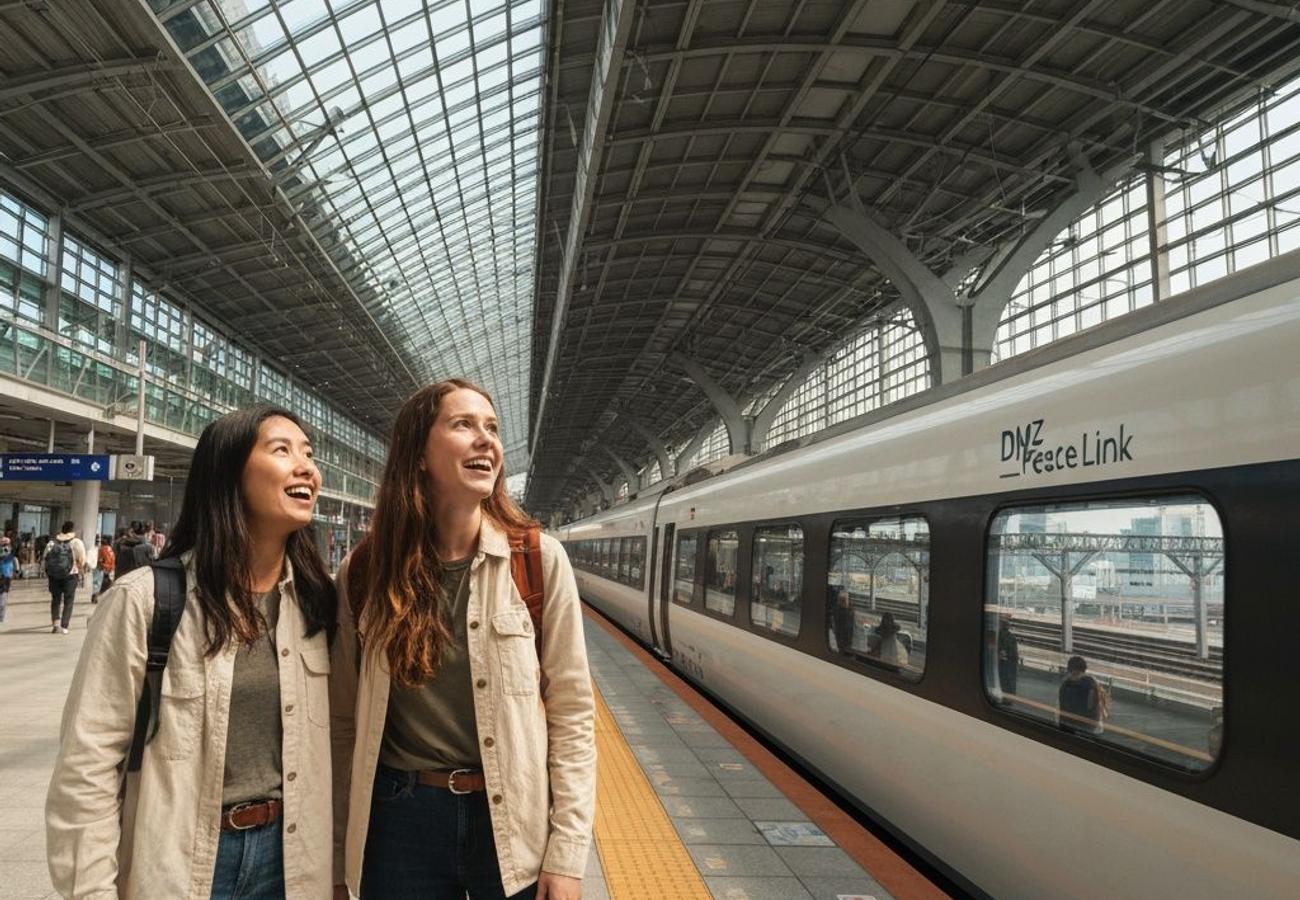
Image generated by AI
The Historic Train That Bridges a Divided Nation Is Running Again
South Korea's Ministry of Unification confirmed the restart of one of Asia's most symbolically charged railway services this month: the DMZ Peace Link Train, connecting Seoul Station to Dorasan Station, the northernmost point of South Korea's national rail network. This isn't merely a commuter route reopening — it's a direct passage into restricted border territory that had been closed to civilian travelers since late 2019.
The resumption marks a watershed moment for experiential tourism in East Asia. Visitors can now board a train that literally terminates at the edge of the Demilitarized Zone (DMZ), standing meters from one of the world's most fortified borders.
Why This Train Matters: History Written in Steel and Symbolism
Dorasan Station opened in 2002 following a historic summit between South and North Korean leaders who agreed to reconnect severed rail networks. For two decades, it functioned as a genuine symbol of reconciliation — even carrying freight to and from the jointly operated Kaesong Industrial Complex until cross-border operations halted in 2016.
But here's what makes this restart extraordinary: travelers aren't just visiting a station. They're crossing the Civilian Control Line, a heavily restricted zone normally off-limits to the public. The journey itself becomes a narrative arc — departing Seoul's bustling metropolis, passing through Unjeong and Imjingang stations, and arriving at a terminus where the rails literally continue into North Korean territory, but passenger service does not.
Reddit: "I've done the DMZ tour by bus, but traveling by train to the actual border hits different. You feel the history in every mile." — r/travel
What Unification Minister Chung Dong-Young Actually Said
At the official ceremony marking the train's return, Unification Minister Chung Dong-young framed this not as tourism infrastructure, but as peacebuilding. He called the service a "small but meaningful starting point for peace," emphasizing that everyday travel engagement can embed reconciliation language into daily life.
The government's position is clear: allowing tourists to visit Dorasan isn't about rail mechanics. It's about materializing the abstract concept of peace through direct, lived experience.
Operating Details: Booking, Schedules, and Restrictions
Here's what intending travelers need to know immediately:
Frequency and capacity matter. During the initial rollout, the train operates on the second and fourth Fridays of each month, with expansion to weekly Friday services planned from June onward. Each trip carries a maximum of 120 passengers, making advance booking non-negotiable.
Identification is mandatory. Visitors must carry a valid passport or Alien Registration Card (ARC) to access controlled DMZ areas. No exceptions.
Bundled experiences are standard. Most bookings include guided tours of nearby attractions — observation posts, peace parks, and the Third Tunnel of Aggression — creating a full historical itinerary rather than a simple point-to-point rail journey.
For detailed scheduling and booking procedures, check the official South Korea tourism portal.
The Economics: Why South Korea's Travel Sector Is Betting on This
Rail tourism in South Korea is already surging among international visitors. Millions annually choose train travel to explore destinations beyond Seoul. This restored DMZ route taps into a specific, high-value traveler segment: those seeking experiential, conflict-resolution tourism that blends history, geopolitical narrative, and boundary-crossing symbolism.
From an industry perspective, this service elevates South Korea's competitive position in Asia's tourism market. It offers something genuinely unique — not a theme park, not a museum, but a functioning rail line with real historical weight.
The Vision That Haunts Dorasan Station
Walk through Dorasan and you'll encounter displays depicting an ambitious dream: a unified Korean rail network extending from Seoul through Pyongyang and potentially into continental Asia — perhaps even reaching Europe via the Trans-Siberian corridor.
These aren't flights of fancy. They're architectural remnants of a specific historical moment when reunification seemed closer. Today, they serve as reminders of what once seemed possible and what some still believe might be.
Before You Book: Essential Preparation
Timeline matters. Book at least two weeks in advance, especially given the limited 120-seat capacity and security protocols.
Plan your full itinerary. Combine the train ride with organized DMZ tours — observation posts at Dorasan, the Third Tunnel of Aggression (approximately 73 meters deep, dug by North Korea as a potential invasion route), and the Joint Security Area visitor center if applicable.
Understand the symbolic weight. This isn't a typical tourist attraction. You're traveling to a place where geopolitical reality remains tangible and immediate.
For comprehensive DMZ tourism planning, the Korean Tourism Organization provides regularly updated protocols and tour operator lists.
A Living Symbol of Division and Hope
The DMZ Peace Link Train represents something rare in 21st-century tourism: a direct confrontation with historical division made accessible through the simple act of boarding a train. Travelers witness a nation's narrative of separation and reconciliation efforts not through exhibits, but through the landscape itself.
This service doesn't resolve the peninsula's geopolitical realities. But it does something perhaps equally important: it invites the world to stand at the boundary and contemplate what division means, and what peace might look like.
For rail enthusiasts, history buffs, and travelers seeking meaning alongside adventure, the reopened Dorasan route offers an unparalleled experience.
South Korea just handed travelers a front-row seat to one of Earth's most consequential borders — by rail.
Related Travel Guides
-
Aeroflot Moscow Baku Flight SU1854: Emergency Landing at Sheremetyevo
-
Short Term Rentals Crisis: NYC Sues Over Illegal Airbnb Listings
Z tour operator credentials with official tourism authorities before planning trips. This article reflects conditions as of June 2026 and does not constitute legal or safety advice for border crossings.
Disclaimer
This article is for informational and educational purposes only. It does not constitute legal, financial, or professional advice. While we strive to provide accurate and up-to-date information, travel policies, regulations, and conditions change rapidly. Always verify information with official sources before making travel decisions. Nomad Lawyer makes no representations about the accuracy, reliability, completeness, or suitability of the information provided. Readers should consult qualified professionals for advice specific to their circumstances. The views expressed in this article are those of the author and do not necessarily reflect the views of Nomad Lawyer.
Preeti Gunjan
Contributor & Community Manager
A passionate traveller and community builder. Preeti helps grow the Nomad Lawyer community, fostering engagement and bringing the reader experience to life.
Learn more about our team →