
Italy Leads Slow Tourism Revolution: How Mindful Travel is Reshaping Global Destinations in 2026
Italy pioneers the slow tourism movement, transforming how travelers experience destinations through meaningful engagement, sustainability, and authentic cultural immersion over rushed itineraries.

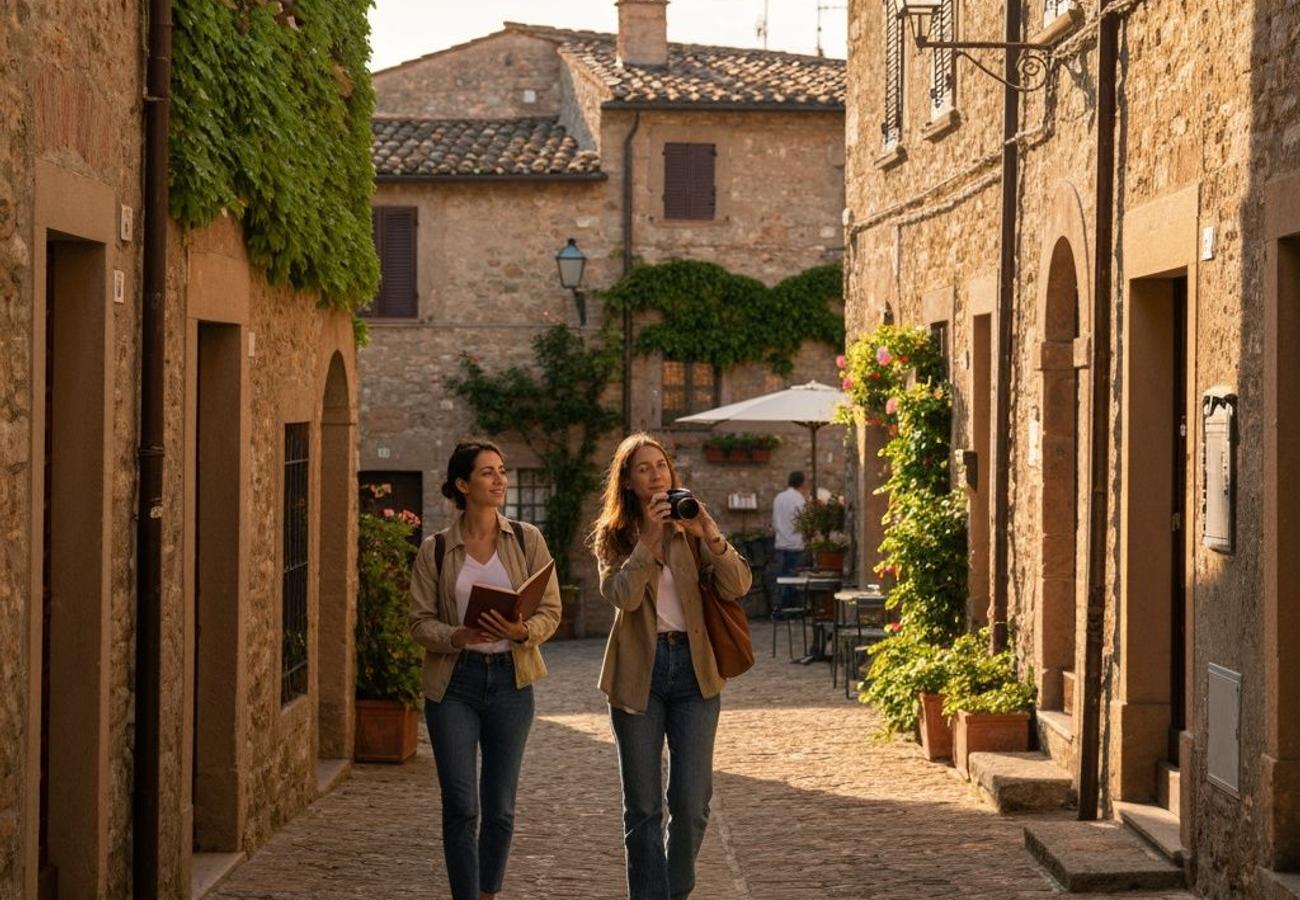
Image generated by AI
The Slow Tourism Uprising: Italy Shows the World How to Travel Differently
A seismic shift is underway in how people explore the world. The days of rushing between landmarks, snapping photos, and ticking off bucket lists are fading fast — replaced by something far more intentional. Slow tourism is no longer a fringe concept. It's become a mainstream movement reshaping travel culture globally, and Italy stands at the forefront of this transformation.
Rather than blitzing through seven cities in ten days, modern travelers are choosing to linger. They're spending a week in a single Tuscan village. They're learning pasta-making from grandmothers. They're riding bicycles through countryside they actually remember. And the ripple effects are reshaping economies, protecting environments, and healing burned-out travelers in equal measure.
What Slow Tourism Actually Is (And Why It Matters Now)
Slow tourism isn't about moving slowly. It's about being present.
At its core, this travel philosophy prioritizes meaningful engagement over speed. Instead of passing through, slow travelers settle in — taking time to understand local customs, build relationships with residents, and participate in everyday life. They value the journey itself as much as the destination. They embrace spontaneity. They seek authenticity.
The roots run deep. Slow tourism traces directly back to Italy's slow food movement of the 1980s — a rebellion against industrialized eating that championed locally sourced ingredients, regional traditions, and mindful consumption. That same philosophy naturally extended into travel.
Reddit: "Slow tourism saved my mental health. I stayed in one place for a month, learned the baker's name, ate at the same restaurant twice a week. I actually felt restored for the first time in years." — r/travel
The Five Pillars That Define Slow Travel
Modern slow tourism rests on five foundational principles:
Meaningful Engagement. Visitors explore local history and traditions deeply rather than collecting monument photos. They attend community festivals. They take workshops from local artisans.
Sustainability. Slow travelers naturally gravitate toward low-impact transportation — trains, bicycles, walking. They stay longer in fewer locations, dramatically reducing carbon footprints compared to traditional multi-city tourism.
Quality Over Quantity. One destination experienced fully beats ten destinations experienced shallowly. The depth matters more than the destinations-visited count.
Community Immersion. Genuine connections with residents deepen cultural understanding and create mutual respect — the opposite of extractive tourism.
Environmental Consciousness. Slow travelers support local businesses, eat regional food, and reduce strain on overtourism hotspots. They're actively choosing destinations' wellbeing.
Real-World Slow Tourism in Action
Picture this: A traveler arrives in Piedmont, Italy for three weeks instead of three days.
Week one: They volunteer at a local organic farm, learning crop rotation and sustainable agriculture. They eat meals with the farming family. They understand why the region's food culture matters.
Week two: They rent a bicycle and ride through rolling hills at 15 kilometers per hour instead of 150. They stop in villages most tourists never see. They drink coffee at the same café daily until the barista knows their order.
Week three: They take a ceramics workshop in a centuries-old studio, studying techniques that haven't changed in generations. They buy directly from the artisan. They can track exactly where their money went.
This isn't vacation. It's transformation.
Why Slow Tourism Is Exploding Right Now
Three converging forces have ignited this movement.
First: Mental health crisis. Burnout is epidemic. Fast-paced modern life leaves people depleted. Traditional vacations that follow fast-tourism patterns don't restore anything — they're just exhausting in a different location. Slow tourism offers genuine restoration: reduced stress, space for reflection, and meaningful human connection.
Second: Environmental awakening. Climate anxiety is reshaping consumer behavior. Travelers increasingly understand that frequent flights damage the planet in direct proportion to distance. Slow tourism naturally reduces aviation impact by encouraging longer stays. One two-week trip beats two one-week trips in terms of carbon emissions.
Third: Authenticity hunger. Instagram has oversaturated iconic destinations with identical photos. Travelers now crave real experiences — actual connections with actual people, not curated content. They want to taste food prepared by someone's grandmother, not Instagram-optimized fusion cuisine designed for foreign palates.
The Economics: Who Benefits From Slow Tourism
This isn't charity tourism. The math works beautifully for everyone involved.
A slow traveler staying three weeks in a small Italian town spends money across weeks, not days. They eat at family-run restaurants repeatedly. They sleep in locally-owned guesthouses. They buy crafts directly from artisans who pocket 100% of proceeds. They might hire a local guide, take a cooking class, rent bicycles daily.
Compare that to mass tourists: 48-hour whirlwind, two chain hotels, one restaurant photo, zero local economic impact.
For destinations, slow tourism spreads economic benefits beyond major cities into rural communities that desperately need it. For local businesses, slow travelers become loyal customers, not transient transactions. For cultures, slow engagement replaces voyeuristic consumption.
For travelers themselves, research shows that meaningful travel experiences correlate directly with life satisfaction, emotional wellbeing, and lasting memories. Quality wins over quantity by orders of magnitude.
The Obstacles: Why Slow Tourism Isn't Universal (Yet)
Slow tourism requires something not everyone possesses: time and flexibility.
A worker with two weeks annual leave can't afford to spend 14 days in one location and still see their home country. A single parent juggling childcare and work can't spontaneously extend a trip. A budget traveler might need to keep costs low, which sometimes conflicts with slow travel's emphasis on quality local spending.
Accessibility remains real. Slow tourism as it currently exists skews toward privileged travelers with flexible schedules and disposable income.
Yet governments and tourism boards are increasingly solving this. Smart destinations are investing in slow tourism infrastructure: improving rail networks, promoting overlooked regions, highlighting lesser-known villages, and actively discouraging overtourism at famous sites.
The European Union has embraced slow tourism as policy. Regional tourism boards market alternative routes specifically for slow travelers. This infrastructure shift makes slow travel gradually more accessible.
Italy's Leadership: The Blueprint for Global Change
Italy didn't just invent slow tourism — it's now exporting the model globally.
The Slow Food movement's expansion into Slow Tourism happened naturally. Italian regions began promoting farm stays, cooking schools, artisan workshops, and cycling routes through countryside. The marketing shifted: instead of "See the Colosseum," it became "Live as Italians live."
Cities like Bologna, Siena, and smaller Tuscan villages became slow tourism destinations by design. They limited cruise ship arrivals, improved cycling infrastructure, promoted local guides, and celebrated neighborhood life over monument tourism.
The result? Higher visitor satisfaction, stronger local economies, cultural preservation, and environmental protection simultaneously.
Other countries are copying the playbook. Portugal launched slow tourism initiatives. Spain promoted wine-region cycling routes. France invested in rural tourism infrastructure. But Italy remains the gold standard — the place where slow tourism philosophy and practice aligned first.
The Future: Slow Tourism as Mainstream Model
We're witnessing a fundamental recalibration of what "good tourism" means.
Mass tourism built the modern travel industry. Cheap flights, package tours, and site-seeing speed records defined success. But that model is collapsing under its own contradictions: overtourism destroying destinations, traveler burnout increasing, environmental costs mounting.
Slow tourism offers the alternative that actually works. It's economically viable. It's environmentally responsible. It's mentally healthy. It creates genuine cultural exchange instead of transactional extraction.
As awareness spreads, slow tourism transitions from niche philosophy to mainstream practice. Tourism boards will invest more. Airlines might actually promote rail alternatives. Hostels will offer community-immersion packages. Destinations will manage visitor flows actively.
The transformation isn't hypothetical — it's already underway, led by Italy, spreading through Europe, and reaching global destinations.
Slow down. Stay longer. Go deeper. That's how travel transforms from escape into restoration.
Related Travel Guides
Disclaimer
This article is for informational and educational purposes only. It does not constitute legal, financial, or professional advice. While we strive to provide accurate and up-to-date information, travel policies, regulations, and conditions change rapidly. Always verify information with official sources before making travel decisions. Nomad Lawyer makes no representations about the accuracy, reliability, completeness, or suitability of the information provided. Readers should consult qualified professionals for advice specific to their circumstances. The views expressed in this article are those of the author and do not necessarily reflect the views of Nomad Lawyer.
Raushan Kumar
Founder & Lead Developer
Full-stack developer with 11+ years of experience and a passionate traveller. Raushan built Nomad Lawyer from the ground up with a vision to create the best travel and law experience on the web.
Learn more about our team →