
South Korea's EMU-370 High-Speed Train Hits 370 km/h: Game-Changing Rail Technology Launches After 2031
South Korea completes revolutionary EMU-370 high-speed rail technology capable of 370 km/h commercial speeds. Production begins 2026, transforming tourism and business travel across Asia's fastest rail network.

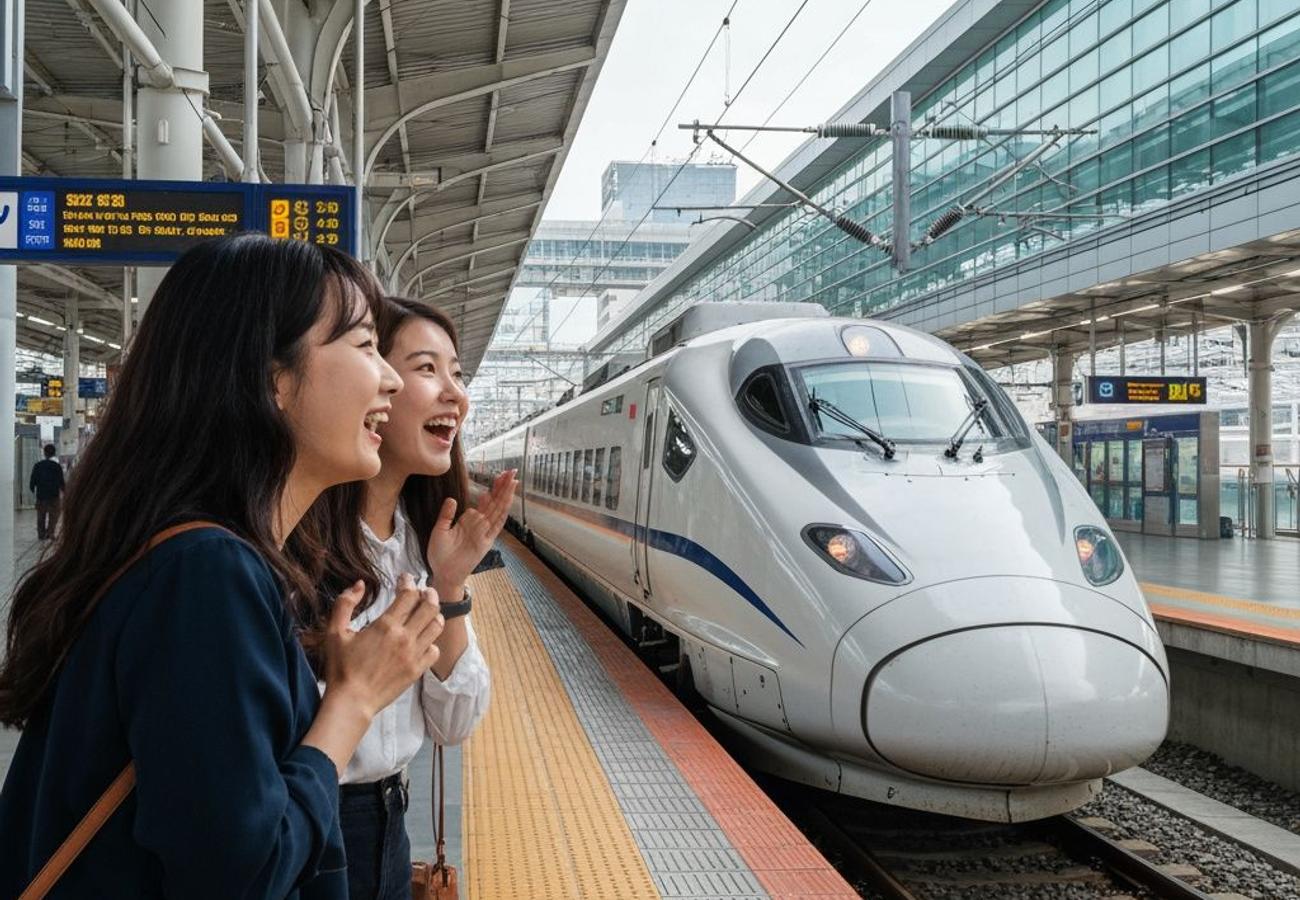
Image generated by AI
South Korea Just Unleashed the Next Generation of High-Speed Rail — And It's Redefining What Fast Means
South Korea has crossed a historic threshold. The nation's Ministry of Land, Infrastructure and Transport (MOLIT) just announced completion of core technology for the EMU-370 electric multiple unit high-speed trainset—capable of reaching 370 km/h (230 mph) in commercial operation. This isn't incremental progress. This is a fundamental leap forward in how people will move across one of Asia's most dynamic nations.
I'm tracking this story because the implications ripple far beyond engineering specs. This is about tourism, business connectivity, and how entire regions will function by the early 2030s.
The Engineering Breakthrough Behind 370 km/h Speed
The EMU-370 represents four years of intensive R&D led by the Korea Railroad Research Institute (KRRI), working alongside six public and private sector partners including heavyweight manufacturer Hyundai Rotem. The technical achievements here are genuinely staggering.
The innovation stack includes a 560 kW traction motor system—delivering 47% higher output than previous generations. That's not just more power; it's sustained power at speeds where traditional systems would strain. The aerodynamic refinements are equally crucial: reshaped nose sections, undercarriage covers, and minimized protrusions reduce drag by over 12%. Engineers also optimized suspension systems to eliminate the vibration and lateral motion that plague conventional high-speed trains, plus they've cut interior noise levels dramatically.
Reddit: "This is the kind of infrastructure investment that actually changes how a country works. South Korea is thinking 20 years ahead while most nations are still debating rail budgets." — r/travel
These aren't cosmetic upgrades. Operating above 350 km/h introduces turbulence, resistance, and vibration challenges that require fundamental design changes. The EMU-370 addresses each one methodically.
Timeline: Production Starts Now, Passengers Board After 2031
Here's where the story becomes concrete. MOLIT confirmed that production of the first EMU-370 vehicles will begin in 2026—meaning this year. Once built, these trains enter rigorous testing on dedicated high-speed lines by 2030. Commercial deployment rolls out after 2031.
This phased approach matters. It's not reckless speed chasing; it's validation. Infrastructure gets stress-tested. Safety systems get proven. Operations teams get trained. When passengers board these trains in the early 2030s, they're boarding equipment that's been thoroughly validated—not a prototype masquerading as service.
The government backed this with approximately 22.5 billion Korean won (around USD 15.5 million), with the majority from government coffers and significant private sector contribution. That financial weight signals strategic intent: South Korea is positioning itself as a global leader in high-speed rail export and technology.
How EMU-370 Stacks Up Against Global Competition
When it enters service, South Korea's EMU-370 will be the world's second-fastest regularly operated high-speed train, behind only China's emerging ultra-high-speed systems. That's a remarkable position.
France, Germany, and Japan—the traditional powerhouses of high-speed rail—operate commercial services around 320 km/h. South Korea is about to lap them at 370 km/h. The engineering design top speed reaches approximately 407 km/h, meaning there's room for future capability expansion without fundamental redesign.
This competitive edge matters for international rail technology exports. Nations upgrading their rail infrastructure will look at proven systems. South Korea just became the nation to watch.
The Actual Impact on Travel and Tourism
Speed numbers are compelling on paper. In reality, the transformation is about accessibility and experience.
Journeys between South Korea's major cities—Seoul, Busan, Daegu, Daejeon—will compress dramatically. What once required 3-4 hours by conventional rail could drop to 90-120 minutes. That makes intercity rail competitive with domestic flights, minus the airport hassle, security lines, and flight delays.
For international tourists, this is genuinely transformative. Multi-city itineraries become feasible within a single vacation. Visitors can experience Seoul's technology and urban energy, Busan's coastal charm, and Korea's historic cultural sites without losing days to transit. Tour operators will rewrite their packages around these connections.
Business travel shifts too. A executive traveling from Seoul to Busan for a day meeting becomes realistic when the journey takes 90 minutes rather than 4 hours. Regional economic integration accelerates.
Sustainability and the Broader Vision
South Korea is also signaling commitment to sustainable transport. Fast rail reduces car dependency and eliminates short-haul flights' environmental impact. When you can reach another major city faster by train than by driving, behavior changes.
The broader context of Asia's rail ambitions reveals South Korea isn't operating in isolation. China is advancing competing ultra-high-speed systems. Japan refined incremental improvements to proven tech. South Korea is doing something more ambitious: achieving genuine technological leadership while proving it works at scale.
What's Coming Next
Production starts this year. Testing accelerates through 2030. By 2031-2032, passengers will board these trains. The next five years will determine whether EMU-370 becomes a regional icon or a technological footnote.
But the bet is already placed. South Korea invested billions. The engineering is complete. The political commitment is public. This train is coming, and when it does, it will fundamentally alter how millions of people move across the peninsula.
For travelers who value speed, comfort, and genuine innovation, the era of 370 km/h rail journeys isn't hypothetical anymore. It's approaching fast.
The future of Asian travel just got significantly faster—and South Korea built it.
Related Travel Guides
Disclaimer
This article is for informational and educational purposes only. It does not constitute legal, financial, or professional advice. While we strive to provide accurate and up-to-date information, travel policies, regulations, and conditions change rapidly. Always verify information with official sources before making travel decisions. Nomad Lawyer makes no representations about the accuracy, reliability, completeness, or suitability of the information provided. Readers should consult qualified professionals for advice specific to their circumstances. The views expressed in this article are those of the author and do not necessarily reflect the views of Nomad Lawyer.
Raushan Kumar
Founder & Lead Developer
Full-stack developer with 11+ years of experience and a passionate traveller. Raushan built Nomad Lawyer from the ground up with a vision to create the best travel and law experience on the web.
Learn more about our team →