
South Australia Launches Travel for Nature Program to Turn Adelaide Business Event Spending into Conservation
South Australia's new voluntary Travel for Nature program allows Adelaide business events and tourism operators to integrate conservation contributions into bookings to fund critical habitat restoration.

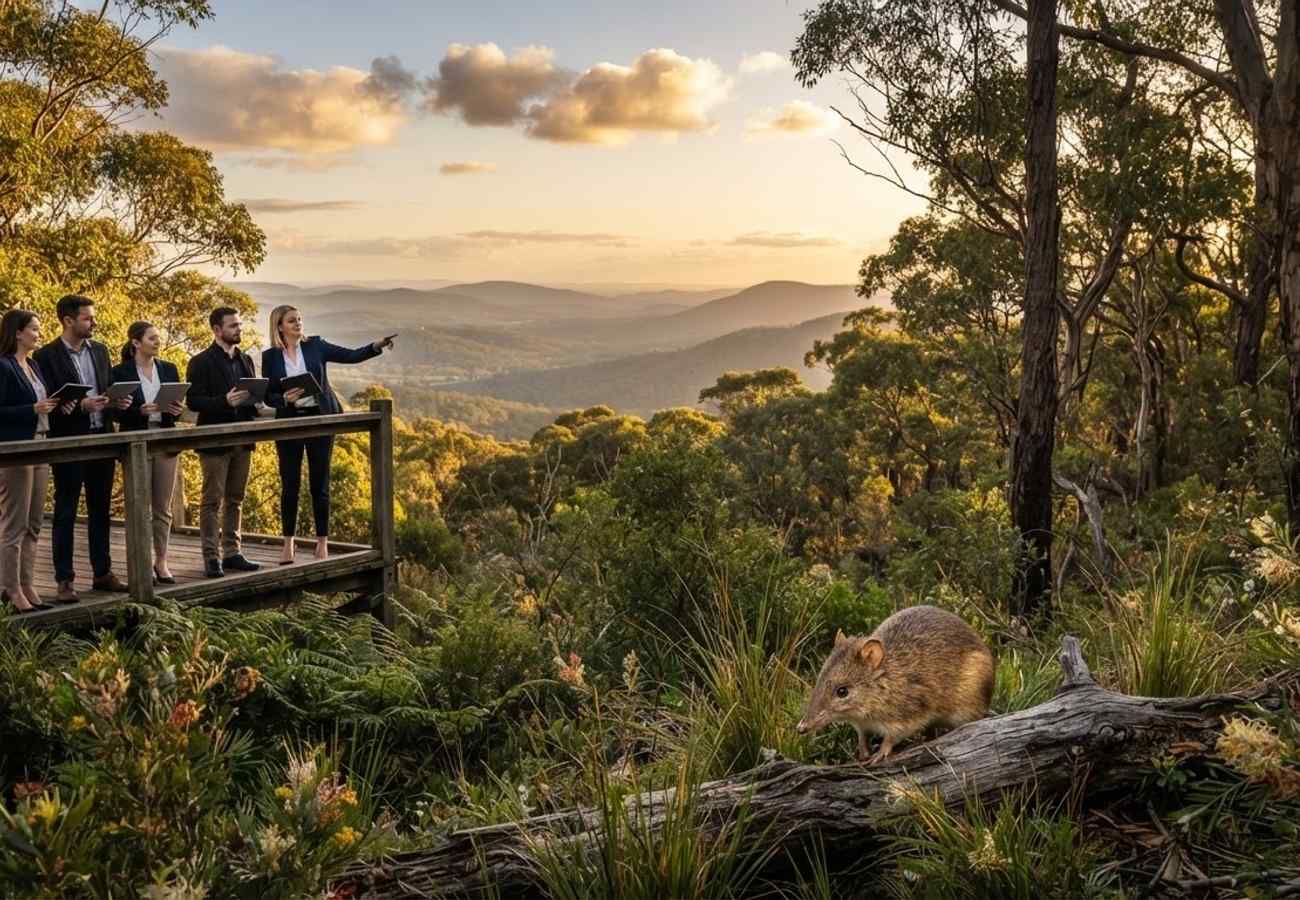
Image generated by AI
South Australia is transforming the economic engine of corporate tourism into a tool for environmental recovery. The newly launched Travel for Nature program allows business events to convert delegate spending into a measurable conservation legacy.
Launched in August 2026, the Travel for Nature initiative introduces a voluntary mechanism for tourism businesses and event organizers in Adelaide to incorporate small conservation contributions into their pricing. Unlike a mandatory government levy or visitor tax, this program relies on the participation of venues, accommodation providers, and conference planners.
The primary objective is to link the high-volume spending associated with corporate gatherings—registration fees, hotel stays, and excursions—directly to regenerative environmental work within South Australia.
Strategic Integration of Environmental Restoration
The program recognizes that business events act as massive economic catalysts. A single conference can bring thousands of professionals to Adelaide, creating a scale of spending that, even with a nominal contribution per person, can generate significant funding for biodiversity.
By shifting from generic, remote carbon offsets to local restoration, event organizers can offer delegates a tangible connection to the destination. Business Events Adelaide has formally backed the initiative, ensuring it reaches the international and national planners who determine venue selection and delegate itineraries.
Focus on the Adelaide Hills Pilot
The program's initial operational phase is centered on the Mark Oliphant Conservation Park in the Adelaide Hills. This pilot project provides a visible, localized destination for funds, focusing on two critical ecological goals:
- Restoring the habitat of the nationally endangered Southern Brown Bandicoot.
- Recovering declining populations of woodland birds within the Mount Lofty Ranges.
This specific focus prevents the "black hole" effect often associated with broad environmental funds, allowing corporate buyers and delegates to understand exactly which landscape is being preserved.
Transparency Through Digital Reporting
To combat "greenwashing" and meet the rising demand for verifiable sustainability data, the program integrates a Reforest digital dashboard. This platform will allow participating businesses to track and share real-time progress and impact metrics.
The dashboard is designed to provide evidence-based reporting on:
- The specific environmental project receiving the funds.
- The precise location of the restoration work.
- The type of ecological intervention being performed.
- Verified outcomes and monitoring data.
Economic Scale of Adelaide's Business Events Sector
The Travel for Nature program leverages one of South Australia's most lucrative tourism sectors. The economic footprint of business events in the region is substantial, as evidenced by recent performance data:
- Future Pipeline: 149 events were secured during the 2024–25 financial year.
- Economic Impact: These secured events are projected to contribute over A$684 million to the state economy.
- Growth Trend: This figure represents a 100% increase over the 2023–24 outcome.
- Daily Revenue: Business events generate an average of nearly A$2 million per day for the state.
- Government Support: The South Australian Government has allocated A$10.9 million over four years to support Business Events Adelaide.
The impact of these events is most visible in the hospitality sector. For example, in October 2024, the Aged and Community Care Providers Association National Conference—which attracted 2,442 delegates—helped drive record occupancy. On October 22, 10,416 rooms were occupied, followed by 10,279 rooms on October 23.
Program Implementation Framework
The South Australian Government has maintained flexibility regarding the financial structure of the contributions, allowing businesses to determine their own commercial approach.
| Programme Element | Official Position (August 2026) | Guidance for Event Planners |
|---|---|---|
| Industry Participation | Voluntary for tourism businesses and events | Confirm participation before promoting |
| Contribution Size | Described as a "small contribution" | Refer to operator's published pricing |
| Initial Project | Mark Oliphant Conservation Park | Use official project descriptions |
| Wildlife Focus | Southern Brown Bandicoot & woodland birds | Avoid promising specific population results |
| Programme Reach | Designed to expand across South Australia | Do not present future projects as confirmed |
| Impact Reporting | Digital dashboard via Reforest | Verify which measurements are public |
| Full Commencement | Platform expected later in 2026 | Register interest and monitor updates |
Turning corporate footprints into ecological fingerprints.
Related Travel Guides
Disclaimer
This article is for informational and educational purposes only. It does not constitute legal, financial, or professional advice. While we strive to provide accurate and up-to-date information, travel policies, regulations, and conditions change rapidly. Always verify information with official sources before making travel decisions. Nomad Lawyer makes no representations about the accuracy, reliability, completeness, or suitability of the information provided. Readers should consult qualified professionals for advice specific to their circumstances. The views expressed in this article are those of the author and do not necessarily reflect the views of Nomad Lawyer.
Preeti Gunjan
Contributor & Community Manager
A passionate traveller and community builder. Preeti helps grow the Nomad Lawyer community, fostering engagement and bringing the reader experience to life.
Learn more about our team →