
South American Travel Hubs Lead USD 117 Billion Surge Driven by Cartagena Cruise Expansion, MICE Growth, and Direct Airlift
South America's travel economy reaches USD 117.05 billion as Cartagena, São Paulo, Rio, Buenos Aires, Bogotá, Lima, and Santiago drive a 4.1% GDP expansion.

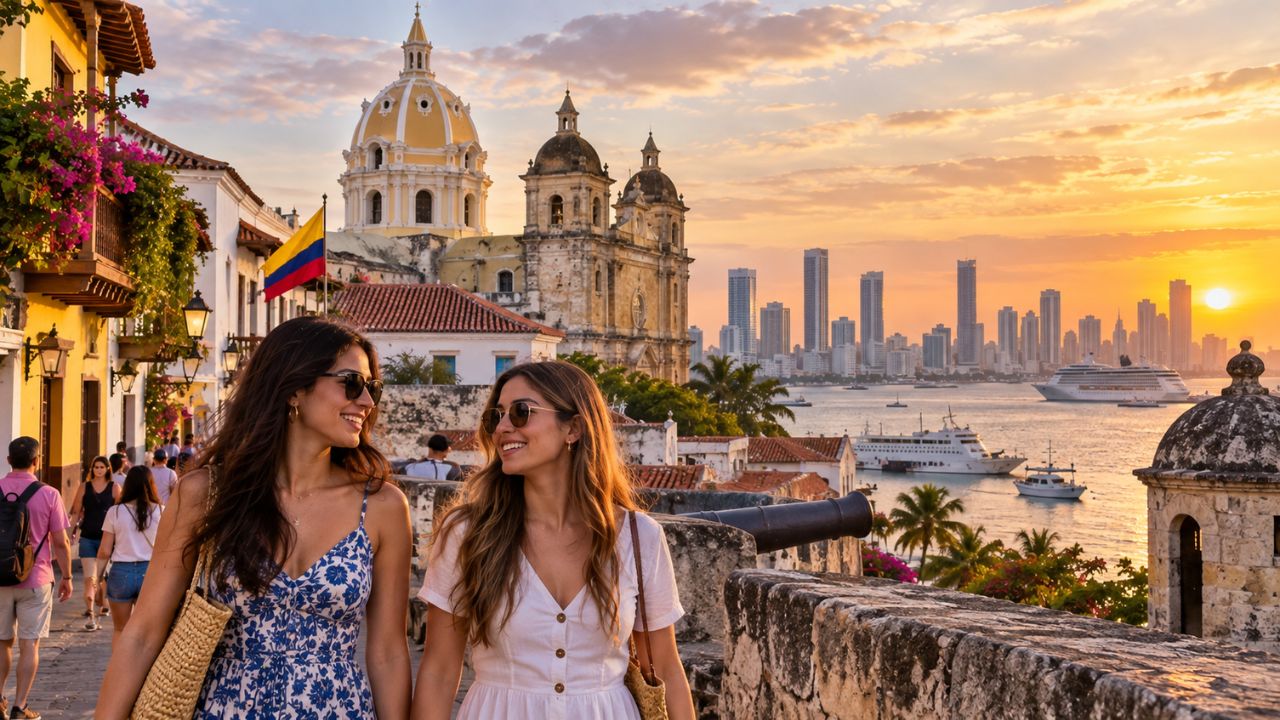
Image generated by AI
South America’s travel economy has reached a valuation of USD 117.05 billion, fueled by major infrastructure investments, direct flight expansions, and targeted cultural initiatives across seven anchor metropolitan transit hubs.
BUENOS AIRES, Argentina — Comprehensive data compiled by the World Travel & Tourism Council (WTTC) indicates that regional travel GDP across Central and South America is expanding at 4.1% annually, outstripping the global average growth rate of 3.2%. Propelled by a 7.8% surge in international visitor spending—more than double the global international growth benchmark of 3.7%—seven core gateways are reshaping South American passenger flows: Cartagena, São Paulo, Rio de Janeiro, Buenos Aires, Bogotá, Lima, and Santiago.
The macroeconomic footprint of the continent’s travel ecosystem currently supports 18.5 million jobs, representing 8.3% of total regional employment—or approximately one out of every twelve workers across the continent. Driven by a compound annual growth rate (CAGR) of 6.30%, the South American travel sector is projected to reach USD 158.86 billion in total output over the coming years.
| South American Gateway | Country | Primary Operational Focus | Annual Visitor Volume | Key Growth & Infrastructure Metric |
|---|---|---|---|---|
| Cartagena | Colombia | Maritime Cruise & Heritage Tourism | 900,000 international visitors (2025) | 31% surge in cruise & coastal visitor arrivals |
| São Paulo | Brazil | MICE & Financial Corporate Transit | Over 2.5 million international arrivals | 75%+ hotel occupancy; major subway & airport upgrades |
| Rio de Janeiro | Brazil | Coastal Leisure & Iconic Landmarks | 1.97 million international visitors | 47.5% year-over-year international arrival growth |
| Buenos Aires | Argentina | Cultural Arts & Tango Tourism | Over 1.8 million international visitors | Favorable exchange rates & independent cinema festivals |
| Bogotá | Colombia | Andean MICE & Historic District Hub | Estimated 1.6 million international visitors | 38% surge in international corporate MICE delegates |
| Lima | Peru | Global Gastronomy & Transit Gateway | 1.4 million international visitors | 14.90% growth in culinary & wellness travel spend |
| Santiago | Chile | Eco-Tourism & Andean Adventure Gateway | Approximately 1.1 million visitors | Entry hub for USD 11B Patagonia & Atacama eco-circuits |
Seven Strategic Metropolitan Hubs Anchor Continental Visitor Growth
Each of the seven core metropolitan hubs fulfills a distinct role in managing international traffic and optimizing regional connectivity:
- Cartagena, Colombia: Combining its UNESCO World Heritage-listed colonial architecture with deep-water port infrastructure, Cartagena recorded 900,000 international visitors in 2025. Multi-million-dollar expansions at the municipal cruise terminal have enabled direct berth access for transatlantic mega-liners, triggering a 31% year-over-year surge in sea and air arrivals.
- São Paulo, Brazil: Operating as the financial engine of South America, São Paulo welcomed over 2.5 million international arrivals. The metropolis serves as the continent's primary Meetings, Incentives, Conferences, and Exhibitions (MICE) capital, leveraging high-speed urban transit extensions and expanded capacity at São Paulo/Guarulhos International Airport (GRU) to maintain corporate hotel occupancy rates above 75%.
- Rio de Janeiro, Brazil: Brazil's premier leisure destination achieved a 47.5% surge in international arrivals, totaling 1.97 million visitors. Enhanced municipal security protocols and public transit overhauls surrounding Copacabana, Ipanema, Corcovado, and Sugarloaf Mountain have restored long-haul traveler confidence.
- Buenos Aires, Argentina: Projecting over 1.8 million international arrivals, the Argentine capital relies on specialized "Tango Tourism" campaigns, traditional milongas, and events like the Buenos Aires International Festival of Independent Cinema to capture long-stay European and North American travelers.
- Bogotá, Colombia: Situated high in the Andes, Bogotá welcomed 1.6 million international visitors. The capital experienced a 38% surge in international MICE attendees, utilizing modern convention facilities and expanded operations at El Dorado International Airport (BOG) to support heritage preservation in La Candelaria.
- Lima, Peru: Drawing 1.4 million international visitors, Peru's capital has transitioned from a pure transit stop for Cusco and Machu Picchu into an independent destination. Coastal districts such as Miraflores and Barranco capture high-yield culinary travelers spending 30% more per day than standard vacationers.
- Santiago, Chile: Serving as the primary gateway for 1.1 million adventure travelers, Santiago anchors Chile's eco-tourism sector. The capital acts as the entry node for transit corridors leading to Patagonia, the Atacama Desert, and Central Valley wine regions.
| Economic & Transit Indicator | Data Benchmark | Global Comparison / Sector Benchmark | Operational Impact |
|---|---|---|---|
| South America Travel GDP Growth | 4.1% | Global average: 3.2% | Outpacing global travel economy expansion |
| Inbound Visitor Spending Growth | 7.8% | Global average: 3.7% | Foreign capital influx directly supports local tax bases |
| Total Sector Market Output | USD 117.05 Billion | Target: USD 158.86 Billion (CAGR 6.30%) | Driven by long-haul connectivity & infrastructure |
| Total Employment Supported | 18.5 Million Jobs | 8.3% of total regional workforce | 1 in 12 regional workers employed in travel supply chains |
| Air Flight Capacity Expansion | 12% to 13.3% year-over-year | Brazil & neighboring transport nodes | Fleet modernization & direct transatlantic routes |
| Colombia Aviation Growth Rate | 9.03% annual expansion | Led by MinCIT & Aerocivil projects | Expanded direct flights to Cartagena & Bogotá |
| Western European Visitor Surge | 19.9% increase | Germany, Spain, and United Kingdom | Long-haul visitors stay longer and spend more daily |
| Brazil 7-Month Tourist Arrival Record | 5.87 Million foreign tourists | Tracked by Embratur & ANAC | Historical performance record for inbound arrivals |
| Online Booking Market Penetration | 52% digital adoption | Mobile apps & travel platforms | Enables seamless multi-country itinerary management |
| Domestic Travel Foundation | 59.7% of total market | Regional domestic passenger base | Maintains baseline occupancy during seasonal shifts |
Navigating South American Air and Maritime Transit Networks: Connection Guidance and Digital Entry Protocols
International travelers navigating South America’s expanding transit corridors can optimize journey efficiency by adhering to established operational practices:
Long-Haul Inter-Hub Flight Transfers
- São Paulo Guarulhos (GRU) to Regional Gateways: Allow a minimum connecting layover window of 3 hours when transferring from international flights to domestic or regional South American sectors. International-to-domestic transfers require luggage collection, customs clearance, and terminal transfers between Terminal 2 and Terminal 3.
- Bogotá El Dorado (BOG) Altitude & Transit Timing: As one of Latin America's busiest transit hubs, El Dorado handles high passenger volumes. Travelers connecting between transatlantic flights and domestic legs to Cartagena or Medellín should ensure minimum 2.5-hour layovers to navigate migration queues.
Digital Entry Declarations & Immigration Logistics
- Colombia Check-MIG Requirement: All passengers entering or departing Colombia via air must complete the online Check-MIG digital migration form within 72 hours prior to flight departure. Failure to present the confirmation code at airline check-in counters will prevent boarding.
- Brazil eVisa Protocols: Passport holders from select international jurisdictions (including Australia, Canada, and the United States) must secure a valid Brazil Electronic Visa (eVisa) prior to departure. Ensure digital copies are stored on mobile devices and printed for physical inspection at passport control in São Paulo or Rio de Janeiro.
- Peru Digital Customs & Andean Migration: Travelers arriving at Lima’s Jorge Chávez International Airport (LIM) must register through the TAM Virtual (Tarjeta Andina de Migración) system, which automatically tracks entry permits digitally without paper passport stamps.
Maritime and Cruise Disembarkation in Cartagena
- Port Terminal Transit: Passengers disembarking at the Port of Cartagena Cruise Terminal can utilize authorized pre-arranged transport or official municipal taxis directly at the terminal exit. The historic walled city center is located approximately 15 minutes by road from the port berths.
| Destination / Hub | Critical Digital Protocol | Mandatory Lead Time | Recommended Connection Layover |
|---|---|---|---|
| Colombia (BOG / CTG) | Check-MIG Digital Migration Form | 72 hours to 1 hour prior to flight | 2.5 hours (BOG transfers) |
| Brazil (GRU / GIG) | Brazil eVisa System (Select Nationalities) | Submit at least 5 working days prior | 3.0 hours (GRU transfers) |
| Peru (LIM) | Tarjeta Andina de Migración (TAM Virtual) | Verified automatically at arrival gate | 2.5 hours (LIM transfers) |
| Chile (SCL) | SAG Agricultural & Customs Digital Form | Complete within 24 hours prior to landing | 2.5 hours (SCL transfers) |
Airlift Expansion, Long-Haul European Demand, and Culinary Travel Expenditure
Strategic fleet modernization by international and low-cost regional airlines has dismantled traditional geographical barriers across South America. Inbound air flight capacity across Brazil and neighboring transit corridors increased between 12% and 13.3% year-over-year. Colombia leads regional aviation growth with a 9.03% annual expansion, supported by direct transatlantic flights connecting European and North American hubs to Cartagena and Bogotá.
Simultaneously, demographic shifts highlight a 19.9% surge in Western European travelers originating from Germany, Spain, and the United Kingdom. This influx contributed to Brazil welcoming 5.87 million foreign tourists during a single seven-month window. Inbound international travel is projected to remain the fastest-growing sector through 2031, expanding at an annual rate of 4.40%.
In the gastronomic sector, specialized food, wine, and wellness travel segments are growing at 14.90% annually across Peru, Argentina, and Chile. In Lima and Bogotá, culinary travelers spend over 30% more per day than standard vacationers, allocating funds directly to tasting menus, guided market tours, and regional producers.
Regional travel resilience is further reinforced by neighboring markets: Ecuador recorded an 11.6% travel GDP expansion, while Bolivia registered a 25.8% spending surge driven by nature and eco-tourism corridors.
Frequently Asked Questions
Which South American cities are leading current international visitor growth?
The primary metropolitan hubs driving South American travel growth are Cartagena, São Paulo, Rio de Janeiro, Buenos Aires, Bogotá, Lima, and Santiago, supported by a 4.1% regional travel GDP expansion.
What caused the 31% visitor surge in Cartagena, Colombia?
Cartagena's growth is driven by multi-million-dollar expansions at its municipal cruise ship terminal, allowing direct docking for international mega-liners alongside increased long-haul flight connectivity.
How does the MICE sector support hotel occupancy in São Paulo and Bogotá?
Corporate conferences and trade events (MICE) generate steady midweek demand, keeping hotel occupancy rates above 75% in São Paulo and supporting a 38% surge in corporate attendees in Bogotá.
What are the mandatory digital entry requirements for Colombia and Brazil?
Travelers entering Colombia must complete the online Check-MIG form within 72 hours of departure. Travelers visiting Brazil must secure an approved eVisa depending on their citizenship.
What is the total macroeconomic valuation of the South American travel sector?
According to WTTC data, the South American travel industry is valued at USD 117.05 billion, expanding at a CAGR of 6.30% toward USD 158.86 billion while supporting 18.5 million jobs.
Related Travel Guides
Disclaimer
This article is for informational and educational purposes only. It does not constitute legal, financial, or professional advice. While we strive to provide accurate and up-to-date information, travel policies, regulations, and conditions change rapidly. Always verify information with official sources before making travel decisions. Nomad Lawyer makes no representations about the accuracy, reliability, completeness, or suitability of the information provided. Readers should consult qualified professionals for advice specific to their circumstances. The views expressed in this article are those of the author and do not necessarily reflect the views of Nomad Lawyer.
Kunal K Choudhary
Co-Founder & Contributor
A passionate traveller and tech enthusiast. Kunal contributes to the vision and growth of Nomad Lawyer, bringing fresh perspectives and driving the community forward.
Learn more about our team →