
Latin America Corporate Tourism Surges as MICE and Bleisure Travel Expand in 2026

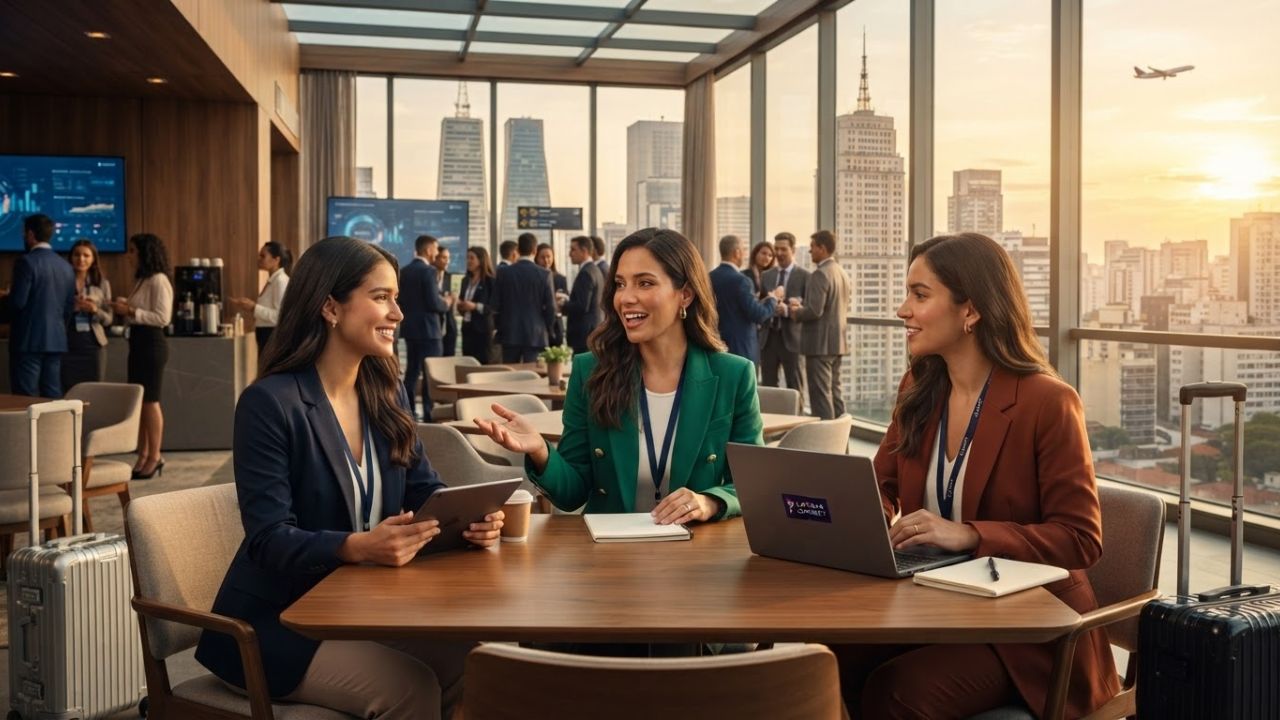
Corporate tourism across Latin America has entered an aggressive era of modernization and yield growth, driven by a projected 4.1% expansion in regional Travel & Tourism GDP and a 7.8% surge in international visitor spending according to the World Travel & Tourism Council (WTTC). Major metropolitan powerhouses—including Mexico City, São Paulo, Bogotá, and Panama City—are redefining business mobility by pairing state-of-the-art conference infrastructure with high-yield experiential cultural itineraries.
Business travel across Central and South America is undergoing a permanent structural evolution. Multinational enterprises and regional conglomerates are stepping away from pure virtual engagements, recognizing that complex deal-making, cross-border investment, and institutional partnerships demand high-touch, in-person collaboration. Concurrently, destinations across the Americas are moving beyond conventional volume metrics to capture high-spending corporate delegates through specialized meetings, incentives, conferences, and exhibitions (MICE).
Supported by modern aviation gateways, upgraded convention centers, and digital transit solutions, corporate tourism has emerged as one of Latin America's most dynamic economic engines.
The Regional Economic Engine: WTTC Projections and MICE Momentum
The macroeconomic indicators driving Latin America's business travel revival underscore an industry outperforming global baseline averages. According to the World Travel & Tourism Council (WTTC), Central and South America’s Travel & Tourism GDP is forecast to expand by 4.1% in 2026, outpacing many mature northern economies. Simultaneously, international visitor spending is projected to climb 7.8%, highlighting growing commercial confidence across regional travel markets.
Corporate travelers represent the highest-yield segment in global tourism. Business and conference delegates consistently outspend leisure vacationers across premium hospitality, private executive transport, fine dining, audio-visual event production, and venue hire.
This high economic yield has spurred municipal governments and regional investment agencies to position their premier cities as international business event capitals:
| Country | Primary Corporate & MICE Hubs | Core Business Travel Specializations |
|---|---|---|
| Mexico | Mexico City, Monterrey, Cancún | Major international conferences, automotive manufacturing, banking, luxury corporate incentives |
| Brazil | São Paulo, Rio de Janeiro, Brasília | Multinational headquarters, industrial trade exhibitions, fintech conventions, corporate summits |
| Argentina | Buenos Aires | Financial services, cultural congresses, legal and academic symposiums |
| Colombia | Bogotá, Medellín, Cartagena | Technology innovation summits, pharmaceutical forums, heritage incentive retreats |
| Panama | Panama City | Regional logistics headquarters, maritime finance, multinational banking, hub-and-spoke conventions |
| Chile | Santiago | Mining technology summits, renewable energy forums, institutional investment assemblies |
| Peru | Lima, Cusco | Gastronomic business forums, mining conventions, heritage-linked executive retreats |
| Costa Rica | San José | Eco-technology conferences, medical device summits, sustainable corporate retreats |
Tier-One Business Capitals: Redefining Infrastructure and Connectivity
Latin America's tier-one commercial capitals are executing targeted modernization programs to secure long-term conventions and corporate events:
- Mexico City: Capitalizing on its close geographic and economic ties with North America, Mexico City commands massive convention capacity across venues like Centro Citibanamex and Expo Santa Fe. The capital pairs multinational corporate banking and diplomatic institutions with UNESCO-listed architectural heritage and world-class gastronomy. In parallel, secondary hubs like Monterrey command heavy industrial and manufacturing congresses, while Cancún and the Riviera Maya capture luxury executive incentive programs.
- São Paulo: As the financial and industrial heartbeat of South America, São Paulo anchors Brazil's commercial economy. Home to the B3 stock exchange, regional headquarters for global banks, and major venues like São Paulo Expo and Transamerica Expo Center, the metropolis hosts massive global trade fairs. Neighboring Rio de Janeiro is complementing this corporate base by dominating the "bleisure" sector, where multinational delegates extend professional itineraries to experience coastal culture.
- Bogotá and Medellín: Colombia has positioned itself as an innovation hub. Corferias and the Ágora Bogotá Convention Center provide modern meeting environments for international summits, while Medellín has evolved into an international tech, design, and software cluster. On the Caribbean coast, Cartagena offers historic colonial fortifications and five-star boutique hotels for executive retreats.
- Panama City: Leveraging the strategic position of the Panama Canal and Tocumen International Airport (Hub of the Americas), Panama City provides frictionless connectivity between North America, South America, and Europe. Venues such as the Panama Convention Center in Amador host global logistics, shipping, and banking symposiums.
Aviation Gateways and the Rise of Multi-City Corporate Circuits
Air connectivity serves as the vital backbone of business mobility across Latin America. Major regional airline hubs—principally Panama City (PTY), Mexico City (MEX and NLU), Bogotá (BOG), São Paulo (GRU), and Lima (LIM)—have expanded international route networks, allowing business executives to execute multi-country itineraries with streamlined layovers.
Expanded long-haul flight links connecting North America, Europe, and Asia directly into South America have substantially reduced transit times. For corporate event planners, modern terminal facilities, streamlined customs processing, and predictable airline flight frequencies directly determine host city selection.
Beyond the Boardroom: Bleisure Travel and Sustainable Practice
The modern business traveler demands far more than sterile meeting rooms and standard hotel chains. Across Latin America, corporate mobility has coalesced around several emerging behavioral shifts:
- The Bleisure Extension: Executives are routinely adding personal weekend stays to business trips. This trend generates substantial auxiliary revenue for local independent boutique hotels, artisan workshops, regional wineries, and neighborhood restaurants.
- Corporate Environmental Responsibility: Multinational organizations increasingly enforce carbon-reduction mandates for corporate gatherings. In response, convention venues and hotel chains are implementing solar power arrays, zero-waste banqueting standards, and paperless digital registration systems. Costa Rica has become the benchmark for this movement, attracting multinational firms seeking carbon-neutral retreats in proximity to biodiversity corridors.
- Digital Infrastructure Integration: Corporate venues across the region have deployed smart check-in protocols, high-speed fiber-optic connectivity for hybrid conferences, and mobile event networking platforms, ensuring seamless productivity for traveling executives.
Emerging Markets: Niche Retreats and Regional Innovation
While primary capitals command the largest trade exhibitions, emerging secondary destinations are gaining traction for executive boards, leadership off-sites, and team-building retreats. WTTC research projects robust long-term expansion across several emerging Latin American markets:
- Ecuador: Quito's Metropolitan Convention Center provides high-altitude meeting facilities, complemented by nature-based incentive excursions to cloud forests and volcanic national parks.
- Bolivia: Corporate planners are staging intimate executive planning sessions against the dramatic salt flats of Uyuni and historic colonial venues in Sucre.
- Guatemala: Antigua Guatemala combines 16th-century Spanish colonial architecture with modern boutique hospitality for regional Central American assemblies.
Cultural and Community Value: Distributing Economic Impact
The decentralization of business travel provides meaningful economic support to local communities beyond hotel corporate chains. When business conferences integrate local catering vendors, cultural performances, and artisan cooperatives, corporate budgets flow directly into the regional economy.
Gastronomy plays a primary role. In culinary centers like Lima, Mexico City, and Bogotá, international business delegations actively patronize indigenous ingredient tasting menus, farm-to-table cooperative distributors, and traditional market tours, turning corporate dining allowances into direct economic stimulus for regional farming communities.
Visitor Insider Tips: Navigating Latin America's Business Hubs
Business travelers and conference delegates navigating Latin America can maximize efficiency and cultural connection through these practical strategies:
- Master Urban Transit Logistics: Traffic congestion in megacities like São Paulo and Mexico City can disrupt tight meeting schedules. Utilize efficient underground metro networks where applicable, or schedule meetings within a single commercial district (such as Polanco/Reforma in Mexico City, Itaim Bibi/Faria Lima in São Paulo, or El Poblado in Medellín) to minimize transit delays. In São Paulo, corporate executives frequently rely on licensed executive ride services or private airport transfers to navigate the Marginal Pinheiros corridor.
- Navigate Peak Business Travel Windows: The primary corporate travel seasons in South America run from March through June and from August through November, avoiding the Southern Hemisphere summer holidays (December to February) and July mid-winter breaks when domestic leisure travel surges and executive offices operate on reduced schedules.
- Cultural Business Etiquette: Business interactions in Latin America prioritize personal relationships and genuine rapport. Rushing directly into negotiations during an initial meeting is considered counterproductive. Allow time for polite conversation over coffee (cafecito in Colombia, cafezinho in Brazil) before addressing formal agendas. Business dress codes in capital cities remain formal and sophisticated.
- Local Dining Specialties for Corporate Entertaining: Host international partners at regional culinary institutions. In São Paulo, experience traditional churrascaria rodizio dining or high-end Amazonian gastronomy; in Lima, book corporate lunches at premier cebicherías featuring line-caught Pacific sea bass and causa limeña; and in Mexico City, arrange dinners featuring contemporary Oaxacan mole in the Roma Norte or Condesa neighborhoods.
- Currency and Digital Payments: Contactless card transactions and mobile payments are ubiquitous across major business hotels, high-end restaurants, and corporate venues. However, carrying small denominations of local currency is essential for tipping private drivers, hotel concierges, and purchasing from local street artisans during walking tours.
Corporate Tourism Outlook: An Expanding Global Competitor
Latin America's business travel sector is positioned for sustained long-term growth. With the World Travel & Tourism Council forecasting a 4.1% rise in regional Travel & Tourism GDP and a 7.8% jump in international visitor expenditures, the region has transitioned from an emerging frontier into an indispensable global commercial arena.
By bridging world-class conference infrastructure with unmatched biodiversity, world-renowned culinary heritage, and rich cultural traditions, Latin American destinations are demonstrating that the future of business travel belongs to locations that offer both commercial productivity and unforgettable regional experiences.
Related Travel Guides
Disclaimer
This article is for informational and educational purposes only. It does not constitute legal, financial, or professional advice. While we strive to provide accurate and up-to-date information, travel policies, regulations, and conditions change rapidly. Always verify information with official sources before making travel decisions. Nomad Lawyer makes no representations about the accuracy, reliability, completeness, or suitability of the information provided. Readers should consult qualified professionals for advice specific to their circumstances. The views expressed in this article are those of the author and do not necessarily reflect the views of Nomad Lawyer.
Raushan Kumar
Founder & Lead Developer
Full-stack developer with 11+ years of experience and a passionate traveller. Raushan built Nomad Lawyer from the ground up with a vision to create the best travel and law experience on the web.
Learn more about our team →