
South Africa’s Green ID Book Era Nears End By 2028 As Secure Smart ID System Takes Centre Stage
South Africa’s Green ID Book Era Nears End By 2028 As Secure Smart ID System Takes Centre Stage

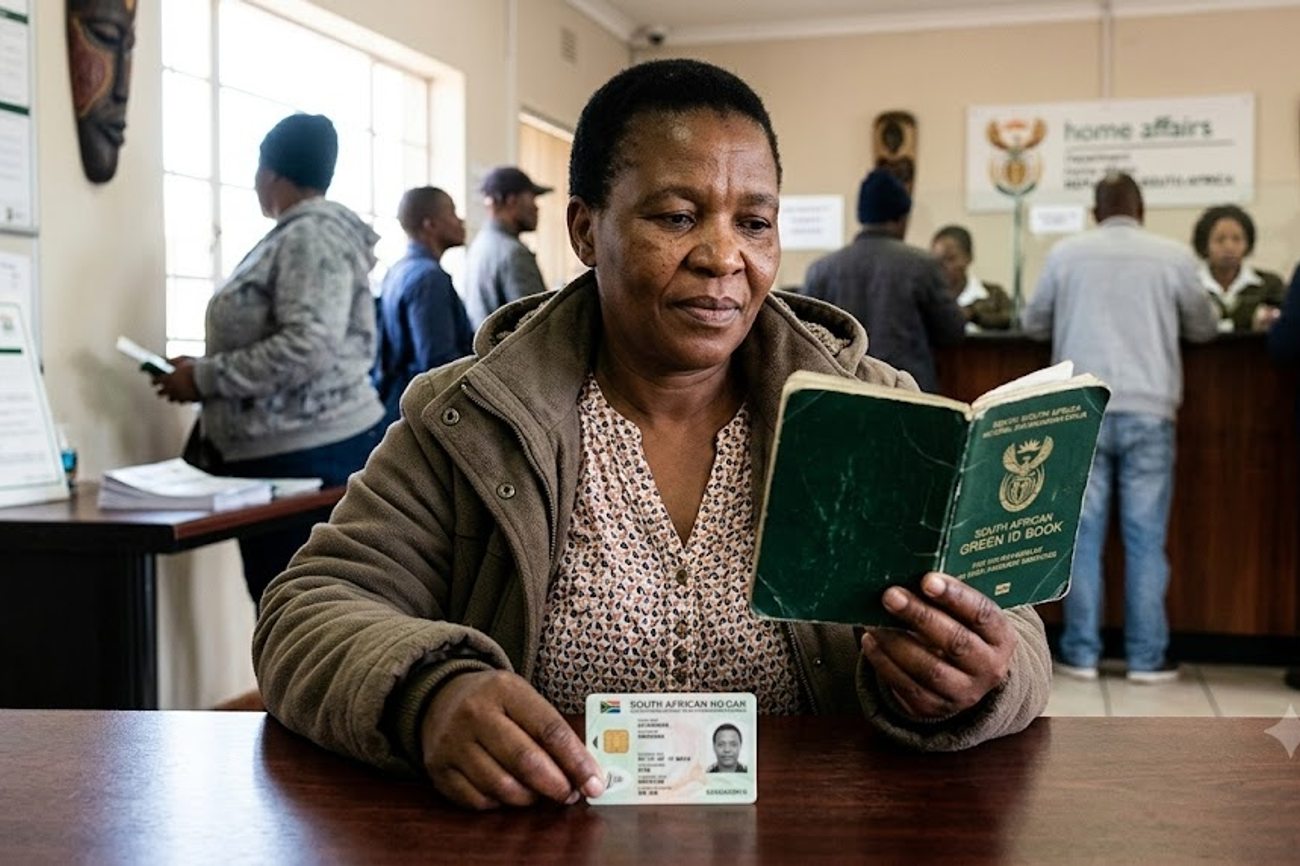
Image generated by AI
[Pretoria, October 2023] — South Africa is preparing to permanently retire the traditional Green ID book by 2028, marking the end of a decades-long era of paper-based identification in favor of biometric Smart ID cards.
The transition is being spearheaded by the Department of Home Affairs, which aims to migrate approximately 16 million citizens still relying on the legacy green barcoded books. While the government has not yet published a specific calendar date for the cessation of issuance, the current roadmap indicates that the Green ID book will begin losing its legal status within the next two years, leading toward a total phase-out by 2028.
The Push for Biometric Security
The primary catalyst for this administrative overhaul is a systemic failure in the security of the legacy paper documents. The Green ID books have become increasingly vulnerable to forgery and sophisticated identity theft, creating significant risks for both the state and individual citizens.
By shifting to Smart ID cards, South Africa is implementing a modern digital identity framework. These cards utilize advanced biometric technology and encrypted security features that are substantially more difficult to duplicate than the barcoded paper books. This move is not merely a change in medium but a strategic pivot toward a digital-first government infrastructure designed to reduce fraud and streamline the verification process for banking, employment, and public services.
Affected Travelers, Key Stakeholders and Regional Positioning
The transition impacts a massive segment of the South African population, specifically those who have not yet upgraded their credentials.
| Group | Impact Status | Required Action |
|---|---|---|
| Current Green ID Holders | Document remains valid for now | Apply for Smart ID before 2028 |
| Estimated 16 Million Citizens | At risk of document obsolescence | Transition to biometric cards |
| Banking & Financial Sector | Transitioning verification systems | Update KYC (Know Your Customer) protocols |
| Govt. Service Applicants | Moving toward digital access | Ensure ID is compatible with new frameworks |
Practical Traveler Advisory and Strategic Insights
For nomads, expats, and South African citizens traveling internationally, this transition creates a critical window for documentation updates. While the Green ID book is currently recognized, the gradual loss of its legal status over the next 24 months could create friction at border crossings or during official transactions within South Africa.
Passenger and Traveler Impact:
- Border Processing: Travelers should prioritize the Smart ID to avoid potential delays at ports of entry as systems are updated to recognize only biometric credentials.
- Banking and Finance: If you maintain South African bank accounts, you will likely be required to present a Smart ID for identity verification to avoid account freezes or restrictions.
- Application Bottlenecks: Waiting until the 2028 deadline will likely result in extreme congestion at government offices. Travelers are advised to utilize the expanded application network now.
- Alternative Application Points: To avoid the notorious queues at Home Affairs branches, citizens can now utilize selected banking institutions and mobile facilities to process their applications.
The Roadmap to 2028
The South African government is aware that migrating 16 million people is a logistical challenge of massive proportions. To prevent a total collapse of administrative services as the deadline approaches, the state has expanded its partnership network.
By 2026, the digital partnership network had already expanded into hundreds of bank branches. This decentralization allows citizens to apply for their biometric cards at locations closer to their homes and workplaces, reducing the reliance on centralized government hubs.
The South African government has announced plans to phase out the traditional green ID book by 2028, replacing it with a more secure and efficient smart ID system. This move is expected to enhance national security and simplify identification processes for citizens, including those traveling abroad, who can visit the Department of Home Affairs website for more information on the new smart ID system. The introduction of the smart ID system is a significant step towards modernizing South Africa's identification infrastructure.
The transition is designed to be gradual. Current holders of the green book will not see their documents cancelled overnight. Instead, the government is employing a "soft phase-out" strategy, encouraging voluntary migration before the document officially loses its legal standing. The final stage of the process will be triggered once the new digital identity system is deemed fully functional and capable of supporting the entire population.
FAQ: South Africa ID Transition 2028
Is my Green ID book still valid for travel and banking? Yes, the Green ID book remains legally recognized today. However, it is expected to begin losing its legal status over the next two years, so it is highly recommended to upgrade to a Smart ID immediately.
Where can I apply for a Smart ID if Home Affairs offices are too busy? The government has partnered with various banking institutions. You can now apply for your Smart ID at selected bank branches and through mobile facilities to avoid long queues at government offices.
What happens if I wait until 2028 to switch? Waiting until the final deadline will likely lead to severe delays due to a surge in applications. You may face difficulties accessing government services or financial institutions as the Green ID loses legal standing.
Why is the government replacing the barcoded book? The move is driven by the need to combat identity theft and forgery. Smart ID cards use biometric technology that provides far superior security and integrates more efficiently with digital government services.
The era of the green book is closing; the digital identity age has arrived.
Related Travel Guides
- Sweden Aligns With Norway and More as Europe Sees 43% Positive Tourism Outlook for Late 2026
- Thailand and Japan Turn to High-Value Tourism as Record Travel Spending Meets Rising Overtourism Pressure
- Japan Reinvents Remote Hokkaido Travel Across Kushiro and Abashiri Through Digital Tourism Innovation
Disclaimer
This article is for informational and educational purposes only. It does not constitute legal, financial, or professional advice. While we strive to provide accurate and up-to-date information, travel policies, regulations, and conditions change rapidly. Always verify information with official sources before making travel decisions. Nomad Lawyer makes no representations about the accuracy, reliability, completeness, or suitability of the information provided. Readers should consult qualified professionals for advice specific to their circumstances. The views expressed in this article are those of the author and do not necessarily reflect the views of Nomad Lawyer.
Naina Thakur
Contributor & Travel Specialist
Travel enthusiast and legal writer covering visa regulations, responsible tourism, and cultural journeys across global destinations.
Learn more about our team →