
Sweden Aligns With Norway and More as Europe Sees 43% Positive Tourism Outlook for Late 2026
Sweden Aligns With Norway and More as Europe Sees 43% Positive Tourism Outlook for Late 2026

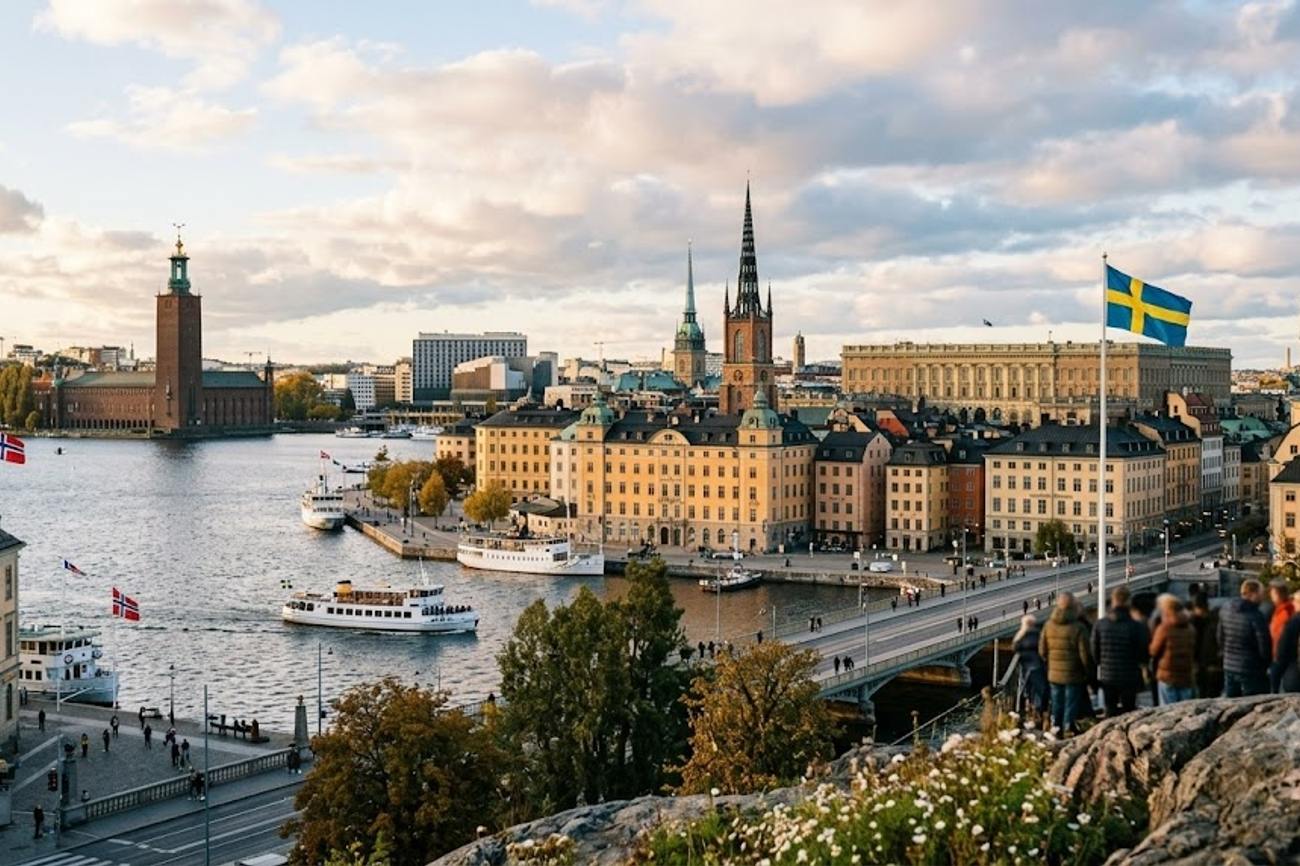
Image generated by AI
[Brussels, September 2026] — European tourism is entering the final quarter of 2026 with a strong positive trajectory, as 43% of industry experts anticipate improved conditions through December. According to the latest UN Tourism Panel of Experts Survey, the region is seeing a surge in international demand that is outpacing domestic travel, signaling a robust recovery and expansion of cross-border mobility.
The current outlook is defined by a split in professional sentiment: 38% of respondents expect "better" conditions, while 5% forecast "much better" prospects. This optimism is balanced by 42% of experts who believe the market will remain stable, leaving only a small minority of 14% expecting a downturn. Hard data from Eurostat supports this sentiment, revealing that EU tourist accommodations recorded 1.321 billion nights during the first half of 2026, marking a 1.7% increase over the previous year.
The Drivers of 2026 Growth
The current expansion is not evenly distributed across all traveler types. Data indicates a clear preference for international exploration over domestic trips. International visitor nights grew by 2.5% in the first half of the year, significantly outstripping the 0.9% growth seen in domestic stays. This shift suggests that global travelers are returning to European hubs in higher volumes, putting pressure on international flight capacity and urban hotel inventories.
The growth is particularly evident in the Nordic regions and Central Europe, where a combination of seasonal appeal and resilient infrastructure is attracting a diverse mix of high-spend international tourists. From the fjords of Norway to the alpine resorts of Austria, the trend shows a move toward both luxury hotel stays and diversified outdoor accommodations, such as camping and holiday rentals.
Markets Under Pressure: Regional Impact
The surge in demand is manifesting differently across key European markets. While some nations rely on a balanced mix of local and foreign visitors, others are now almost entirely dependent on international arrivals to drive growth.
Nordic Market Dynamics
- Sweden: Recorded 27.94 million accommodation nights from January to June 2026 (+1.5%). While domestic travelers provided 21 million nights, international visitors accounted for 6.94 million, growing at 1.9%. July saw a massive spike to 14.25 million guest nights, with international demand leaping 9.9%.
- Norway: The trend is more skewed toward foreign visitors. Total nights for the first half of 2026 hit 17.73 million (+1.7%). Notably, domestic nights actually declined by 0.1%, while international nights surged 5.5% to reach 6.06 million. July performance remained strong with 7.76 million commercial nights (+5.1%), including a 6.9% rise in camping stays.
Central European Surge
- Austria: This market is seeing record-breaking volume. Between January and June, Austria logged 65.71 million nights (+1.8%). International visitors are the primary engine, contributing 47.99 million nights (a 2.3% increase). The period from May to July 2026 set an all-time historical record since 1973, totaling 41.87 million nights. July alone saw 19.46 million nights (+4.8%) and 5.97 million arrivals (+9.3%).
Practical Traveler Advisory and Strategic Insights
For those planning trips to Europe in late 2026, the "positive outlook" cited by the World Tourism Organization (UN Tourism) translates to specific practical challenges and opportunities.
Higher Costs and Lower Availability With international nights growing faster than domestic ones, prime urban hotels in capitals and seasonal resorts in the Nordics and Alps are hitting capacity. Travelers should expect higher average daily rates (ADR) and shorter booking windows. The 9.9% jump in international visitors to Sweden in July suggests that "last-minute" bookings for peak windows are now high-risk.
Diversification of Lodging The data shows a significant rise in non-hotel accommodations. In Sweden, camping nights rose 3.9%, and Norway saw a 6.9% increase in camping stays in July. Travelers who find hotels fully booked or overpriced should look toward regulated camping and holiday rentals, which are currently absorbing a larger share of the growth.
Airport and Transit Congestion The 2.5% increase in international nights across the EU implies a corresponding increase in arrivals at major hubs. Passengers should anticipate longer queues at immigration and higher demand for airport transfers. Booking flights through carriers like Lufthansa or SAS well in advance is recommended to avoid price spikes associated with this 43% positive growth trend.
The Road to 2027
As Europe moves into the winter season, the focus shifts to whether this growth can be sustained without compromising the traveler experience. The record-breaking numbers in Austria suggest that the infrastructure is holding, but the decline in domestic travel in Norway indicates a potential imbalance where tourism becomes overly reliant on external markets.
Industry analysts are watching the Q4 data closely to see if the "much better" forecast (5% of experts) manifests in a late-year surge. If current trends hold, the first half of 2027 will likely see a continuation of the international-led expansion, potentially leading to new regulatory measures to manage "overtourism" in high-density zones.
FAQ: Europe Travel Outlook 2026
Is it more expensive to travel to Europe in late 2026? Yes, likely. With international demand growing by 2.5% and record-breaking stays in countries like Austria, hotel prices are trending upward. Early booking is essential to secure competitive rates.
Which countries are seeing the most international growth? Norway is seeing a sharp international lead, with international nights growing 5.5% while domestic travel slightly declined. Sweden and Austria also show strong international growth, particularly in July.
Are hotels the only option for accommodation? No. There is a significant trend toward outdoor and alternative lodging. Camping nights in Norway rose 6.9% and in Sweden 3.9% during peak periods, offering a viable alternative to crowded hotels.
How does the 2026 outlook compare to previous years? The outlook is broadly stable-to-positive. 43% of experts expect improvement, and total EU nights (1.321 billion) are up 1.7%, indicating a steady climb rather than a volatile spike.
Expect tighter inventories and higher premiums as the international surge continues into the winter season.
Related Travel Guides
Disclaimer
This article is for informational and educational purposes only. It does not constitute legal, financial, or professional advice. While we strive to provide accurate and up-to-date information, travel policies, regulations, and conditions change rapidly. Always verify information with official sources before making travel decisions. Nomad Lawyer makes no representations about the accuracy, reliability, completeness, or suitability of the information provided. Readers should consult qualified professionals for advice specific to their circumstances. The views expressed in this article are those of the author and do not necessarily reflect the views of Nomad Lawyer.
Kunal K Choudhary
Co-Founder & Contributor
A passionate traveller and tech enthusiast. Kunal contributes to the vision and growth of Nomad Lawyer, bringing fresh perspectives and driving the community forward.
Learn more about our team →