
Federal Order Mandates Warning Signs Outside Smithsonian Museums in 2026
A federal executive order directs warning signs outside Washington D.C.'s Smithsonian museums, altering the entry experience for millions of tourists.

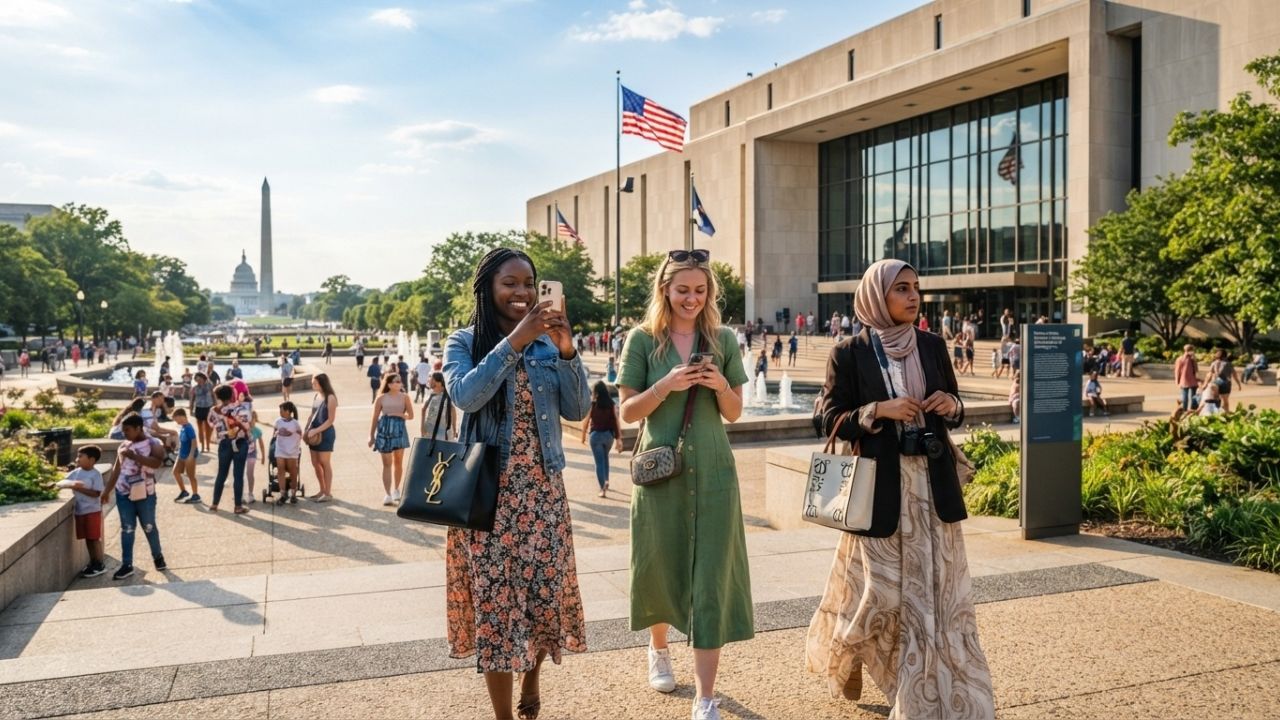
Image generated by AI
Federal workers have begun installing warning signs outside the Smithsonian's National Museum of American History in Washington D.C. following an executive instruction from President Donald Trump in July 2026.
Smithsonian Network Structure and Signage Impact Profile
| Museum Network Component | Scale and Entry Policy (2026) | Visitor Demographics Impacted | Key Operational Changes |
|---|---|---|---|
| Smithsonian Network | 21 museums, National Zoo, free admission | Millions of domestic & international tourists | None (exhibits remain unchanged) |
| Museum of American History | National Mall location, free general entry | High volume of school groups and UK tourists | Federal warning signs placed at main entries |
| National Mall Corridor | Central transit zone, pedestrian walkways | General public, educational tour buses | Increased pedestrian gathering near entrance signs |
Why This Matters: Shifting Dynamics in Cultural Tourism
From an operational and transit perspective, the placement of federal notices impacts visitor patterns on the National Mall:
- Pedestrian Congestion: The installation of signage near main entrances creates gathering points, slowing passenger flows into the National Museum of American History during peak morning hours.
- Flight Demand Spikes: Inbound arrivals at Washington Dulles (IAD) and Reagan National (DCA) show sustained volumes as tourists plan trips to observe the updated museum environment.
- Guided Tour Adjustments: Local tour guides are revising their itineraries to incorporate explanations of the new signage, reflecting rising demand for political and historical context.
Visitor Advisory: Security Rules and Museum Entry Policies
For travelers planning a visit to the Smithsonian network in 2026, understanding security guidelines and entry rules remains essential:
- Admission and Ticketing: General admission to the National Museum of American History and other Smithsonian museums remains free, and no advance tickets are required for entry, though selected special events may carry separate terms.
- Security Screening Protocols: All visitors must pass through security checkpoints, including metal detectors and bag checks. Prohibited items include weapons, large suitcases, and aerosols, which cannot be stored on-site.
- Photography and Media Guidelines: Handheld camera use is permitted for personal photos inside the galleries, but tripods, monopods, and selfie sticks are prohibited to ensure passenger safety.
- Conduct on Federal Property: Visitors are required to follow all safety signs and directives from security officers. Demonstrations, commercial filming, and leaflet distribution are restricted on Smithsonian grounds without prior permits.
Industry Outlook: The Rise of Narrative-Driven Travel
Over the next 12 to 24 months, the presence of public debates at heritage sites will continue to influence visitor patterns. While controversy can occasionally cause short-term confusion, it frequently drives tourist engagement, prompting travelers to seek out multiple sources of historical interpretation. The Smithsonian Institution will maintain its schedule of research and public programming, while local transportation networks adapt to the passenger flows of Washington D.C.'s tourism corridor.
Related Travel Guides
Disclaimer
This article is for informational and educational purposes only. It does not constitute legal, financial, or professional advice. While we strive to provide accurate and up-to-date information, travel policies, regulations, and conditions change rapidly. Always verify information with official sources before making travel decisions. Nomad Lawyer makes no representations about the accuracy, reliability, completeness, or suitability of the information provided. Readers should consult qualified professionals for advice specific to their circumstances. The views expressed in this article are those of the author and do not necessarily reflect the views of Nomad Lawyer.
Kunal K Choudhary
Co-Founder & Contributor
A passionate traveller and tech enthusiast. Kunal contributes to the vision and growth of Nomad Lawyer, bringing fresh perspectives and driving the community forward.
Learn more about our team →