
SkyWest-Operated United Express Flight SKW5911 Diverts to Casper Due to Severe Convective Storms Blocking Denver Airspace
SkyWest Airlines flight SKW5911, operating an Embraer E175LR from Helena to Denver, diverted to Casper, Wyoming due to severe convective weather.

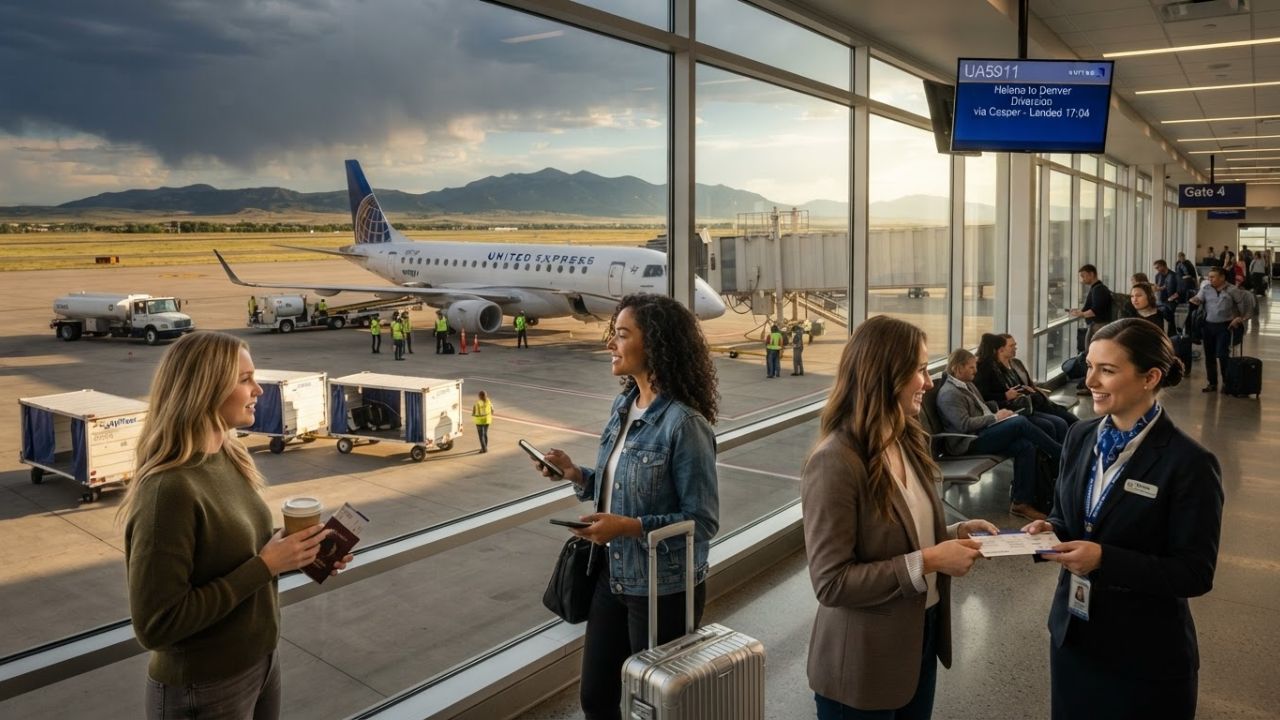
Image generated by AI
[Casper, July 9, 2026] — SkyWest Airlines flight SKW5911, operating under the United Express brand from Helena Regional Airport in Montana to Denver International Airport, executed an unscheduled landing in Wyoming. The aircraft was redirected to Casper-Natrona County International Airport.
The Embraer E175LR regional jet departed Helena on schedule and climbed to its cruising altitude. However, as the aircraft traveled southbound, the flight crew received urgent updates regarding severe thunderstorm cells forming over Colorado.
Recognizing that entering the convective front would exceed safety margins, the pilots initiated a controlled turn. The flight deck coordinated with regional air traffic control to establish a new routing profile.
Selection of Casper as Strategic Alternate Airfield
The captain selected Casper-Natrona County International Airport as the primary diversion target. The airport serves as a key alternate gateway for regional flights when Denver experiences weather closures.
Casper's runways are fully equipped to handle commercial passenger jets like the Embraer E175LR. Ground facilities at the airport allowed the aircraft to park safely away from active lightning activity.
Air traffic control cleared the local airspace to ensure a direct approach for the diverted aircraft. The flight landed safely without incident, and passengers remained on board during the temporary delay.
Fuel Parameters and Regional Jet Operations
Regional jets like the Embraer E175LR operate with different fuel capacity profiles compared to large transcontinental aircraft. While highly efficient on short-haul routes, they cannot hold indefinitely during prolonged hub congestion.
Airlines calculate contingency fuel to allow for route detours and approaches to alternate destinations. Choosing a prompt diversion preserves these fuel reserves and prevents low-fuel emergencies.
The crew of SKW5911 executed standard company safety procedures by diverting early. This approach avoids exposing the airframe to the severe G-forces associated with mountain storm cells.
Ground Handling and Recovery Operations in Casper
Once the regional jet was secured on the apron, customer service teams began coordinating passenger updates. Ground crews monitored refueling progress and filed updated flight plans for the final segment.
Aviation dispatchers worked to balance passenger transit timelines against strict pilot duty hour limitations. Ground teams expedited the required administrative procedures to minimize overall travel delays.
Once the storm cells over the Colorado Front Range began to clear, the flight was cleared to depart. The aircraft took off from Casper to complete the final segment of the journey to Denver.
Impacts of Rocky Mountain Convective Weather
Summer afternoon thunderstorms are a common hazard for commercial aviation routes crossing the Rocky Mountains. Convective columns frequently produce severe wind shear and microburst activity near major hubs.
These localized weather fronts can rapidly alter runway wind directions, forcing air traffic control to adjust runway configurations. Widespread flow control management is often used to regulate arrival traffic during peak storm activity.
Aviation safety guidelines prioritize route adjustments to prevent aircraft from entering active storm cores. Passengers are advised to expect route alterations when traveling through mountain airspace during the summer season.
Flight Parameters (SKW5911)
| Parameter | Details |
|---|---|
| Flight Number | SKW5911 (Operating as United Express) |
| Aircraft Model | Embraer E175LR |
| Departure Airport | Helena Regional Airport (HLN) |
| Original Destination | Denver International Airport (DEN) |
| Diversion Airport | Casper-Natrona County International Airport (CPR) |
| Primary Reason | Severe convective weather & wind shear |
Regional Jet Specifications
| Specification | Embraer E175LR |
|---|---|
| Aircraft Class | Regional Passenger Jet |
| Typical Seating | 76 passengers |
| Engine Configuration | Dual Turbofan Engines |
| Contingency Fuel | Calculated for alternate airfield reach |
| Diversion Strategy | Early detour over prolonged aerial holding |
Why This Matters
This diversion highlights the operational limitations that regional aircraft face when operating near major hubs during convective weather events. Because regional jets like the Embraer E175LR have tighter fuel profiles, they cannot participate in extended holding patterns, forcing pilots to make early diversion choices.
Our analysis of the flight data suggests that the capacity of regional airports like Casper is critical to preventing domestic system gridlock. Without equipped alternate fields in the Rocky Mountain region, weather delays at hubs like Denver would trigger widespread cancellations rather than manageable delays.
Additionally, this event demonstrates the importance of real-time collaboration between regional operators and mainline partners. Efficient ground handling at alternate stations is necessary to prevent crew duty limits from causing secondary cancellations.
Industry Outlook
Market trends suggest that airlines will increasingly rely on advanced meteorological forecasting to predict storm paths. Improving the accuracy of these forecasting systems will help dispatchers plan alternate routes before flights depart.
Furthermore, regional airports must continue to invest in ground service infrastructure to support commercial diversions. Strengthening these secondary gateways is essential to maintaining flight safety margins during severe summer weather.
Related Aviation News Guides
- United Airlines Flight 498 Diverts to Wichita Following Mechanical Issue on Boeing 737-900ER
- United Airlines Flight UAL2027 Diverts to Salt Lake City Due to Severe Storms and Wind Shear in Denver Airspace
- SkyWest-Operated United Express Flight SKW5099 Diverts to Scottsbluff Due to Severe Thunderstorms and Wind Shear Over Denver
Disclaimer
This article is for informational and educational purposes only. It does not constitute legal, financial, or professional advice. While we strive to provide accurate and up-to-date information, travel policies, regulations, and conditions change rapidly. Always verify information with official sources before making travel decisions. Nomad Lawyer makes no representations about the accuracy, reliability, completeness, or suitability of the information provided. Readers should consult qualified professionals for advice specific to their circumstances. The views expressed in this article are those of the author and do not necessarily reflect the views of Nomad Lawyer.
Preeti Gunjan
Contributor & Community Manager
A passionate traveller and community builder. Preeti helps grow the Nomad Lawyer community, fostering engagement and bringing the reader experience to life.
Learn more about our team →