
SITA Leads New Aviation Era as Smart AI, Biometrics, and Data Exchange Remove Barriers Across Global Air Travel
SITA's latest IT insights reveal how AI, facial biometrics, and baggage data networks are eliminating airport delays for five billion global passengers.

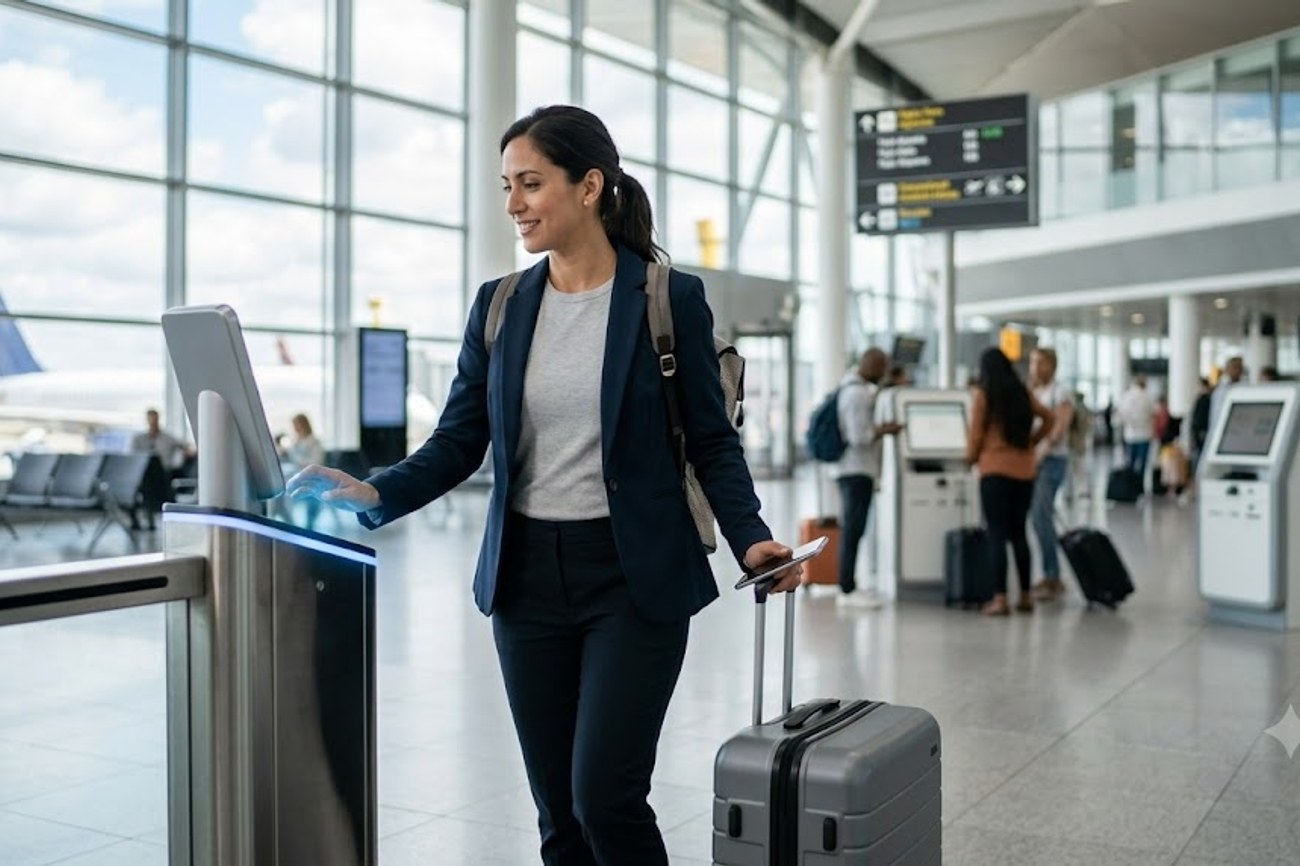
Image generated by AI
Global air transport communications leader SITA has outlined a technology-driven evolution in aviation, revealing that artificial intelligence, digital identity credentials, and real-time data sharing are fundamentally eliminating airport friction for more than five billion annual passengers. According to industry research published by SITA, connected digital ecosystems are replacing repetitive document checks and long wait times with automated facial recognition and predictive operational coordination.
Operational AI Adoption & Data Integration Barriers
SITA's Air Transport IT Insights report highlights that artificial intelligence has transitioned from experimental testing into core airport operations:
- Operations Control Adoption: 63% of airlines worldwide now deploy AI in operations control centers to handle flight disruption management, aircraft scheduling, and crew availability planning.
- Asia Pacific Leadership: Asia Pacific leads global adoption, with 98% of regional airlines incorporating AI into daily operational workflows.
- Data Silo Challenges: Despite rapid deployment, 49% of airlines identify data integration as their primary operational bottleneck, with disconnected software platforms preventing real-time data exchange between airlines, airports, ground handlers, and border control agencies.
| Aviation Technology Indicator | SITA Industry Metric | Operational Impact & Trend | Global Region Leader |
|---|---|---|---|
| Airline Operational AI Use | 63% global adoption | Disruption management & crew scheduling | Asia Pacific (98% adoption) |
| Biometric Border Systems | 54% global airport operation | Facial scan replacing paper document checks | Projected 83% by 2028 |
| Digital Identity Comfort | 79% passenger acceptance | Passport storage on mobile smartphones | Asia Pacific (62% prefer biometrics) |
| Baggage Mishandling Rate | 4.9 bags per 1,000 passengers | 23% reduction year-on-year in 2025 | Asia Pacific (3.41 per 1,000) |
| Digital Tracking Recovery | 90% reduction in permanent loss | Apple Find My & Google Find Hub integration | Global airline adoption |
Biometrics, Digital Identity & Seamless Border Control
Passenger research conducted across more than 7,500 global travelers by SITA demonstrates accelerating consumer demand for touchless airport processing. Facial recognition scans and digital travel credentials (DTC) aligned with ICAO standards are establishing borderless transit:
- Biometric Preference: In Asia Pacific, the share of travelers who have never used biometrics fell from 41% in 2024 to 31% in 2025, with 62% now preferring biometric gates over traditional border counters.
- Credential Sharing: 79% of international travelers are comfortable storing passport credentials on smartphones, while 78% are willing to pre-share biometric data prior to arrival.
- Airport Deployment: 54% of global airports currently operate live biometric border checkpoints, a figure expected to reach 83% by 2028. Additionally, 64% of airlines plan to issue digital identity credentials directly to passengers.
Baggage Intelligence & Data Sharing Breakthroughs
Despite global air traffic hitting a record five billion passengers, SITA's Baggage IT Insights Report records significant operational improvements:
- Mishandling Reduction: Global mishandled baggage dropped 23% to 4.9 bags per 1,000 passengers, with Asia Pacific achieving the lowest regional rate at 3.41 per 1,000.
- Cost Efficiency: Annual mishandled baggage costs to the aviation industry remain substantial at $6.3 billion (averaging $260 per affected bag).
- Consumer Asset Integration: Integrating airline baggage tracking with consumer networks such as Apple Find My and Google Find Hub has reduced permanently lost luggage rates by 90% during initial deployment phases.
The aviation industry is undergoing a significant transformation with the introduction of smart technology, led by SITA, a global IT provider. This shift is expected to enhance the overall travel experience, making it more efficient and seamless for passengers. For more information on SITA's innovative solutions, visit the International Air Transport Association (IATA) website, which provides insights into the latest industry trends and developments.
Traveler Logistics & Smart Airport Navigation Guide
For air travelers navigating modern tech-enabled airport terminals, utilizing digital identity tools can significantly reduce transit times:
Enrolling in Biometric Smart Gates
Travelers flying through participating hubs (including Singapore Changi, Dubai International, London Heathrow, and Tokyo Haneda) can pre-enroll digital identity credentials via airline mobile apps. Once enrolled, a single facial scan grants access through check-in, bag drop, security screening, and boarding gates without presenting paper passports or boarding passes.
Multi-Modal Transport Connections
In regions like Asia Pacific, where 45% of air travelers utilize multi-modal transit (compared to 31% in Europe and North America), integrated air-rail passes allow seamless baggage transfers directly between high-speed rail stations and airport departure gates.
Real-Time Luggage Tracking Protocols
Passengers are advised to enable baggage notifications within airline apps and utilize Bluetooth tracking tags connected to global asset networks. In the event of a delayed bag, automated data sharing between ground handlers allows instant location verification and home delivery routing.
Key Takeaways: SITA Aviation Forecast
- Primary Bottleneck: Bridging data integration gaps between airlines, airports, and border control (currently only 21% of Asia Pacific airlines share operational data with external partners).
- Future Outlook: Autonomous AI coordination and universal digital identity profiles will allow passengers to move from curb to gate without stopping for physical document checks.
- Industry Standards: Supported by guidelines from IATA and SITA technology frameworks.
Frequently Asked Questions: SITA Smart Aviation 2026
What is SITA's role in global air travel technology?
SITA provides IT and telecommunications infrastructure to the air transport industry, powering passenger processing, border management, flight operations, and baggage tracking for over 90% of global airlines and airports.
How do biometric airport checkpoints work for passengers?
Biometric checkpoints capture facial scans matched against digital passport data stored in secure traveler profiles, allowing passengers to pass through security, border control, and boarding without showing physical documents.
How much has baggage mishandling dropped according to SITA reports?
Baggage mishandling dropped 23% globally to 4.9 bags per 1,000 passengers, with Asia Pacific recording the lowest rate worldwide at 3.41 mishandled bags per 1,000 passengers.
FAQ: SITA Leads New Aviation Era As Smart Tec 2026
What is SITA's role in aviation? SITA provides smart technology for seamless air travel.
How does SITA improve travel experiences? SITA enhances security, efficiency, and passenger convenience.
What benefits does SITA offer to travelers? SITA offers faster check-in, baggage handling, and boarding.
Is SITA's technology available globally? Yes, SITA's technology is used by airlines and airports worldwide.
Related Travel Guides
Disclaimer
This article is for informational and educational purposes only. It does not constitute legal, financial, or professional advice. While we strive to provide accurate and up-to-date information, travel policies, regulations, and conditions change rapidly. Always verify information with official sources before making travel decisions. Nomad Lawyer makes no representations about the accuracy, reliability, completeness, or suitability of the information provided. Readers should consult qualified professionals for advice specific to their circumstances. The views expressed in this article are those of the author and do not necessarily reflect the views of Nomad Lawyer.
Kunal K Choudhary
Co-Founder & Contributor
A passionate traveller and tech enthusiast. Kunal contributes to the vision and growth of Nomad Lawyer, bringing fresh perspectives and driving the community forward.
Learn more about our team →