
Switzerland’s Vorsee Joins HBX Group to Bring Predictive AI Technology to Global Hotel Partners
Switzerland’s Vorsee Joins HBX Group to Bring Predictive AI Technology to Global Hotel Partners

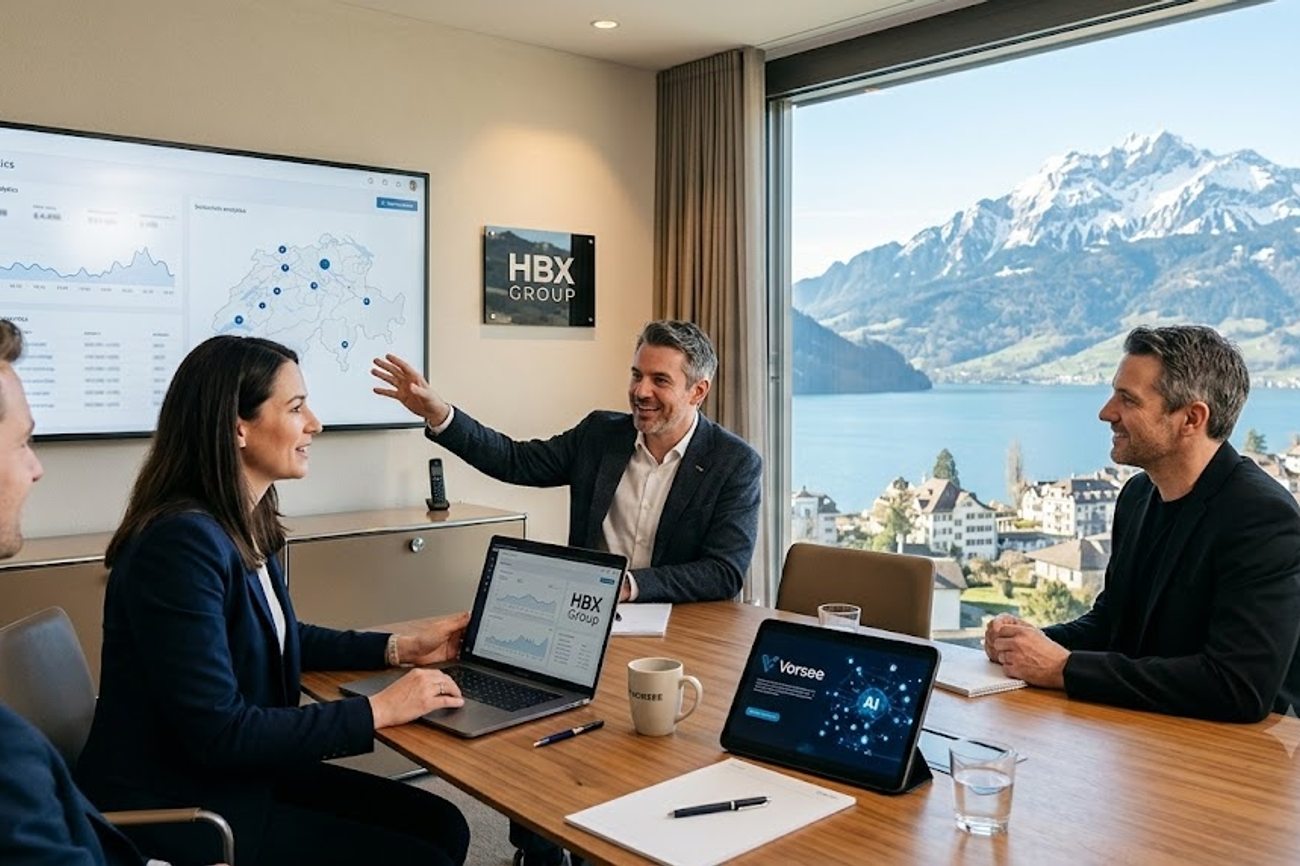
Image generated by AI
[Geneva, October 2024] — HBX Group has integrated Swiss-developed predictive AI technology into its global hotel ecosystem to shift hospitality management from historical reporting to real-time demand forecasting. The strategic move embeds Vorsee ActionOS directly into HBX Group’s suite of professional tools, including the Partner Portal, Roiback, and Civitfun.
The partnership connects the intelligence capabilities of Vorsee—a venture created by ZYTLYN Technologies AG—with the extensive marketplace and booking data managed by HBX Group. By deploying specialized AI agents and advanced forecasting models, the collaboration aims to provide hotel operators with the ability to detect market shifts and traveler behavior changes before they manifest in traditional booking logs.
The Shift to Predictive Intelligence
The immediate catalyst for this integration is the inherent limitation of traditional hotel reporting. Standard industry systems are retrospective, analyzing completed bookings and past trends to explain previous performance. This "rear-view mirror" approach often leaves hotel managers reacting to demand spikes or drops after they have already occurred.
Vorsee ActionOS replaces this reactive model with a predictive framework. By analyzing live market signals and travel-specific data, the AI identifies emerging patterns in source markets. For instance, if search data indicates a surge of interest from a specific geographic region, the system alerts the hotel before the actual booking volume increases. This allows management to pivot their commercial strategy in anticipation of the wave rather than in response to it.
The technology operates through multiple intelligence layers. These layers combine raw travel data with forecasting algorithms and AI agents that operate within strict operational permissions. When these tools interface with the distribution data from HBX Group, the result is a recommendation engine that suggests specific adjustments to pricing and inventory.
Who Is Affected
The rollout primarily impacts global hotel partners currently utilizing the HBX Group technology stack. The integration is designed to bridge the gap between disparate departments, specifically targeting the following operational areas:
- Revenue Management: Teams can now adjust room rates based on predicted demand rather than historical averages.
- Marketing Departments: AI signals allow for the deployment of targeted campaigns toward specific source markets showing early signs of growth.
- Distribution Teams: Inventory can be shifted across different channels to maximize occupancy based on forecasted arrivals.
- General Management: Decision-makers gain a forward-looking visibility tool to assist in long-term commercial planning.
This integration is not a standalone software purchase but an embedding of AI into existing workflows. By placing ActionOS within the Partner Portal and Roiback, the technology becomes a native part of the daily operational routine for hotel staff.
What This Means for Travelers
While this technology operates on the backend of hotel management, the ripple effects will be felt directly by guests booking rooms and suites.
Dynamic Pricing Volatility Travelers should expect more precise and potentially more volatile pricing. Because hotels can now predict demand spikes earlier, "early bird" windows may shrink, and prices may rise faster as the AI detects a surge in interest from a particular region or event, even if the hotel isn't yet "full."
Hyper-Targeted Offers Guests may notice an increase in highly specific marketing offers. If the AI detects a trend of travelers from a specific city heading to a specific destination, hotels will likely push tailored packages to those users via distribution channels to capture that demand.
Improved Availability Management On a positive note, predictive AI reduces the likelihood of unexpected "sold out" scenarios by allowing hotels to manage their inventory more efficiently. This means a better balance between availability and pricing for the average consumer.
The Future of Hospitality AI
The collaboration between HBX Group and Vorsee signals a broader industry transition toward "Actionable AI." The goal is no longer simple automation—such as chatbots answering FAQs—but strategic AI that supports high-level business intelligence.
The next phase of this rollout involves refining the AI agents to move from providing "recommendations" to executing "actions" within controlled frameworks. This could eventually lead to autonomous revenue management where the AI adjusts prices in real-time across multiple platforms without human intervention, based on the predictive signals it receives.
As the hospitality sector faces increasing economic volatility and changing traveler habits, the reliance on data-driven ecosystems is expected to grow. The integration of ZYTLYN Technologies AG logic into distribution platforms suggests that the future of the industry lies in the convergence of distribution, data, and artificial intelligence.
FAQ: Hotel Predictive AI 2024
What is the difference between traditional reporting and predictive AI? Traditional reporting looks at past bookings to explain what happened. Predictive AI analyzes current market signals and travel patterns to forecast what will happen, allowing hotels to adjust prices and marketing before bookings actually arrive.
Will this technology make hotel rooms more expensive? Not necessarily, but it makes pricing more accurate. While it may lead to faster price increases during predicted high-demand periods, it can also help hotels identify low-demand periods earlier and offer competitive discounts to fill rooms.
How does Vorsee ActionOS integrate with existing hotel tools? It is embedded directly into the HBX Group ecosystem, including the Partner Portal, Roiback, and Civitfun. This means hotel staff do not need to learn a new software system; the AI insights appear within the tools they already use.
Who manages the data used by these AI agents? The system uses a combination of HBX Group's marketplace data and Vorsee's travel-specific forecasting models. The AI agents operate under defined permissions and controls to ensure data security and operational safety.
The era of guessing occupancy is over; the era of calculating it has begun.
#HBXGroup #VorseeActionOS #HotelTech2024 #PredictiveHospitality #ZYTLYN #RevenueManagementAI
Related Travel Guides
- Slovenia Marks World Tourism Day As Digital Innovation And AI Shape The Future Of Sustainable Travel
- Vietnam Airlines Partners with Visa and AWS to Launch AI-Powered Aviation Solutions and Connected Travel Ecosystem
- Paris and Bangkok Tourism Soars: Accor Launches ALL Concierge AI Tech – All You Need To Know
Disclaimer
This article is for informational and educational purposes only. It does not constitute legal, financial, or professional advice. While we strive to provide accurate and up-to-date information, travel policies, regulations, and conditions change rapidly. Always verify information with official sources before making travel decisions. Nomad Lawyer makes no representations about the accuracy, reliability, completeness, or suitability of the information provided. Readers should consult qualified professionals for advice specific to their circumstances. The views expressed in this article are those of the author and do not necessarily reflect the views of Nomad Lawyer.
Raushan Kumar
Founder & Lead Developer
Full-stack developer with 11+ years of experience and a passionate traveller. Raushan built Nomad Lawyer from the ground up with a vision to create the best travel and law experience on the web.
Learn more about our team →