
Singapore Sustainable Hotels: Decoupling Occupancy from Carbon Emissions
Singapore's hospitality sector achieves record-low carbon footprints despite welcoming 8.2 million visitors in the first half of 2026.

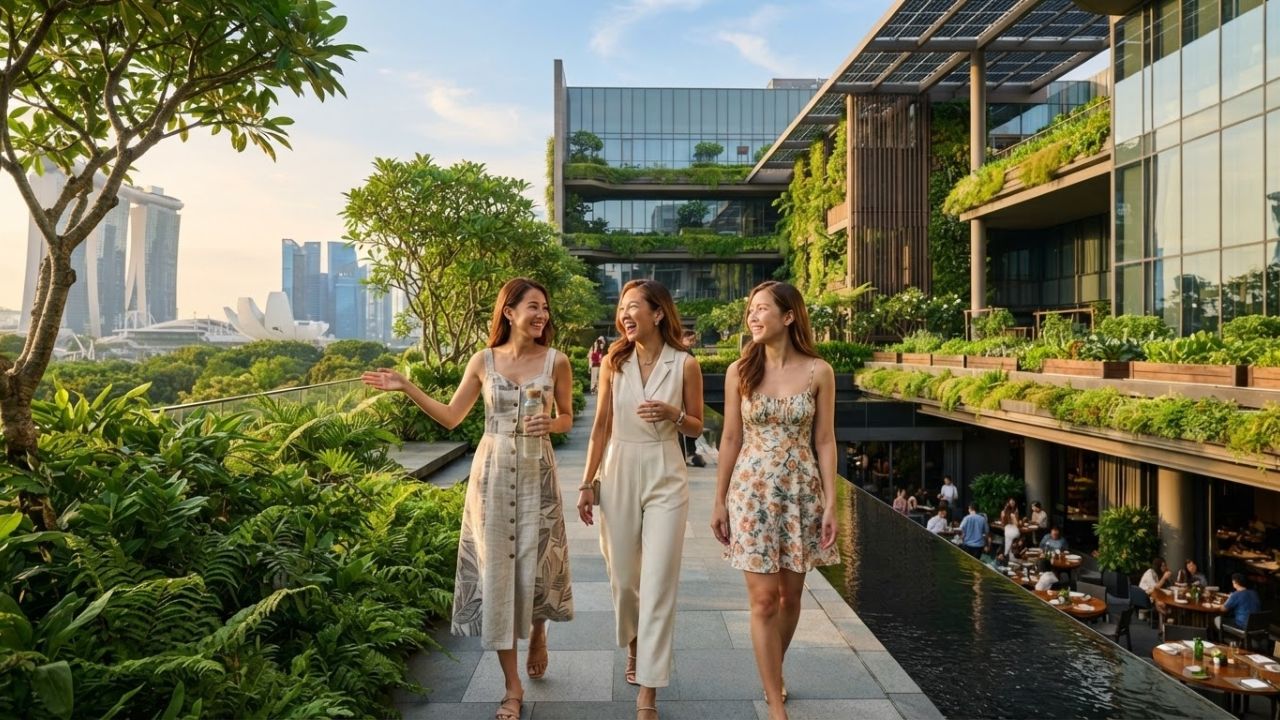
Image generated by AI
Singapore has decoupled massive international arrivals from environmental degradation in the first half of 2026, welcoming 8.2 million visitors with a city-wide hotel occupancy rate of 83% while achieving record-low carbon footprints, proving that premium hospitality and green operations can co-exist.
The transition of the Republic of Singapore from the visionary "Garden City" concept of the 20th century to the modern "City in Nature" paradigm represents a highly successful integration of environmental consciousness into macroeconomic development. In 2026, this integration has reached new heights within the hospitality sector. As climate change poses a threat to low-lying island nations, the Singaporean government, alongside private stakeholders, has recognized that massive international footfall must be decoupled from ecological degradation. For the visitor, the real impact is the opportunity to stay in urban sanctuaries that actively protect local biodiversity.
According to the Singapore Tourism Board (STB), Q1 2026 welcomed approximately 4.4 million International Visitor Arrivals (IVA), generating S$8.6 billion in tourism receipts. This financial performance represented a solid 6% year-on-year increase compared to the same period in 2025, driven heavily by quality tourism and substantial visitor spending in high-value retail and entertainment categories. By the end of June 2026, the first half (1H) of the year saw international visitor arrivals reach 8.2 million, directly translating to consistently high city-wide hotel occupancy rates, which hovered around the 83% mark throughout the first half of the year. Operating at near capacity, eco-friendly accommodation providers successfully delivered world-class luxury without spiking their carbon emissions.
The demographic profile of visitors in 1H 2026 also highlights the scale of this achievement. The top source markets include Mainland China (1.5 million visitors), Indonesia (1.1 million visitors), and Malaysia (645,000 visitors), alongside Australia and India. Managing this influx has made educating tourists in sustainable practices—such as resource conservation and waste segregation—a key operational strategy for hotel operators, ensuring that massive tourist arrivals do not result in environmental degradation.
Meticulous Public Policy and the Hotel Sustainability Roadmap
This performance is the direct result of meticulously crafted public policy. The Singapore Green Plan 2030 serves as the blueprint for targets in renewable energy, waste reduction, and green building standards. Under this plan, the Ministry of Sustainability and the Environment (MSE) and the STB ensure that hotel developments and refurbishments adhere to strict environmental criteria.
A key milestone is the Hotel Sustainability Roadmap, co-developed by the STB and the Singapore Hotel Association (SHA). The roadmap targeted 60% of all hotel room stock in Singapore attaining sustainability certification by 2025, and committing the sector to commence comprehensive emissions tracking with a final goal of net-zero emissions by 2050. By 2026, this momentum has accelerated, with Singapore becoming the first country certified as a sustainable destination under the GSTC Destination Criteria. Additionally, properties are utilizing the Building and Construction Authority's (BCA) Green Mark scheme to achieve Platinum and Super Low Energy ratings, forcing innovations in cooling, lighting, and architectural design to drastically reduce baseline energy consumption.
Case Studies of Top-Performing Sustainable Properties
Several major properties have distinguished themselves as trailblazers, proving that massive scale and uncompromising luxury can perfectly coexist with rigorous environmental stewardship:
- Marina Bay Sands (MBS): This integrated resort utilizes an intelligent BMS to control lighting and cooling across thousands of rooms, casino floors, and exhibition halls. MBS offsets its power with solar panels and uses industrial food waste digesters to curtail emissions, targeting BCA Green Mark Platinum status.
- PARKROYAL COLLECTION Marina Bay: Celebrated as Singapore's first 'Garden-in-a-Hotel,' this biophilic property preserved its 1987-heritage atrium, preventing over 51,300 metric tonnes of carbon emissions. Holding GSTC and BCA Green Mark Super Low Energy certifications, it features low emissivity windows, 210 solar panels, and a rooftop Urban Farm supplying nearly 20% of its food needs, which powers its farm-to-table, farm-to-bar, and farm-to-spa initiatives.
- Grand Hyatt Singapore: Holding EarthCheck Silver Certification in 2026, the property transitioned to 100% renewable electricity by purchasing Renewable Energy Certificates (RECs) via Flo Energy since April 2022. It uses Hyatt EcoTrack to monitor emissions, operates an automated water bottling plant, and sources 80% of seafood from MSC/ASC-certified sustainable sources.
- Holiday Inn Express Singapore Clarke Quay: Proving that mid-tier hospitality can play a key role, this BCA Green Mark Platinum property uses solar shading, LED lighting, smart sensors, and low-flow water fixtures to maintain a low resource footprint per guest, demonstrating that green tourism is accessible to all travelers.
Industry Shift in Hospitality Economics and the Green Economy
The push toward sustainable operations has shifted hospitality economics. Historically, the primary barrier was high Capital Expenditure (CapEx). However, by 2026, financial models show that the Return on Investment (ROI) is highly favorable, with high-efficiency HVAC systems and waste digesters paying for themselves within three to five years through reduced utility bills and waste disposal fees. Furthermore, REITs now heavily weight ESG performance in asset valuations. Properties holding Green Mark Platinum or Super Low Energy ratings enjoy preferential green financing rates and higher asset values. This transition has also boosted the green economy, creating high-value jobs for building management analysts, energy engineers, and urban farming technicians who manage these biophilic hotel structures, showing that ecology and economics can align.
Destination Expert Singapore Travel Insider Tips
To explore Singapore responsibly and maximize travel value, destination specialists recommend:
- Use Contactless MRT Payments: Tap your contactless bank card or mobile wallet directly at MRT fare gates. Tapping the same card throughout your journey automatically calculates the cheapest capped daily fare, eliminating the need for paper tickets.
- Carry Cash for Hawker Stalls: While digital payments are common, carry cash when visiting Lau Pa Sat (walk from Raffles Place MRT station), as some individual stalls only accept cash or local QR payments.
- Claim GST Tax Refunds: Under the Electronic Tourist Refund Scheme (eTRS), you can claim a refund on the 9% GST when spending at least SGD 100 at participating retailers. Scan your passport at the airport's eTRS self-help kiosks before departure, and arrive 2 to 3 hours early to facilitate any inspection.
- Drink Tap Water: Singapore’s municipal tap water is fully safe to drink. Carry a reusable water bottle to refill at public water stations, avoiding single-use plastic bottles.
- Visit Biophilic Landmarks During Shoulder Seasons: Explore green spaces like the Southern Ridges and Sungei Buloh Wetland Reserve during off-peak windows (July-August) to minimize crowding, ensuring a peaceful experience.
Singapore's Sustainable Tourism Long-Term Economic Outlook
The trajectory for Singapore sustainable hotels is clear, pointing toward net-zero emissions by 2050. As international arrivals climb, the pressure on natural resources will intensify. However, the top-performing properties of 2026 have proven that growth does not require environmental degradation, offering a sustainable blueprint for global tourism. By balancing neighborhood hospitality expansion with sustainable operations, biophilic architecture, and green technology, the city-state is building a resilient tourism framework that protects the local environment and community assets for future generations, securing its position as a global leader in green tourism.
Related Travel Guides
Disclaimer
This article is for informational and educational purposes only. It does not constitute legal, financial, or professional advice. While we strive to provide accurate and up-to-date information, travel policies, regulations, and conditions change rapidly. Always verify information with official sources before making travel decisions. Nomad Lawyer makes no representations about the accuracy, reliability, completeness, or suitability of the information provided. Readers should consult qualified professionals for advice specific to their circumstances. The views expressed in this article are those of the author and do not necessarily reflect the views of Nomad Lawyer.
Kunal K Choudhary
Co-Founder & Contributor
A passionate traveller and tech enthusiast. Kunal contributes to the vision and growth of Nomad Lawyer, bringing fresh perspectives and driving the community forward.
Learn more about our team →