
Hotels Thailand Luxury: Supply Crisis Hits Seller's Market 2026
Thailand's hotels thailand luxury sector faces unprecedented scarcity in 2026 as investor demand dramatically outpaces available trophy properties. Wealthy buyers compete fiercely for limited assets, reshaping Southeast Asia's hospitality investment landscape.

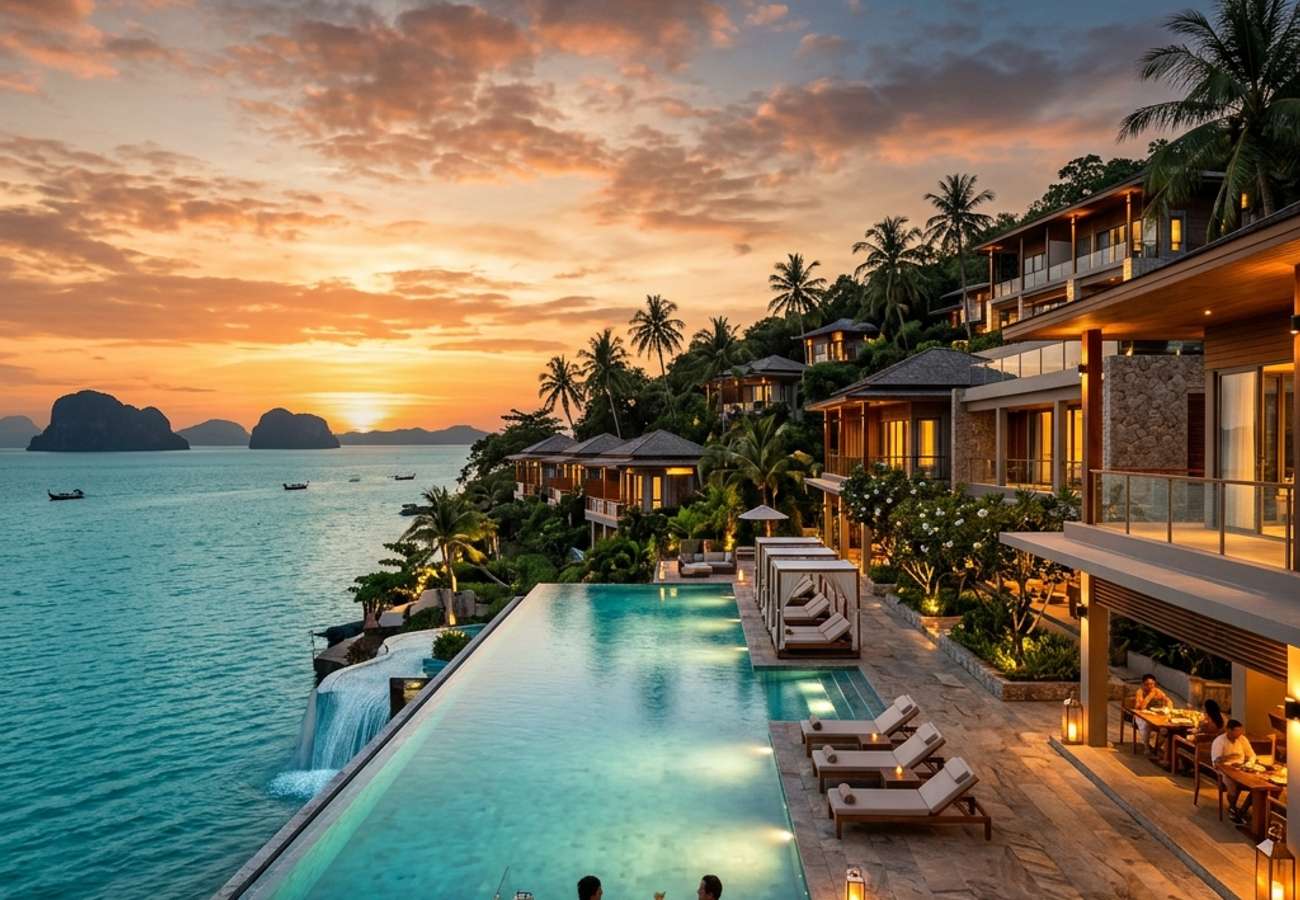
Image generated by AI
Thailand's Luxury Hotel Market Faces Historic Supply Shortage
Thailand's premium hotel assets are vanishing from the market at record pace in 2026. Investor appetite for high-end properties continues climbing, yet available trophy hotels remain stubbornly scarce. This fundamental supply-demand imbalance has transformed Thailand into one of Asia's most competitive luxury hospitality investment markets, where wealthy buyers battle for limited opportunities and current owners enjoy unprecedented leverage.
The shortage stems from decades of successful hotel operations by incumbent operators who show little incentive to divest profitable properties. Combined with Thailand's strict foreign ownership regulations and limited new luxury development, the result is a crystallized market where scarcity commands premium valuations.
The Luxury Hotel Supply Crunch in Thailand
Thailand's hospitality market has entered a distinctive phase where trophy-tier hotels rarely change hands. Unlike secondary cities experiencing new construction booms, Bangkok and Phuket's finest properties remain locked in the portfolios of long-term operators generating consistent returns.
Several factors intensify this shortage. First, successful luxury hotel operators generate substantial cash flow, eliminating any urgent financial motivation to sell. Second, Thailand's Foreign Business Act restricts non-Thai entities from owning land, complicating acquisition structures and narrowing the buyer pool. Third, the nation's premier beachfront and urban locations cannot be replicated—new luxury development faces regulatory and geographic constraints.
Property consultants report that formal sales listings for five-star hotels have declined 60% since 2024. When premium properties do appear on the market, bidding contests emerge quickly, with prices climbing 15-25% above historical valuations.
For destination research, visit Tourism Authority of Thailand for official market insights.
Why Investors Are Competing Fiercely for Thai Properties
Global ultra-high-net-worth individuals increasingly view Thailand's luxury hotels as hedge assets against currency volatility and inflation. Unlike commercial real estate in saturated markets, Thailand offers superior yield potential combined with cultural distinctiveness that appeals to international portfolios.
Private equity firms, family offices, and sovereign wealth funds have redirected capital toward Southeast Asian hospitality following pandemic recovery. Thailand specifically attracts attention because of its established tourism infrastructure, visa-friendly policies, and lower acquisition costs compared to Singapore or Hong Kong.
The investment thesis centers on three pillars: reliable international visitor flows exceeding 40 million annually, booming domestic travel from regional middle-class expansion, and minimal direct competition from other tropical destinations offering comparable luxury experiences. Buyers recognize that purchasing decisions made today represent long-term wealth preservation vehicles.
Recent transaction analysis shows average capitalization rates between 4.5-6.5% for prime Bangkok properties, above returns available in developed markets yet competitive with comparable Asia-Pacific opportunities.
Learn more about Thailand's tourism recovery through official channels.
Impact of Private Wealth Influx on the Market
Unprecedented capital flows from ultra-wealthy international investors have fundamentally reshaped pricing dynamics. Family offices controlling multi-billion-dollar portfolios now actively pursue Thailand's luxury hotel inventory, treating hospitality acquisitions as permanent holdings rather than short-term investments.
This wealth concentration has consequences. Traditional hospitality operators who historically acquired properties through bank financing now find themselves priced out of competitive bidding situations. Smaller regional chains struggle to match all-cash offers from institutional buyers unburdened by debt servicing requirements.
The influx of private capital also influences asset quality expectations. New ownership cohorts demand enhanced sustainability credentials, digital infrastructure upgrades, and international brand partnerships—driving renovation expenditures that reach $5-15 million per property. Properties failing to meet emerging investor standards face valuation pressure.
Interestingly, this dynamic has created opportunity gaps for boutique properties and smaller luxury hotels with strong regional positioning. While trophy assets command monopolistic pricing, secondary-tier properties offer returns that attract diversified investment portfolios.
What This Means for Future Hotel Development
Thailand's current supply constraints will likely stimulate new luxury hotel construction, though regulatory approval processes move slowly. The Thai government has signaled interest in increasing high-end tourism capacity, particularly outside Bangkok's congested central zones.
Developers are increasingly focused on secondary markets including Chiang Mai, Krabi, and emerging beach destinations where land acquisition proves less complex. Planned openings through 2028 include approximately 8,000 new luxury rooms, though this represents modest supply growth relative to existing inventory.
Private operators, recognizing the limited sale opportunities, are pursuing alternative value-capture strategies. Long-term lease arrangements with institutional investors offer flexibility while retaining operational control. Shared-ownership partnerships and fractional hotel investment platforms provide capital access without complete ownership transfer.
The industry consensus suggests that sustained supply constraints will persist through 2027-2028, maintaining elevated asset valuations and restricting new entrants to the luxury hotel market. However, regulatory reforms could accelerate foreign investment frameworks, potentially expanding the available property pipeline.
Key Market Data Table
| Metric | 2024 Value | 2026 Value | Change |
|---|---|---|---|
| Annual Luxury Hotel Listings (Bangkok/Phuket) | 12 | 5 | -58% |
| Average Price per Room (Trophy Properties) | $2.8M | $3.4M | +21% |
| Capitalization Rate Range | 5.2-6.8% | 4.5-6.5% | Compressed |
| International Investor Participation | 35% | 58% | +23pp |
| Average Days on Market | 180 | 65 | -64% |
| Properties with Multiple Offers | 40% | 78% | +38pp |
What This Means for Travelers
Thailand's luxury hotel supply constraints create specific implications for high-end travelers and hospitality consumers:
-
Book advance reservations earlier – With limited new supply and elevated occupancy among existing luxury properties, five-star hotels book faster. Reserve 4-6 months ahead during peak seasons (November-February).
-
Expect rate premiums – Constrained supply supports higher nightly rates. Budget 12-18% more than equivalent properties in competing destinations. Premium positioning reflects scarcity economics, not necessarily enhanced amenities.
-
Explore secondary markets – Chiang Mai, Krabi, and Koh Samui offer emerging luxury experiences with better availability than Bangkok. These destinations attract investment precisely because supply constraints remain less acute.
-
Investigate alternative accommodations – High-end resorts, boutique villas, and luxury Airbnb properties provide comparable experiences with greater flexibility. Private vacation rentals increasingly target international travelers seeking premium amenities.
-
Lock in pricing with strategic flexibility – Utilize hotel loyalty programs and advance booking commitments to secure rates. Many luxury chains offer rate guarantees and free cancellation for elite members.
FAQ
Q: Are new luxury hotels opening in Thailand through 2027? A: Yes, approximately 8,000 new luxury hotel rooms are planned across Thailand through 2028, with concentration in secondary cities like Chiang Mai and coastal destinations. However, project timelines frequently extend beyond initial estimates due to permitting complexity and construction challenges.
Q: Why is it difficult for foreign investors to purchase Thai hotels? A: Thailand's Foreign Business Act restricts foreign land ownership and requires 51% Thai nationals in hotel companies. These regulations, combined with complex corporate ownership structures, narrow the buyer pool and increase transaction costs significantly.
Q: Can travelers benefit from this supply shortage? A: Limited supply drives rate increases, but loyalty program members receive priority booking and rate guarantees. Early advance bookings and flexible travel dates offer tactical advantages when navigating constrained luxury inventory.
Q: What's the long-term outlook for Thailand's luxury hotel market? A: Industry analysis suggests elevated valuations will persist through 2028 as supply constraints continue. Regulatory reforms or significant new construction could moderate pricing growth
Disclaimer
This article is for informational and educational purposes only. It does not constitute legal, financial, or professional advice. While we strive to provide accurate and up-to-date information, travel policies, regulations, and conditions change rapidly. Always verify information with official sources before making travel decisions. Nomad Lawyer makes no representations about the accuracy, reliability, completeness, or suitability of the information provided. Readers should consult qualified professionals for advice specific to their circumstances. The views expressed in this article are those of the author and do not necessarily reflect the views of Nomad Lawyer.
Raushan Kumar
Founder & Lead Developer
Full-stack developer with 11+ years of experience and a passionate traveller. Raushan built Nomad Lawyer from the ground up with a vision to create the best travel and law experience on the web.
Learn more about our team →