
Singapore and Asia-Pacific Travel Markets Experience Sharp Airfare Fluctuations as High Tourism Demand from India and China Reshapes Booking Strategies
Airfares to Singapore and across the Asia-Pacific are experiencing extreme volatility driven by surging tourism demand from India and China, forcing travelers to adopt new booking strategies.

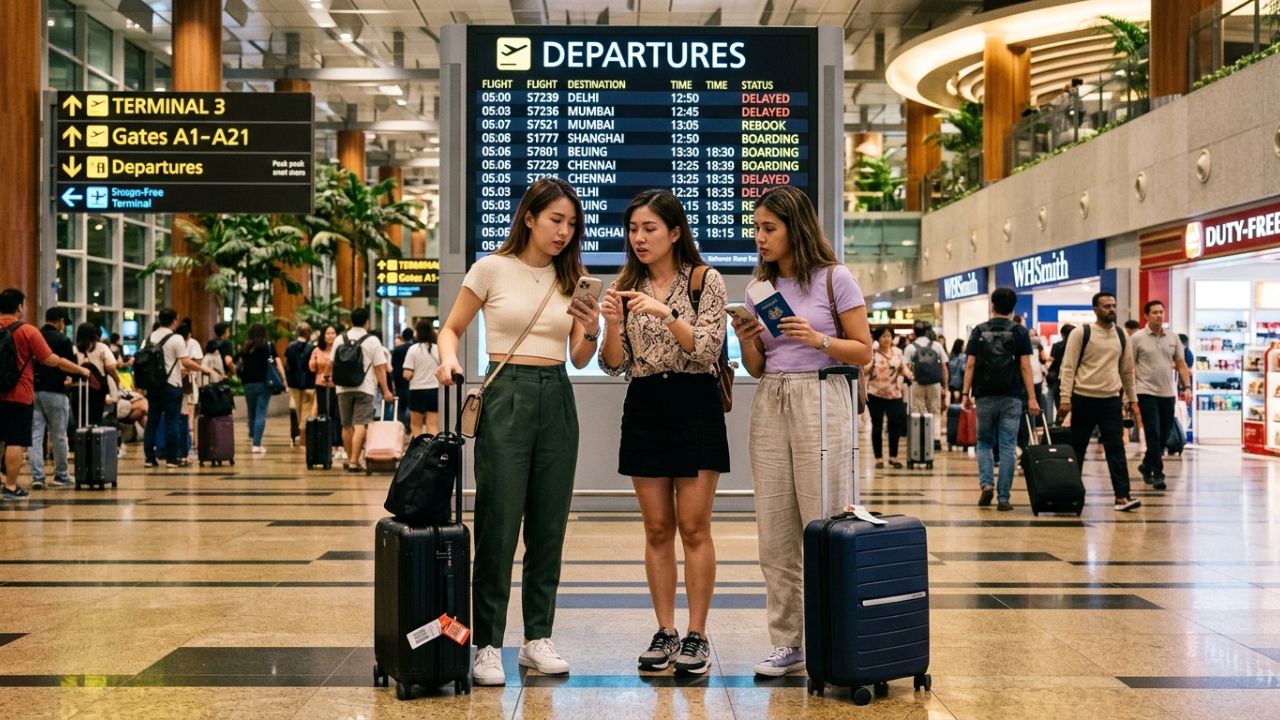
Image generated by AI
Singapore and Asia-Pacific Travel Markets Experience Sharp Airfare Fluctuations as High Tourism Demand from India and China Reshapes Booking Strategies
Published on May 13, 2026
Planning a luxury escape to one of Asia’s most iconic hubs has suddenly become a complex financial puzzle. Across the Asia-Pacific travel corridors, airfares to Singapore are experiencing extreme volatility, driven by a massive, simultaneous surge in tourism demand from powerhouse outbound markets like India and China. As Singapore Changi Airport continues to shatter passenger volume records, and the city-state aggressively projects up to 18.5 million international arrivals in 2025, the intense competition for airline seats is completely reshaping how global travelers plan their itineraries. Gone are the days of static, predictable pricing; sophisticated dynamic fare algorithms are now reacting minute-by-minute to an explosion of leisure bookings, family holidays, and returning corporate travel. For Indian tourists—who consistently rank Singapore as a premier dream destination for short-haul luxury—this airfare unpredictability poses a significant challenge. As major carriers expand capacity, travelers must discard outdated booking habits and adopt highly flexible, data-driven strategies to secure affordable access to Singapore’s world-class hospitality, stunning attractions, and legendary cultural experiences.
Quick Summary:
- Airfare volatility is gripping the Singapore and broader Asia-Pacific travel markets due to surging outbound tourism demand from India, China, and Southeast Asia.
- The Singapore Tourism Board projects between 17 million and 18.5 million international arrivals in 2025, heavily concentrating flight demand during peak school holidays and festive seasons.
- High-frequency routes from major Indian cities (Delhi, Mumbai, Bengaluru, Chennai) are experiencing rapid dynamic pricing shifts as limited seat inventory vanishes weeks in advance.
- Premium pricing is heavily triggered by major international events, Formula One weekends, luxury retail festivals, and high-traffic regional holidays like Chinese New Year.
- Singapore Changi Airport's unmatched global connectivity means point-to-point leisure travelers are fiercely competing for seats against high-yield corporate and long-haul transit passengers.
- Travel experts urge holidaymakers to utilize flexible date searches, monitor fare drops early, and consider unbundling round-trip tickets to navigate the unpredictable pricing landscape successfully.
The Dynamic Pricing Squeeze: Why Your Flight Just Got More Expensive
The frustration of seeing a reasonable airfare on Tuesday only for it to double by Thursday is a defining characteristic of the 2026 Asia-Pacific aviation market. This is the reality of modern dynamic pricing, an algorithmic system utilized by airlines to maximize revenue based on real-time demand.
Airlines do not sell every economy seat at the same price. Instead, they divide the cabin into multiple "fare buckets." As the cheapest buckets sell out—which happens rapidly when thousands of Indian and Chinese travelers simultaneously decide to book a long weekend in Singapore—the algorithm automatically bumps the remaining seats into much higher, premium-priced categories.
Because Singapore’s appeal bridges multiple travel segments—it is equally a family leisure playground, a massive financial center, and a luxury wellness hub—these fare buckets empty out remarkably fast. Travelers who wait for last-minute "deals" are now almost guaranteed to be severely penalized by the algorithm.
The India to Singapore Corridor: High Demand, High Stakes
For the Indian outbound travel market, Singapore is an unparalleled juggernaut. The short flight duration (typically 4 to 6 hours), the culturally familiar yet impeccably organized environment, and the sheer density of world-class attractions make it perfect for travelers seeking an effortless international vacation.
Airlines recognize this lucrative pipeline. Carriers including Air India, Air India Express, Singapore Airlines, and IndiGo operate high-frequency schedules from major Indian metros. Yet, despite this massive capacity, demand is outpacing supply during critical windows.
Indian families traveling during the Diwali holiday, or tech executives commuting between Bengaluru and Singapore's financial district, are all competing for the same finite number of seats. This fierce competition allows airlines to hold fares at a premium, knowing that the immense desirability of the destination will ultimately force travelers to pay the higher price.
The Calendar Effect: School Holidays, Festivals, and F1
Singapore is not a seasonal destination dictated by weather; its airfare spikes are dictated almost entirely by the calendar. Understanding these event-driven demand surges is the single most important factor in securing an affordable flight.
The most severe airfare volatility aligns directly with Singapore's local academic calendar (school breaks in March, June, September, and November-December), which triggers massive waves of regional family travel. Compounding this is the influx of tourists during major Asian cultural events, most notably the Lunar New Year, which creates an intense, simultaneous squeeze on inbound capacity from China.
Furthermore, Singapore's aggressive, year-round events strategy—hosting blockbuster international music concerts, massive trade conventions, and the globally broadcast Formula One Singapore Grand Prix—acts as a powerful magnet, instantly evaporating affordable airline inventory for specific, hyper-targeted weekends.
The Changi Airport Factor: Competing With the World
When booking a flight to Singapore, travelers from India or China are not just competing with each other; they are competing with the entire world. Singapore Changi Airport is arguably the most efficient and popular transit hub on the planet.
A passenger flying from London to Sydney, or from Frankfurt to Bali, will frequently transit through Singapore. Airlines often reserve a significant portion of their seats on inbound flights to Singapore specifically to feed these highly profitable long-haul transit networks.
This means that the actual number of seats available for point-to-point tourists whose final destination is Singapore is significantly lower than the aircraft's total capacity suggests. This engineered scarcity is a fundamental driver of the sharp price fluctuations seen by regional holidaymakers.
Winning the Booking Game: Strategies for the Smart Traveler
Navigating this volatile market requires travelers to pivot from passive booking to active strategy. The golden rule for Singapore travel in 2026 is flexibility.
Travel data consultants emphasize that shifting a departure date by just 24 to 48 hours can bypass a sold-out fare bucket and yield massive savings. Mid-week departures (Tuesday or Wednesday) frequently offer better value and higher seat availability than the heavily congested Friday evening or Saturday morning slots preferred by weekend tourists.
Additionally, savvy travelers are increasingly unbundling their itineraries. Rather than searching exclusively for a traditional round-trip ticket on a single airline, travelers can often find better value by flying outbound on a low-cost carrier (like Scoot or Air India Express) and returning on a full-service carrier, leveraging digital fare comparison tools to construct the most economically efficient route possible.
Guide for Travelers:
- When to book: For travel during peak Asian holiday periods or major Singaporean school holidays, book your flights a minimum of 3 to 4 months in advance to secure lower-tier fare buckets.
- The "Cookie" Myth vs. Real Volatility: While clearing browser cookies is a common myth, real airfare changes are driven by inventory depletion. If you see a good fare that fits your budget, book it immediately. It is highly unlikely to drop as the departure date approaches.
- Best times to visit for lower fares: The "shoulder seasons" of late January, April, and October (avoiding major public holidays and major events) generally offer the most stable and affordable airfare pricing.
- Must-Do Activities: Upon arrival, explore the stunning supertrees at Gardens by the Bay, experience the incredible street food culture at the Maxwell Food Centre, and indulge in luxury shopping along Orchard Road.
- Transportation Tip: Skip the expensive airport taxis. Upon landing at Changi Airport, purchase a Singapore Tourist Pass or simply tap your contactless credit card to ride the impeccably clean and efficient MRT train network directly to your hotel.
Related Travel Guides
- South Korea's Jeju Air Implements Unpaid Leave Amid Soaring Jet Fuel Costs
- Discover Ultimate Comfort at Guangzhou Baiyun Airport’s New Star Alliance Lounge
- Massive Aviation Upgrade for Papua New Guinea as PNG Air Adds First ATR42-600
The sheer magnetism of Singapore remains undeniably powerful. As a destination that seamlessly blends a breathtaking urban skyline with immersive cultural enclaves, world-class hospitality, and a relentless calendar of global events, it continues to draw millions of travelers from India, China, and beyond. However, the surging, record-breaking tourism demand projected for 2025 and 2026 means that the era of effortlessly snagging a cheap last-minute flight is over. The sharp airfare fluctuations currently defining the Asia-Pacific market are a direct reflection of Singapore's success as both a premier luxury escape and an indispensable global transit hub. To experience the magic of the Lion City without breaking the bank, travelers must become as dynamic as the airline pricing algorithms themselves—planning earlier, searching smarter, and utilizing flexible itineraries to unlock the best possible value on their journey to Asia's ultimate dream destination.
Disclaimer
This article is for informational and educational purposes only. It does not constitute legal, financial, or professional advice. While we strive to provide accurate and up-to-date information, travel policies, regulations, and conditions change rapidly. Always verify information with official sources before making travel decisions. Nomad Lawyer makes no representations about the accuracy, reliability, completeness, or suitability of the information provided. Readers should consult qualified professionals for advice specific to their circumstances. The views expressed in this article are those of the author and do not necessarily reflect the views of Nomad Lawyer.
Kunal K Choudhary
Co-Founder & Contributor
A passionate traveller and tech enthusiast. Kunal contributes to the vision and growth of Nomad Lawyer, bringing fresh perspectives and driving the community forward.
Learn more about our team →