
Singapore Airlines Overhauls Winter Business Class Cabins Across A380 and Wide-Body Networks
Operating through March 27, 2027, Singapore Airlines deploys four distinct Business Class seats across major routes, returning the Airbus A380 to Auckland and expanding Boeing 737-8 MAX regional services.

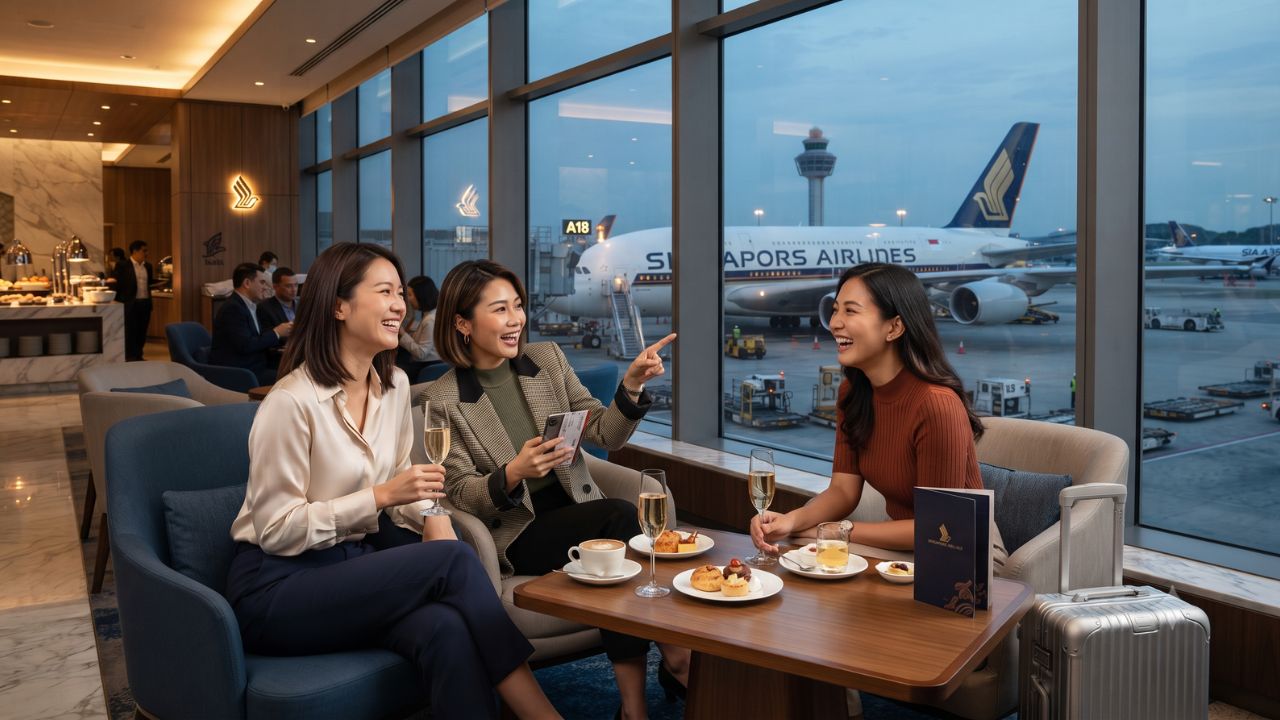
Singapore Airlines deploying varied wide-body and narrow-body Business Class cabins across winter 2026/27
Booking a Business Class ticket on Singapore Airlines does not guarantee a single uniform seat design, as four entirely distinct cabin architectures are currently flying across the carrier's international schedule through March 27, 2027. The airline’s winter operational reshuffle introduces major aircraft redeployments across Oceania, Europe, Southeast Asia, and the Middle East, returning the double-decker Airbus A380 superjumbo to New Zealand while reassigning narrow-body Boeing 737-8 MAX aircraft to regional vacation corridors.
Decoding the Winter Aircraft Allocations and Cabin Shifts
The global fleet strategy demonstrates why savvy travelers examine individual flight numbers rather than assuming uniform cabin experiences across city pairs. The flagship long-haul 2013 J seat continues to anchor operations on Airbus A350-900 Long Haul, A350 Ultra Long Range (ULR), and Boeing 777-300ER airframes. The wider 2017 J product remains exclusive to the double-decker Airbus A380 fleet, while regional routes rely on the 2018 RJ seat aboard medium-haul A350s and Boeing 787-10s, alongside the 10-seat MAX RJ configuration on Boeing 737-8 MAX narrow-body aircraft.
Auckland stands out as the most prominent beneficiary of this seasonal recalibration. From October 25, 2026, through March 27, 2027, Singapore Airlines will operate the Airbus A380 daily on flights SQ285 and SQ286 in partnership with Air New Zealand, replacing the Boeing 777-300ER and upgrading the cabin from 2013 J to 2017 J. Shanghai Pudong also retains daily A380 service on SQ830 and SQ833 throughout the winter, connecting passengers through Singapore Changi Airport, which processed approximately six million passenger movements in August 2026 alone.
Conversely, Frankfurt loses its scheduled A380 rotation as SQ326 and SQ325 shift to the Boeing 777-300ER from October 25, moving passengers from 2017 J back to 2013 J. In Australia, Brisbane gains long-haul comfort on SQ265 and SQ266 from November 1, 2026, as the service upgrades from the regional 2018 RJ cabin to the 2013 J lie-flat product aboard A350 Long Haul aircraft, while three other daily departures maintain regional cabins. Additionally, daily operations to Western Sydney International Airport launch on November 23, 2026, utilizing medium-haul A350 equipment.
In Southeast Asia and the Middle East, aircraft assignments diverge significantly based on stage length. Jakarta sees eight of its nine daily flights convert to A350 Long Haul aircraft with 2013 J seating from October 25, leaving only SQ968/SQ951 as a regional exception. Bali converts three flight pairs (SQ934/SQ935, SQ946/SQ947, and SQ948/SQ949) to Boeing 737-8 MAX narrow-bodies, while remaining rotations keep the wide-body 787-10. Cairns also shifts from medium-haul A350s to the 737-8 MAX on December 1, placing a narrow-body cabin on a five-hour sector. In the Middle East, Dubai returns with A350 Medium Haul equipment (SQ494/SQ495), while the resumed Riyadh route launching December 1, 2026, becomes the network's longest regional-cabin route at nearly nine hours of flight time.
Meanwhile, the carrier is progressing with its S$1.1 billion retrofit initiative across 41 Airbus A350 airframes, scheduled to debut a fifth-generation long-haul Business Class seat from 2026 and expanding to ultra-long-haul A350-900ULR aircraft in early 2027 before eventual deployment on the Boeing 777-9 through 2030.
What Makes the Changi Hub and Transcontinental Cabins Distinct
The contrast between wide-body superjumbos and modern narrow-body jets fundamentally alters how travelers experience intercontinental flights. On the Airbus A380, the upper-deck 2017 J cabin features private semi-enclosed suites arranged in a 1-2-1 layout, where center seats can convert into double beds for traveling partners, accompanied by exceptional acoustic quietness during trans-Tasman and long-haul climbs.
On narrow-body routes flown by the Boeing 737-8 MAX, Singapore Airlines delivers full lie-flat capability in a compact cabin containing only 10 Business Class seats. Alternating rows provide standalone throne seats with extensive personal surface areas, making regional flights between Singapore, Cairns, Ho Chi Minh City, and Bali feel intimate and responsive.
Connecting through Changi Airport links these varied flight products with one of the world's most sophisticated transit terminals. Covering 78 direct passenger destinations within the mainline network and 136 global points across the wider SIA Group, Changi functions as an urban oasis featuring tropical indoor gardens, tranquil water installations, and dedicated transit wellness spaces certified by the Singapore Tourism Board.
Visitor Insider Tips for Booking and Maximizing Singapore Airlines Flights
Navigating this complex matrix of aircraft assignments requires tactical flight selection and pre-departure planning.
Decoding Flight Numbers Before Confirmation
When booking flights to multi-frequency destinations like Bangkok, Brisbane, Jakarta, or Ho Chi Minh City, review the specific aircraft type listed for your departure time. For example, on flights to Ho Chi Minh City, SQ184/SQ183 provides the wide-body A350 Long Haul with 2013 J lie-flat seats, whereas SQ178/SQ177 and SQ188/SQ187 utilize the narrow-body Boeing 737-8 MAX.
Optimizing Connections at Changi Airport
For layovers exceeding five hours, access the complimentary city tours departing from Terminal 2 and Terminal 3, or visit the historic colonial district around the Singapore Botanic Gardens, inscribed under the UNESCO World Heritage Centre. If remaining airside, use the SilverKris Lounge in Terminal 3 for full shower suites and authentic Singaporean culinary stations before evening departures.
Utilizing Book the Cook and Pre-Flight Dining
Singapore Airlines offers its Book the Cook pre-ordering service on flights departing Singapore, Auckland, and major European stations. Reserve your main meal at least 24 hours prior to departure to access signature options like Classic Lobster Thermidor, Singapore Chicken Rice, or roasted lamb loin that are unavailable on standard onboard printed menus.
Seasonal Packing and Transcontinental Layers
When traveling between northern winter destinations and southern hemisphere summer gateways like Auckland or Brisbane, carry breathable merino wool layers in your carry-on luggage. Cabin temperatures remain crisp throughout long overnight sectors, but arriving in the South Pacific demands lightweight linen clothing.
Cultural and Environmental Context of Modern Fleet Deployment
Matching aircraft size to exact route demand is central to reducing aviation emissions. By assigning fuel-efficient Boeing 737-8 MAX narrow-body aircraft to regional Asian leisure routes, Singapore Airlines optimizes passenger load factors—which reached 84.7% in August 2026 across the mainline carrier—while curbing unnecessary fuel burn associated with operating underfilled wide-body aircraft.
Similarly, shifting the A380 to high-density seasonal routes like Auckland and Shanghai concentrates heavy passenger volume onto coordinated single departures, reducing overall runway congestion and airspace holding patterns. Across ground operations at Changi Airport, initiatives focus on expanding electric apron vehicles, installing terminal solar canopies, and implementing digital meal pre-selection to drastically reduce onboard catering food waste.
This balanced fleet deployment ensures that regional economic connections remain robust without sacrificing environmental efficiency, allowing travelers to navigate global routes with greater predictability and operational precision.
FAQ: Singapore Airlines Winter Business Class 2026/27
How long does the Singapore Airlines winter cabin schedule run?
The winter schedule and its associated aircraft allocations operate through March 27, 2027, across all international and regional routes.
Which flight operates the Airbus A380 to Auckland this winter?
Flights SQ285 and SQ286 operate with the double-decker Airbus A380 daily between Singapore and Auckland from October 25, 2026, to March 27, 2027.
Does the Boeing 737-8 MAX have lie-flat Business Class seats?
Yes. The 10-seat Business Class cabin on the Boeing 737-8 MAX features full lie-flat beds, including select throne seats with extra storage.
When will the next-generation 2027 J Business Class cabin enter service?
The retrofitted A350 long-haul aircraft begin rolling out progressively from 2026, with ultra-long-haul A350-900ULRs starting in early 2027.
The true art of smooth travel lies in understanding the metal beneath you long before the boarding doors close.
Related Travel Guides
Disclaimer
This article is for informational and educational purposes only. It does not constitute legal, financial, or professional advice. While we strive to provide accurate and up-to-date information, travel policies, regulations, and conditions change rapidly. Always verify information with official sources before making travel decisions. Nomad Lawyer makes no representations about the accuracy, reliability, completeness, or suitability of the information provided. Readers should consult qualified professionals for advice specific to their circumstances. The views expressed in this article are those of the author and do not necessarily reflect the views of Nomad Lawyer.
Naina Thakur
Contributor & Travel Specialist
Travel enthusiast and legal writer covering visa regulations, responsible tourism, and cultural journeys across global destinations.
Learn more about our team →