
Aviation Updates: Singapore Airlines and Air New Zealand Launch Joint Venture to Help Fliers Bypass Travel Chaos
As catastrophic logistical bottlenecks paralyze massive transit grids, Singapore Airlines and Air New Zealand optimize schedules to shield premium travelers from devastating travel chaos.

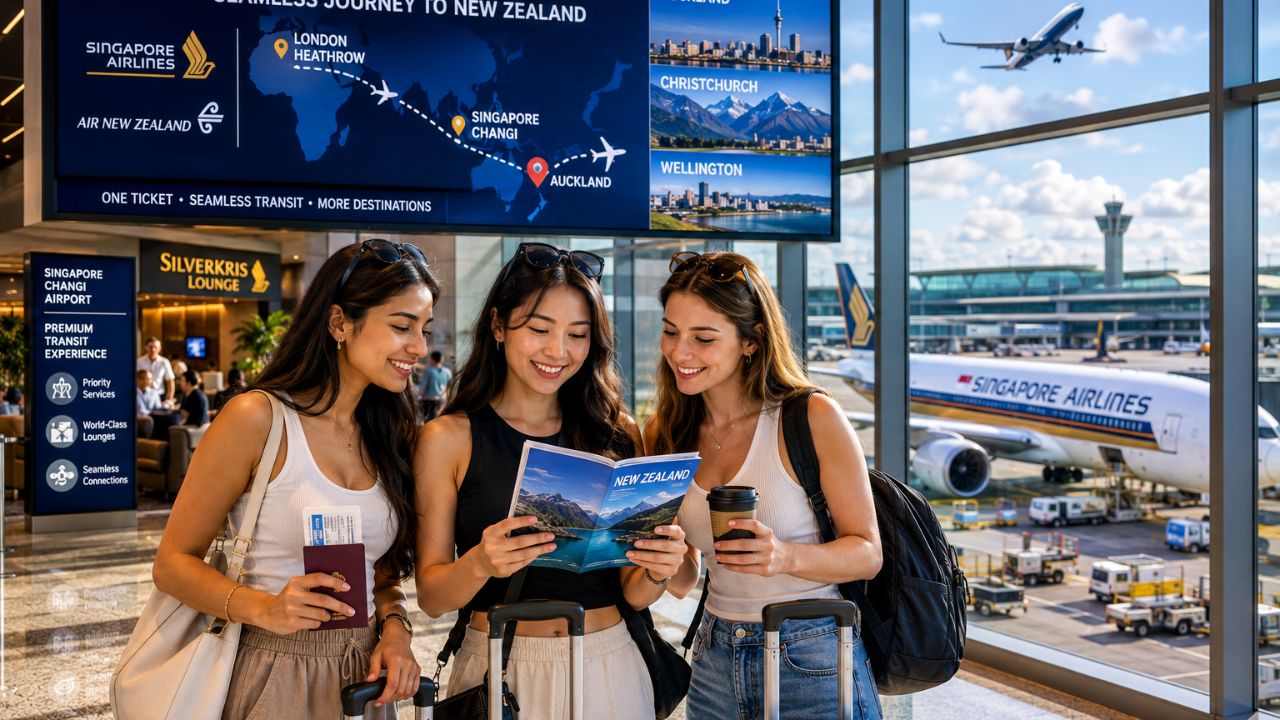
Image generated by AI
Aviation Updates: Singapore Airlines and Air New Zealand Launch Joint Venture to Help Fliers Bypass Travel Chaos
As extreme operational friction and suddenly compounding infrastructure bottlenecks continue to terrorize standard travel itineraries, Singapore Airlines and Air New Zealand have explicitly launched a powerful joint venture designed to shield premium long-haul travelers from devastating travel chaos.
Image generated by AI
As high-impact airline news platforms rapidly issue continuous, grim aviation updates regarding the intense fragility of massively congested primary transit grids, highly structured airline alliances have officially become a traveler's most critical defense mechanism. Amidst widespread rolling travel chaos, severe airport disruptions, and the terrifying threat of devastating flight cancellations severely plaguing heavily overcrowded Middle Eastern hubs, a powerful strategic joint venture expansion between Singapore Airlines and Air New Zealand has officially launched. By drastically optimizing flight schedules strictly through Singapore Changi Airport, the carriers are actively delivering a highly resilient, seamless, single-ticket transit corridor stretching entirely from London Heathrow to multiple premier destinations across the Kiwi mainland, effectively bypassing the systemic terminal meltdowns actively crippling rival networks.
Expanded Overview: The Defensive Power of Route Optimization
To fully comprehend the sheer scale of this massive logistical evolution, commercial aviation analysts must closely examine how rapidly localized scheduling coordination violently reshapes passenger retention and transit security.
The massive disruption pattern actively terrorizing global networks is primarily defined by highly disjointed multi-carrier itineraries. Prior to this joint expansion, planning multi-city itineraries across the Southern Hemisphere required navigating completely disparate airline schedules, disconnected baggage rules, and incredibly disjointed frequent flyer point policies. According to massive aviation commercial updates published by Travel Weekly, the two prominent flag carriers have significantly strengthened their long-standing alliance strictly to capture surging post-pandemic transit demand while simultaneously destroying this operational fragmentation. This deep commercial integration allows both businesses to fiercely optimize capacity, pool financial resources, and systematically adjust daily flight frequencies specifically to counter aggressive competitive maneuvers from rival Middle Eastern network hubs that frequently suffer massive ground delays.
Section-Wise Breakdown: Expanding the Transit Shield
Terminal operations are violently degrading across competing hubs, forcing major carriers to furiously optimize their strategic alliances to strictly ensure maximum brand loyalty among highly stressed premium consumers.
The Changi Airport Pipeline: The logistical spine of this freshly optimized aviation corridor relies completely on the world-renowned infrastructure of Singapore Changi Airport. The enhanced joint venture seamlessly funnels daily flights departing directly from London Heathrow into a highly efficient transit terminal in Southeast Asia. From this secure central point, the carriers coordinate multiple high-frequency departures heading directly to major New Zealand cities, heavily including Auckland, Christchurch, and Wellington. This meticulously timed hub-and-spoke system actively ensures that highly vulnerable layover durations are kept to an absolute bare minimum, drastically reducing the threat of missed connections.
Cabin Breakthroughs and Passenger Comfort: The actual time spent in the air on these grueling multi-stop journeys is actively being transformed by incredible passenger comfort breakthroughs. On the long-haul legs, Singapore Airlines aggressively deploys its massive, state-of-the-art Airbus A350 and Boeing 777 fleets, featuring incredibly spacious premium economy and business class configurations. Concurrently, Air New Zealand provides its legendary hospitality alongside its highly proprietary “Economy Skycouch” design framework. This completely unique seating layout permits regular economy passengers to convert an entire row of three seats into a flat, private sleeping surface, offering a premium experience even outside of business class.
Loyalty Ecosystem Integration: The financial incentives driving customer loyalty within this expanded alliance are heavily delivering unprecedented value. Members of both KrisFlyer and Airpoints loyalty programs can now enjoy fully reciprocal point accrual and redemption privileges across the entire combined route map. Elite tier status holders, specifically including Star Alliance Gold members, unlock immediate priority boarding, extra baggage allowances, and highly critical fast-track security access globally, actively providing massive bureaucratic leverage if localized disruptions occur.
Strategic Details: Verified Alliance Optimization Matrix
To ensure stranded passengers and commercial aviation analysts can accurately track the incredibly precise operational telemetry of this massive network shift, the verified structural data has been consolidated into the exact, mandatory matrix below.
| Operational Feature | Passenger Benefit |
|---|---|
| Partner Airlines | Singapore Airlines & Air New Zealand |
| Transit Hub | Singapore Changi Airport |
| Origin / Destinations | London Heathrow to Auckland, Christchurch, Wellington |
| Ticketing Integration | Single-Ticket Check-In & Automatic Baggage Transfer |
| Loyalty Ecosystem | Reciprocal KrisFlyer & Airpoints Integration |
| Elite Tier Perks | Star Alliance Gold (Priority Boarding, Fast-Track) |
| Singapore Air Fleet | A350 & B777 Premium Cabins |
| Air New Zealand Cabin | Proprietary "Economy Skycouch" Technology |
| Booking Window | 6 to 9 Months in Advance for Peak Summer |
(Source: Singapore Airlines, Air New Zealand, Travel Weekly)
Industry Analysis: The Macroeconomic Impact of Coordinated Hubs
Air travel explicitly across massive global transit corridors continues to massively struggle, driven violently by incredibly fragile air traffic flow constraints and severely congested layover zones.
To explore how advanced airport hubs continuously optimize transit times to streamline complex global passenger corridors, industry stakeholders closely track logistics via specialized tracking networks like FlightRoutes to furiously analyze real-time scheduling data. Passengers actively benefit from a strictly unified single-ticket check-in policy that legally guarantees baggage is automatically transferred directly to their final destination down under. Furthermore, premium travelers can seamlessly access an expansive network of luxury departure lounges at every stage of their long-distance journey. By deeply focusing heavily on physical well-being and high-quality logistics, the alliance is aggressively setting an entirely new standard for highly secure global airline travel.
Passenger Impact: Protecting the Vacation Baseline
For the everyday premium domestic traveler and budget-conscious international vacationer, the immediate consequence of this massive logistical evolution directly translates to a monumental, highly verified spike in transit leverage.
Travelers desperately attempting to navigate complex long-haul flight itineraries frequently encounter heavily delayed baggage, catastrophic missed connections, and the terrifying threat of sudden airspace gridlock when utilizing split-network flying. The strategic deployment of these optimized flight schedules is explicitly designed to encourage highly rewarding multi-day stopover vacations to alleviate travel anxiety. Travel agents are aggressively urging consumers to look beyond traditional point-to-point bookings and actively embrace a two-in-one holiday itinerary strategy. By taking massive advantage of the natural geographical hub in Southeast Asia, British tourists can cleanly split their massive journey with a vibrant, multi-day urban escape in Singapore, completely avoiding transit fatigue before continuing to New Zealand.
Conclusion: A Network Reimagined
Ultimately, the aggressive, massive expansion of the Singapore Airlines and Air New Zealand joint venture actively marks a massively significant milestone in global aviation coordination. The current booking windows for the upcoming peak southern hemisphere summer season are already filling up at a record-shattering pace.
Industry data explicitly indicates that booking approximately six to nine months in advance yields the absolute highest availability for these incredibly unique multi-destination premium tickets. To read localized travel tips or strictly review curated luxury hotel guides for these specific global stopover destinations, international holidaymakers frequently check official cultural updates on Condé Nast Traveller. Ultimately, travelers who actively leverage this highly coordinated joint venture will safely experience the most logical, deeply comfortable way to conquer ultra-long-haul travel while actively bypassing the massive disruptions plaguing uncoordinated competitors.
Key Takeaways
- Massive Network Optimization: Singapore Airlines and Air New Zealand unified their booking engines to create a highly efficient transit pipeline from London to New Zealand.
- Changi Transit Hub: The meticulously timed hub-and-spoke system routes passengers safely through Singapore Changi Airport to drastically minimize layover times.
- Cabin Innovation: Singapore deploys A350 and B777 premium cabins, while Air New Zealand offers its proprietary, lie-flat "Economy Skycouch."
- Elite Frequent Flyer Integration: KrisFlyer and Airpoints members gain fully reciprocal earning and redemption rights, with Star Alliance Gold unlocking global fast-track access.
- Strategic Booking Windows: Industry experts strongly advise booking these highly coveted routes 6 to 9 months in advance for the peak southern summer season.
FAQ: Singapore Airlines and Air New Zealand Joint Venture 2026
What is the new joint venture between Singapore Airlines and Air New Zealand? The joint venture drastically optimizes flight schedules through Changi Airport, delivering seamless, single-ticket transit corridors from London Heathrow directly to Auckland, Christchurch, and Wellington.
Do I have to recheck my bags when transiting in Singapore? No. Passengers actively benefit from a strictly unified single-ticket check-in policy that guarantees baggage is automatically transferred directly to their final destination in New Zealand.
What is the Air New Zealand Economy Skycouch? The Economy Skycouch is a proprietary, unique seating layout that permits regular economy passengers to convert an entire row of three seats into a flat, private sleeping surface.
Can I earn KrisFlyer miles on Air New Zealand flights? Yes. Due to the deep loyalty ecosystem integration, members of both KrisFlyer and Airpoints programs enjoy fully reciprocal point accrual and redemption privileges across the combined network.
Related Travel Guides
EU EES Border Delays British Holidaymakers Travel Chaos 2026
United States Flight Delays Southwest Airlines Travel Chaos 2026
Asia Middle East Flight Delays China Eastern Travel Chaos 2026
Disclaimer: This article is strictly for informational and aviation tracking purposes. The specific operational telemetry (Skycouch availability, 6-9 month booking windows) and alliance details are based on verified corporate announcements and Travel Weekly data available at the time of publication. Fleet assignments, specific loyalty reward multipliers, and airline ancillary policies are highly dynamic and subject to immediate modification by the operating authorities. Passengers booking long-haul itineraries should explicitly verify exact terms, conditions, and alliance benefits via official Singapore Airlines and Air New Zealand platforms prior to booking.
Disclaimer
This article is for informational and educational purposes only. It does not constitute legal, financial, or professional advice. While we strive to provide accurate and up-to-date information, travel policies, regulations, and conditions change rapidly. Always verify information with official sources before making travel decisions. Nomad Lawyer makes no representations about the accuracy, reliability, completeness, or suitability of the information provided. Readers should consult qualified professionals for advice specific to their circumstances. The views expressed in this article are those of the author and do not necessarily reflect the views of Nomad Lawyer.
Kunal K Choudhary
Co-Founder & Contributor
A passionate traveller and tech enthusiast. Kunal contributes to the vision and growth of Nomad Lawyer, bringing fresh perspectives and driving the community forward.
Learn more about our team →