
Newark Airport Emerges as US Punctuality Leader While Qantas Deploys Revolutionary Ultra-Long-Range Airbus
Breaking airline news and aviation industry updates for 2026.

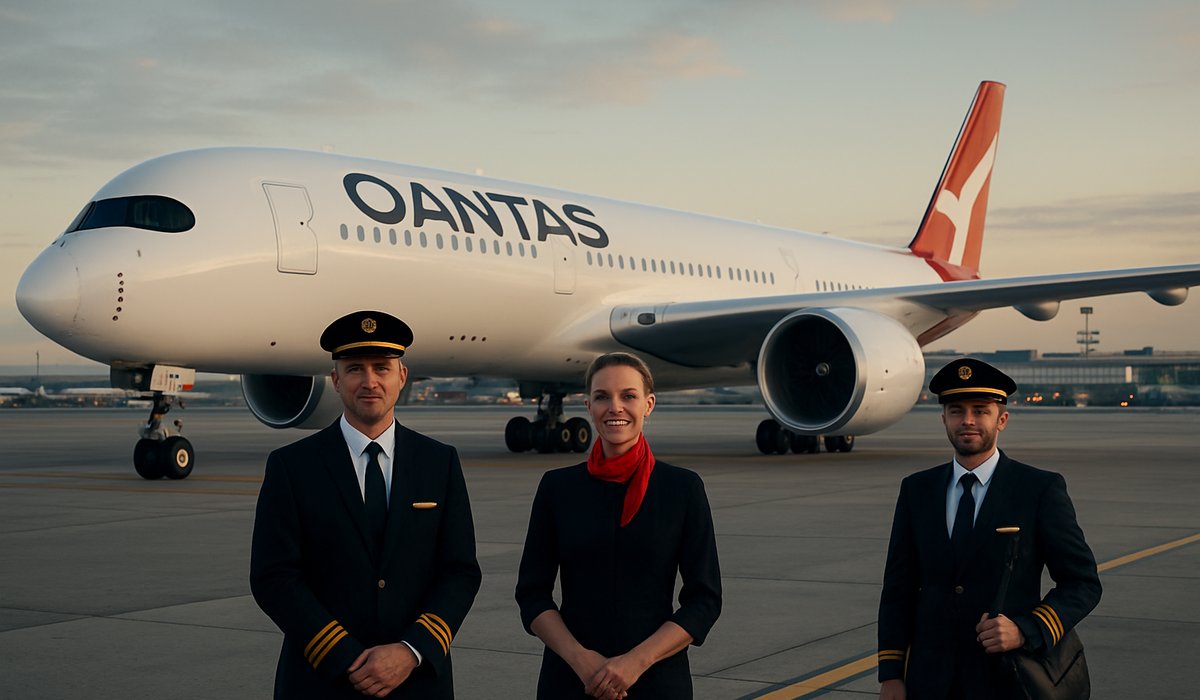
Image generated by AI
Newark Airport Emerges as US Punctuality Leader While Qantas Deploys Revolutionary Ultra-Long-Range Airbus
Latest aviation industry developments highlight operational excellence and next-generation aircraft technology
Newark Liberty Sets New Benchmark for On-Time Performance
Newark Liberty International Airport has distinguished itself as America's most punctual major hub, according to the latest episode of the Simple Flying Podcast, marking a significant achievement in an industry where scheduling reliability remains fiercely competitive. The New Jersey gateway's performance metrics underscore the operational challenges facing major US carriers amid ongoing staffing pressures, infrastructure constraints, and post-pandemic capacity rearrangement.
The development carries particular weight for airlines operating at the congested New York metropolitan area, where operational delays cascade across networks and inflate costs for carriers already managing compressed margins. Newark's achievement suggests that targeted investment in ground operations, air traffic management coordination, and staff training can yield measurable results—a lesson increasingly critical as airlines pursue operational efficiency gains to offset inflationary pressures on jet fuel and labor costs.
Qantas Launches Revolutionary A350-1000ULR, Reshaping Ultra-Long-Range Aviation
In parallel developments, Australia's flag carrier Qantas has commenced operations with its first Airbus A350-1000ULR aircraft, a milestone representing a fundamental shift in long-haul aviation capabilities. The ultra-long-range variant extends range to approximately 8,700 nautical miles, enabling unprecedented routing flexibility and reduced fuel consumption per available seat kilometer—a critical metric as environmental regulations and carbon pricing mechanisms intensify across major markets.
The A350-1000ULR deployment positions Qantas to optimize transcontinental routes while reducing operational costs and carbon intensity, trends reflecting broader industry momentum toward fuel-efficient narrowbody and widebody platforms. For passengers, the aircraft introduces enhanced cabin comfort features, improved air quality systems, and extended range that permits direct routing between secondary cities previously requiring intermediate stops.
Industry Context: Technology and Operational Excellence Drive Competitive Advantage
These developments reflect diverging yet complementary strategies shaping modern aviation. While Newark's on-time performance gains demonstrate that operational discipline and infrastructure investment yield competitive returns, Qantas's investment in next-generation aircraft illustrates how technological advancement drives efficiency, sustainability, and network optimization.
The podcast episode, hosted by Simple Flying's Managing Editor Tom Boon and Senior Editor Channing Reid, explores these themes within broader industry context, examining how carriers balance near-term operational pressures against long-term competitive positioning.
Frequently Asked Questions
Q: How does airport on-time performance impact airline profitability? A: Punctuality improvements reduce fuel consumption, crew overtime costs, and passenger compensation expenses while enhancing reputation and yield management capabilities.
Q: What makes the Airbus A350-1000ULR different from standard widebody aircraft? A: The ULR variant achieves extended range (8,700+ nautical miles) through lightweight composite construction and optimized engines, enabling nonstop routes previously requiring intermediate stops.
Q: How do ultra-long-range aircraft affect airline baggage fees and ancillary revenue? A: Extended range permits direct routing that reduces connecting passenger numbers, potentially affecting ancillary revenue streams while improving operational economics.
Q: Which airlines operate A350-1000ULR aircraft currently? A: Qantas leads deployment, with additional orders placed by major carriers seeking fuel-efficient long-range capability.
Q: How do jet fuel prices influence adoption of next-generation aircraft? A: Rising fuel costs accelerate investment in efficient platforms; newer aircraft typically consume 20-25% less fuel than comparable legacy models, justifying capital expenditure.
Related Travel Guides
Disclaimer
This article is for informational and educational purposes only. It does not constitute legal, financial, or professional advice. While we strive to provide accurate and up-to-date information, travel policies, regulations, and conditions change rapidly. Always verify information with official sources before making travel decisions. Nomad Lawyer makes no representations about the accuracy, reliability, completeness, or suitability of the information provided. Readers should consult qualified professionals for advice specific to their circumstances. The views expressed in this article are those of the author and do not necessarily reflect the views of Nomad Lawyer.
Raushan Kumar
Founder & Lead Developer
Full-stack developer with 11+ years of experience and a passionate traveller. Raushan built Nomad Lawyer from the ground up with a vision to create the best travel and law experience on the web.
Learn more about our team →