
Why Commercial Aircraft Deliberately Burn Fuel Before Takeoff: An Industry Secret That Defies Logic
Breaking airline news and aviation industry updates for 2026.

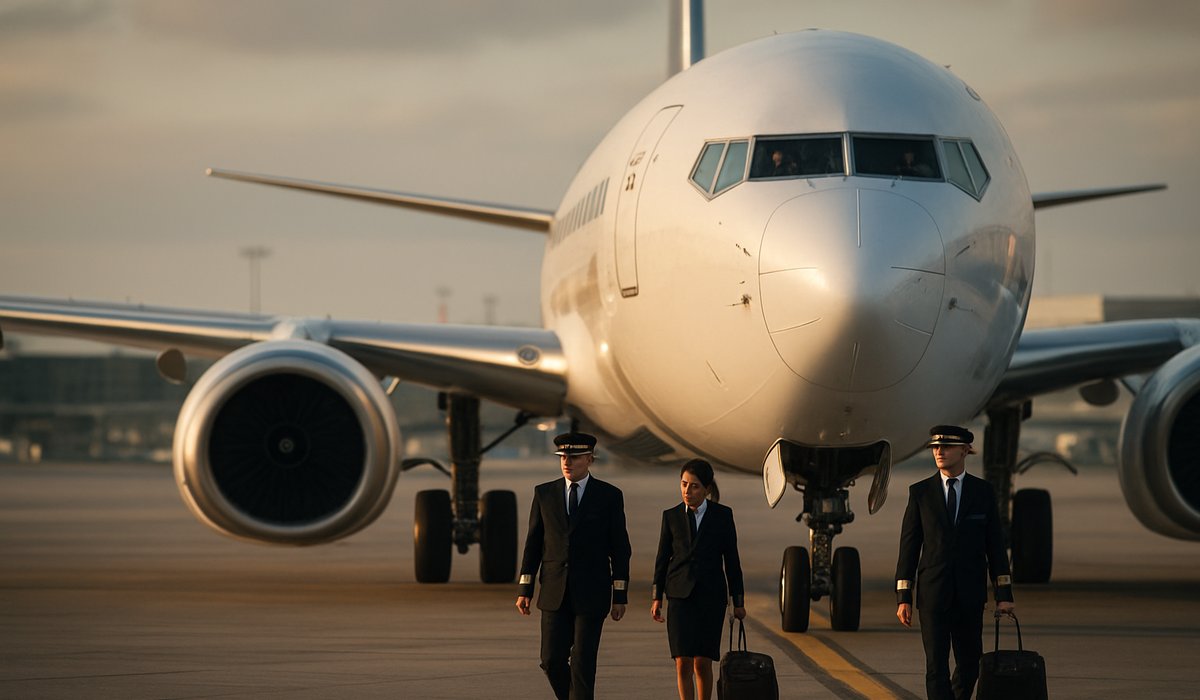
Image generated by AI
Why Commercial Aircraft Deliberately Burn Fuel Before Takeoff: An Industry Secret That Defies Logic
Understanding the operational constraints forcing airlines to waste thousands of gallons of jet fuel daily
The Paradox of Grounded Aircraft
In an industry obsessed with fuel efficiency and cost optimization, commercial aviation faces a counterintuitive operational challenge: pilots regularly ignite engines and burn substantial quantities of jet fuel while planes remain stationary at the gate or runway. This practice, known as "high idle" operations, appears wasteful on its surface, yet reflects a fundamental constraint in modern air transportation—the delicate balance between aircraft weight limitations and regulatory safety requirements.
The phenomenon underscores a broader tension within global aviation: as airlines squeeze maximum capacity onto flights to boost profitability amid rising jet fuel prices and competitive pricing pressures, they frequently encounter situations where aircraft cannot safely operate at their intended gross weight.
Weight Restrictions and Physics Collide
Aircraft performance is governed by rigid aerodynamic and structural limits. Each plane has a maximum takeoff weight (MTOW) determined by manufacturer specifications and regulatory certification. When a flight is fully booked with passengers, baggage, cargo, and full fuel tanks—a scenario increasingly common as carriers maximize load factors—the combined weight can exceed what runway length or atmospheric conditions safely permit.
Rather than offload paying cargo or passengers, airlines employ fuel dumping or deliberate high-idle burn operations. By operating engines at elevated thrust while stationary, excess jet fuel is consumed, reducing the aircraft's total weight to within permissible takeoff parameters. A single wide-body aircraft can burn hundreds of gallons per minute during this process.
Environmental and Economic Implications
This practice reveals the hidden environmental costs of modern air travel. As jet fuel prices remain volatile—influenced by geopolitical tensions, refinery capacity, and crude oil markets—intentional fuel burn represents a direct financial loss for carriers already operating on razor-thin margins.
The procedure also carries climate implications. Each gallon of jet fuel combusted generates greenhouse gas emissions equivalent to ground-level fuel consumption, contributing to aviation's estimated 2-3% of global carbon emissions.
A Systemic Industry Challenge
Airlines argue the practice is unavoidable given contemporary operational demands. Modern flight schedules leave minimal flexibility, and regulatory authorities enforce strict weight-and-balance protocols. Some industry analysts suggest better ground infrastructure, runway improvements, and weight management protocols could reduce unnecessary fuel burn—yet such investments require capital many carriers struggle to allocate.
As aviation continues navigating post-pandemic recovery while confronting sustainability mandates, this operational reality exemplifies the deeper inefficiencies embedded within commercial air transport systems.
FAQ: Common Questions About Aircraft Fuel Burn Operations
Why can't airlines simply remove cargo instead of burning fuel? Removing booked cargo or offloading paid passengers creates revenue loss, customer service issues, and scheduling cascades. Fuel burn, while costly, often represents the least disruptive option operationally.
How much fuel is wasted annually through this practice? Industry estimates suggest millions of gallons daily across global commercial aviation, though exact figures remain proprietary to individual carriers.
Is this practice regulated by aviation authorities? Yes. The FAA, EASA, and other regulatory bodies mandate procedures, but they don't prohibit the practice—they simply ensure it's executed safely within established protocols.
What's the environmental impact compared to in-flight fuel dumping? Ground-based fuel burn and in-flight dumping produce similar emissions per gallon, though ground operations are more localized and concentrated near airports.
Will electric or sustainable aviation fuels eliminate this problem? Next-generation aircraft with improved weight-to-thrust ratios may reduce instances, though fundamental physics constraints will likely persist across the industry.
Related Travel Guides
- Porter Airlines Stuns Transnational Passengers with New Nonstop Toronto to Austin Year-Round Flights, Revealing Fastest Canada-US Corridor to Prevent Flight Cancellations and Travel Chaos Across Texas and Ontario: New Airline News and Aviation Updates
- Aviation Updates: Alaska Airlines Launches Nonstop Flights from Seattle to London and Reykjavík
- Trans-Tasman Travel Chaos: 14 Flight Cancellations and 381 Delays Paralyze Sydney, Melbourne, and Christchurch Hubs for Qantas, Air New Zealand, and Virgin Australia
Disclaimer
This article is for informational and educational purposes only. It does not constitute legal, financial, or professional advice. While we strive to provide accurate and up-to-date information, travel policies, regulations, and conditions change rapidly. Always verify information with official sources before making travel decisions. Nomad Lawyer makes no representations about the accuracy, reliability, completeness, or suitability of the information provided. Readers should consult qualified professionals for advice specific to their circumstances. The views expressed in this article are those of the author and do not necessarily reflect the views of Nomad Lawyer.
Preeti Gunjan
Contributor & Community Manager
A passionate traveller and community builder. Preeti helps grow the Nomad Lawyer community, fostering engagement and bringing the reader experience to life.
Learn more about our team →