
Travel Seoul Goes Ultra-Connected: Free Wi-Fi Networks Reshape Asian Tourism
Seoul's aggressive free Wi-Fi expansion is transforming digital tourism across Asia in 2026. The city now rivals global tech hubs with its connectivity infrastructure, reshaping how millions navigate and experience urban travel.

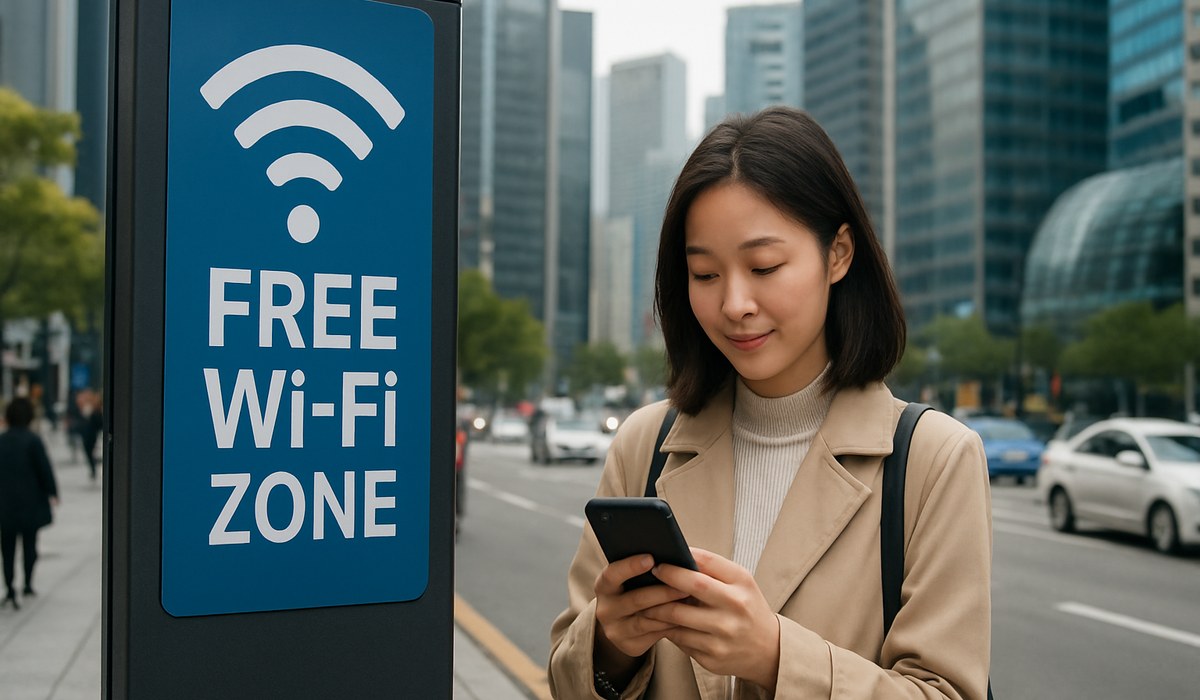
Image generated by AI
Quick Summary
- Seoul has deployed one of Asia's most extensive public Wi-Fi networks, covering metro stations, parks, and commercial districts
- Free connectivity eliminates roaming costs and removes barriers to real-time navigation for budget-conscious travelers
- The infrastructure investment positions Seoul ahead of regional competitors in the Asia slow travel market
- Tourists can now access translation apps, booking platforms, and local services without purchasing data plans
Seoul's Wi-Fi Revolution: The Infrastructure That's Redefining Asian Tourism
Seoul has quietly engineered one of the world's most formidable digital tourism infrastructures. While visitors to competing Asian cities grapple with unreliable mobile coverage and expensive roaming charges, the South Korean capital has woven seamless connectivity into nearly every public space—from subway platforms to riverside parks. This isn't marketing hyperbole. The city's commitment to blanket Wi-Fi coverage represents a genuine competitive shift in how travelers experience major urban destinations.
The scale is remarkable. According to Seoul Metropolitan Government initiatives announced throughout 2025 and 2026, the city maintains over 35,000 free Wi-Fi hotspots across public institutions, transportation hubs, and outdoor recreational areas. This infrastructure reaches beyond tourist zones. Residential neighborhoods, municipal libraries, and public markets—the places where authentic urban exploration happens—all offer high-speed connectivity at zero cost. For context on how Seoul fits within global tourism recovery trends, the UN World Tourism Organization has identified digital infrastructure as a critical differentiator for post-pandemic destination competitiveness.
The practical implications for travelers are substantial. Visitors arriving with international roaming disabled can immediately access mapping applications, translation services, and real-time transit information upon exiting the airport. This removes friction from the first-time travel experience and particularly benefits budget travelers who typically avoid expensive data packages.
Beyond Convenience: How Free Connectivity Shapes the Modern Travel Experience
Connectivity transcends logistical convenience—it fundamentally alters how travelers interact with urban space. When navigation becomes frictionless, exploratory behavior increases. Visitors venture into residential districts, discover neighborhood cafés, and access hyperlocal information that traditional guidebooks cannot match.
Seoul's infrastructure enables what travel professionals call "serendipitous discovery." A tourist following a restaurant recommendation into an unfamiliar alley can instantly verify directions. A cultural enthusiast can translate museum placards in real time. Language barriers—historically a major friction point in solo travel—diminish substantially when real-time translation tools operate without data throttling.
National Geographic Travel has increasingly documented how digital infrastructure influences the authenticity of urban exploration. Paradoxically, enhanced connectivity can deepen genuine cultural engagement. When basic navigation and communication challenges are resolved, travelers allocate more mental energy to observation and interaction rather than logistics.
Seoul's free Wi-Fi zones extend beyond commercial districts. The city has prioritized coverage in cultural spaces—museums, heritage sites, traditional markets. This design choice signals an investment philosophy that treats connectivity as essential infrastructure for equitable tourism access, not merely a convenience amenity for affluent travelers.
The Competitive Advantage: Why Other Asian Cities Are Playing Catch-Up
The broader Asian travel landscape has entered a period of digital infrastructure competition. Cities across the region are rushing to upgrade connectivity in response to Seoul's positioning as a "digital-first destination." This competitive pressure creates measurable advantages for Seoul's tourism economy.
Consider the regional context. As detailed in our analysis of the Asia Slow Travel: Japan & Thailand Lead New Regional Circuit, emerging slow travel circuits prioritize destinations with reliable digital infrastructure. Paradoxically, travelers seeking "authentic" offline experiences still value connectivity for safety, emergency communication, and offline-to-online transition moments.
Seoul's Wi-Fi advantage is particularly consequential for the growing segment of location-independent workers and extended travelers. Digital nomads, remote professionals taking working sabbaticals, and long-term budget travelers increasingly select destinations based on connectivity reliability. Seoul now attracts this demographic more effectively than competing hubs like Bangkok or Ho Chi Minh City, where coverage remains inconsistent and data plans are comparatively expensive.
The competitive gap extends to infrastructure reliability. Seoul's Wi-Fi network operates under consistent performance standards maintained by the city government, ensuring tourists encounter similar service quality across districts. This contrasts with cities where private operators manage hotspots inconsistently, creating unpredictable coverage gaps.
Government investment reflects commitment. While cities like Yunnan are emerging as Europe gateways through infrastructure development, Seoul has prioritized digital connectivity as its defining competitive advantage within Asia. This focused investment strategy demonstrates strategic positioning within regional tourism hierarchies.
Practical Guide: Maximizing Seoul's Digital Network as a Tourist
Getting Connected Upon Arrival
International travelers entering Incheon or Gimpo airports can immediately access free airport Wi-Fi without authentication. Major carriers operate their own hotspots; municipal systems provide backup coverage. Connection requires only accepting terms of service—no Korean phone number, credit card, or sim card necessary.
Navigating the City
The Seoul Metro system requires zero data for physical navigation. Station names appear in English and Korean on platforms. However, connecting to the free "SeoulFreeWiFi" network at major interchange stations enables real-time departure tracking via apps like Naver or Kakao Map. These applications provide accurate arrival estimates and platform assignments that static signage cannot match.
For accommodation-specific navigation, Lonely Planet recommends downloading offline maps before traveling. However, Seoul's coverage means online navigation remains practical for budget travelers. Download only your home country before departure; cover Seoul once connected.
Practical Connectivity Strategy
Budget travelers should identify Wi-Fi-enabled cafés in their neighborhood immediately upon arrival. Korean coffee shops (typically 4,000–6,000 KRW per beverage) have become informal co-working spaces. Establish a home base for video calls, communication with family, or hostel booking for future destinations. This approach costs less than a single day of international roaming.
Tourist areas including Gangnam, Myeongdong, and Jongno-gu maintain particularly dense Wi-Fi coverage. These districts also host free government-operated visitor centers where connectivity supplements tourism information services.
Communication Apps and Services
Download Kakao Talk and Naver services before arrival. These applications (requiring only email registration) function seamlessly over Seoul's free networks and enable local communication without international data plans. Restaurant reservations, taxi services, and accommodation inquiries increasingly operate through these platforms rather than traditional websites.
Practical Information for Seoul Travelers
Climate and Best Travel Season
Spring (April–May) and autumn (September–October) offer optimal conditions, with moderate temperatures (15–25°C) and minimal precipitation. Summer months bring heat and humidity; winter presents cold snaps below freezing. Pack layers year-round; connectivity enables real-time weather monitoring for trip adjustments.
Visa Requirements
Most Western passport holders receive 90-day visa-free entry upon arrival. Southeast Asian citizens should verify current requirements through their nearest Korean embassy. Extended stays require separate visa applications; connectivity enables digital processing of supporting documents.
Currency and Budget Considerations
The South Korean won (KRW) is the official currency. 1 USD approximately equals 1,200
Disclaimer
This article is for informational and educational purposes only. It does not constitute legal, financial, or professional advice. While we strive to provide accurate and up-to-date information, travel policies, regulations, and conditions change rapidly. Always verify information with official sources before making travel decisions. Nomad Lawyer makes no representations about the accuracy, reliability, completeness, or suitability of the information provided. Readers should consult qualified professionals for advice specific to their circumstances. The views expressed in this article are those of the author and do not necessarily reflect the views of Nomad Lawyer.
Preeti Gunjan
Contributor & Community Manager
A passionate traveller and community builder. Preeti helps grow the Nomad Lawyer community, fostering engagement and bringing the reader experience to life.
Learn more about our team →