
San Francisco Beyond the Icons: Neighborhoods, Spending Surge, and Complete City Guide 2026

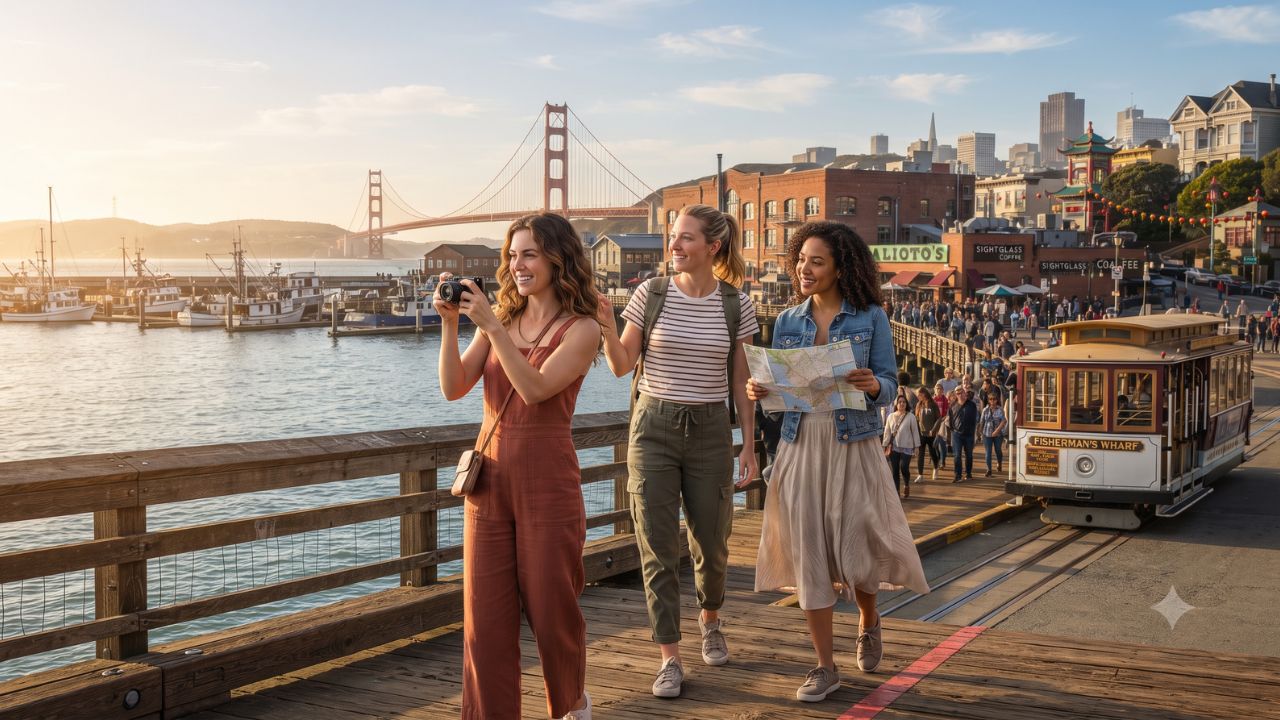
While most first-time visitors to San Francisco never venture beyond the Golden Gate Bridge and Alcatraz, over 60% of the city's visitor spending is generated directly within residential neighborhoods outside downtown hotels. Strategic tourism analyses published by the San Francisco Travel Association reveal that the city welcomed an estimated 23.7 million visitors in 2025 generating $9.4 billion in direct spending, with forecasts projecting 24.2 million travelers and a record-shattering $9.9 billion in visitor expenditure for 2026.
This economic milestone surpasses the pre-pandemic 2019 benchmark of $9.6 billion, demonstrating how international and domestic explorers are actively seeking multi-layered urban experiences across maritime waterfronts, historic immigrant enclaves, coastal parklands, and elevated ridge trails.
The Economic Resurgence: Five Years of Tourism Transformation
San Francisco's visitor economy has undergone a remarkable multi-year evolution. In 2021, tourism remained constrained at 17.0 million visitors (generating $3.56 billion in spending, comprising 12.48 million day visitors, 3.98 million domestic overnight guests, and 0.56 million international travelers). Inbound volume expanded to 21.9 million in 2022 ($7.4 billion in spending, up 28.8%, with international arrivals surging 211% to 1.7 million). In 2023, arrivals climbed to 23.1 million ($8.8 billion spending, including 2.19 million international overnight visitors), held steady at 23.06 million in 2024 ($9.26 billion spending supporting 62,000 jobs), and reached 23.7 million in 2025 ($9.4 billion spending supporting 63,900 tourism jobs).
During 2025, citywide hotels achieved 67.2% occupancy with an average daily rate (ADR) of $245.38 and revenue per available room (RevPAR) of $164.85, producing $655 million in local tourism tax revenues. Connectivity through San Francisco International Airport (SFO) surpassed 54.5 million passengers across more than 140 nonstop routes, including over 60 international gateways, establishing seamless access for global travelers.
What Makes San Francisco's Neighborhoods Experientially Distinct
San Francisco's compact 49-square-mile layout allows travelers to traverse diverse cultural, ecological, and historic districts within a single day:
- Fisherman's Wharf and Maritime Waterfront: Blending historic seaport commerce with bay views, the district centers on San Francisco Maritime National Historical Park. Visitors can explore the 1907 Haslett Warehouse visitor center at 499 Jefferson Street (open daily 10:00 to 17:00) and the Maritime Museum (open Wednesday through Sunday 10:00 to 16:00). While Hyde Street Pier remains temporarily closed for structural restoration with its historic fleet relocated to Mare Island, the surrounding Aquatic Park, Ghirardelli Square, and historic cable car turnaround provide a classic coastal introduction. Sourdough bread bowls filled with clam chowder and seasonal Dungeness crab remain culinary staples.
- Chinatown and Portsmouth Square: Holding over a century of continuous cultural heritage, Chinatown is North America's oldest Chinese enclave. Portsmouth Square, the historic civic gathering space, is undergoing a $73 million municipal revitalization project announced in June 2026 to add modern play spaces, event lawns, and a community clubhouse. Walking its lively side streets reveals traditional dim sum tea houses, roast duck windows, herbal apothecaries, and artisan bakeries.
- Mission District and Mission Dolores Park: Anchored at Dolores and 19th streets, the sunny slopes of Mission Dolores Park attract thousands of locals every weekend for skyline picnics. The surrounding corridor offers vibrant community murals along Clarion Alley and authentic Latin American culinary staples, from Mexican street tacos and pupusas to world-famous Mission-style foil-wrapped burritos.
- Palace of Fine Arts: Originally built for the 1915 Panama-Pacific International Exposition, this neoclassical masterpiece stands as the exposition's sole surviving major structure. Featuring an ornate Greco-Roman rotunda and curved colonnade beside a serene swan lagoon, it operates daily from 05:00 to midnight for photography and quiet walks adjacent to the Marina district.
- Twin Peaks Viewpoint: Rising 922 feet above sea level as the city's second-highest summit after Mount Davidson, this 64-acre park (including 31.1 acres of protected natural habitat) delivers unmatched 360-degree vistas of the bay, downtown towers, and the Golden Gate strait. Vehicle access is available through the Portola Drive gate (05:00 to midnight), while the Burnett Avenue vehicle gate remains closed.
- Presidio and Golden Gate Park: Spanning 1,000 acres with 53 miles of hiking trails and a free park shuttle, the Presidio Trust welcomes roughly 9.5 million annual visitors. Its transformative Presidio Tunnel Tops parkland welcomed five million visitors during its first three years through July 2025, expanded further by the 1.5-acre Outpost Meadow in 2025 providing outdoor picnic seating for 240 guests. Golden Gate Park stretches across 1,017 acres, welcoming an estimated 24 million annual visitors along its three-mile green corridor from Haight-Ashbury to the 3.5-mile Pacific coastline at Ocean Beach.
Visitor Insider Tips for Navigating San Francisco
Maximizing your itinerary while managing expenses requires understanding transit options, neighborhood topography, and local timing:
- Master the SFMTA Visitor Passport: Public transit overseen by the San Francisco Municipal Transportation Agency (SFMTA) provides significant cost efficiency. Single adult Muni bus and light rail fares cost $5.70 via Clipper or contactless payment, while historic cable car rides cost $9.00 (with an approved budget framework raising single cable car fares to $12.00 in January 2027 and introducing an $18.00 Cable Car Plus product). Purchasing a 1-Day Visitor Passport ($15), 3-Day Passport ($35), or 7-Day Passport ($47) grants unlimited rides on all Muni buses, historic streetcars, and cable cars.
- Dress in Multi-Layered Clothing for Microclimates: San Francisco's weather changes dramatically between neighborhoods. The western coastal districts near Ocean Beach often remain engulfed in chilly ocean fog (Karl the Fog), while the Mission District and Potrero Hill enjoy warm, sunny skies. Carry a lightweight windbreaker and fleece regardless of the morning forecast.
- Book Alcatraz Ferries Well in Advance: Official National Park Service concession ferries departing Pier 33 sell out weeks ahead during peak seasons. Allow two to three hours for the full island experience, including the award-winning Cellhouse audio tour available in Spanish, French, German, Italian, Japanese, Korean, Mandarin, Portuguese, and Dutch.
- Walk Neighborhoods on Foot, Connect via Light Rail: Avoid renting a car for city exploration due to steep parking rates and one-way grid hills. Base yourself near Union Square, Fisherman's Wharf, or the Marina to access rapid transit and enjoy walkable access to North Beach cafes and Chinatown alleyways.
- Dine During Off-Peak Hours: Popular dim sum houses in Chinatown and neighborhood taquerías in the Mission experience peak lunch queues between 12:30 and 14:00. Arrive before 11:30 or after 14:30 for swift table seating.
Cultural and Environmental Context: Coastal Ecology and Community Preservation
As San Francisco expands its visitor economy toward the $9.9 billion threshold, municipal leaders and environmental agencies are prioritizing ecosystem restoration and equitable neighborhood investment.
Along the Pacific edge at Ocean Beach, municipal teams launched extensive sand-dune revegetation initiatives in 2025 in collaboration with local volunteers and environmental partners. These projects restore native coastal flora, protect fragile dune topography from rising sea levels, and improve public beach access paths and restrooms.
At the historic 1925 Beach Chalet and throughout the western coastal corridors, visitors are encouraged to remain on marked paths, respect shorebird habitats, and support minority-owned culinary and arts cooperatives across the Mission and Chinatown, ensuring tourism revenues directly enrich local community heritage.
FAQ: Visiting San Francisco 2026
What is the best time of year to visit San Francisco?
September through November (autumn) offers the city's warmest, sunniest weather with minimal coastal fog, ideal for outdoor sightseeing and neighborhood exploration.
Do I need a car to get around San Francisco?
No. San Francisco is one of the most walkable transit-friendly cities in North America. Muni buses, streetcars, BART, and cable cars easily connect all major districts.
How do I reach downtown San Francisco from SFO Airport?
BART (Bay Area Rapid Transit) trains depart directly from SFO's International Terminal, reaching downtown stations (Powell St, Montgomery St) in approximately 30 minutes.
Is visiting Twin Peaks and the Palace of Fine Arts free?
Yes. Both Twin Peaks and the outdoor grounds and lagoon of the Palace of Fine Arts are free public parks open daily from 05:00 to midnight.
From early morning fog rolling through the Golden Gate to the vibrant aromas of Chinatown bakeries, San Francisco enchants those who look past the postcards.
Related Travel Guides
Disclaimer
This article is for informational and educational purposes only. It does not constitute legal, financial, or professional advice. While we strive to provide accurate and up-to-date information, travel policies, regulations, and conditions change rapidly. Always verify information with official sources before making travel decisions. Nomad Lawyer makes no representations about the accuracy, reliability, completeness, or suitability of the information provided. Readers should consult qualified professionals for advice specific to their circumstances. The views expressed in this article are those of the author and do not necessarily reflect the views of Nomad Lawyer.
Kunal K Choudhary
Co-Founder & Contributor
A passionate traveller and tech enthusiast. Kunal contributes to the vision and growth of Nomad Lawyer, bringing fresh perspectives and driving the community forward.
Learn more about our team →