
San Francisco Stands With New York City and Other US Cities in Hammering Mexican Tourism With a Drop in Tourist Arrivals for Eight Consecutive Months in 2026
San Francisco Stands With New York City and Other US Cities in Hammering Mexican Tourism With a Drop in Tourist Arrivals for Eight Consecutive Months in 2026

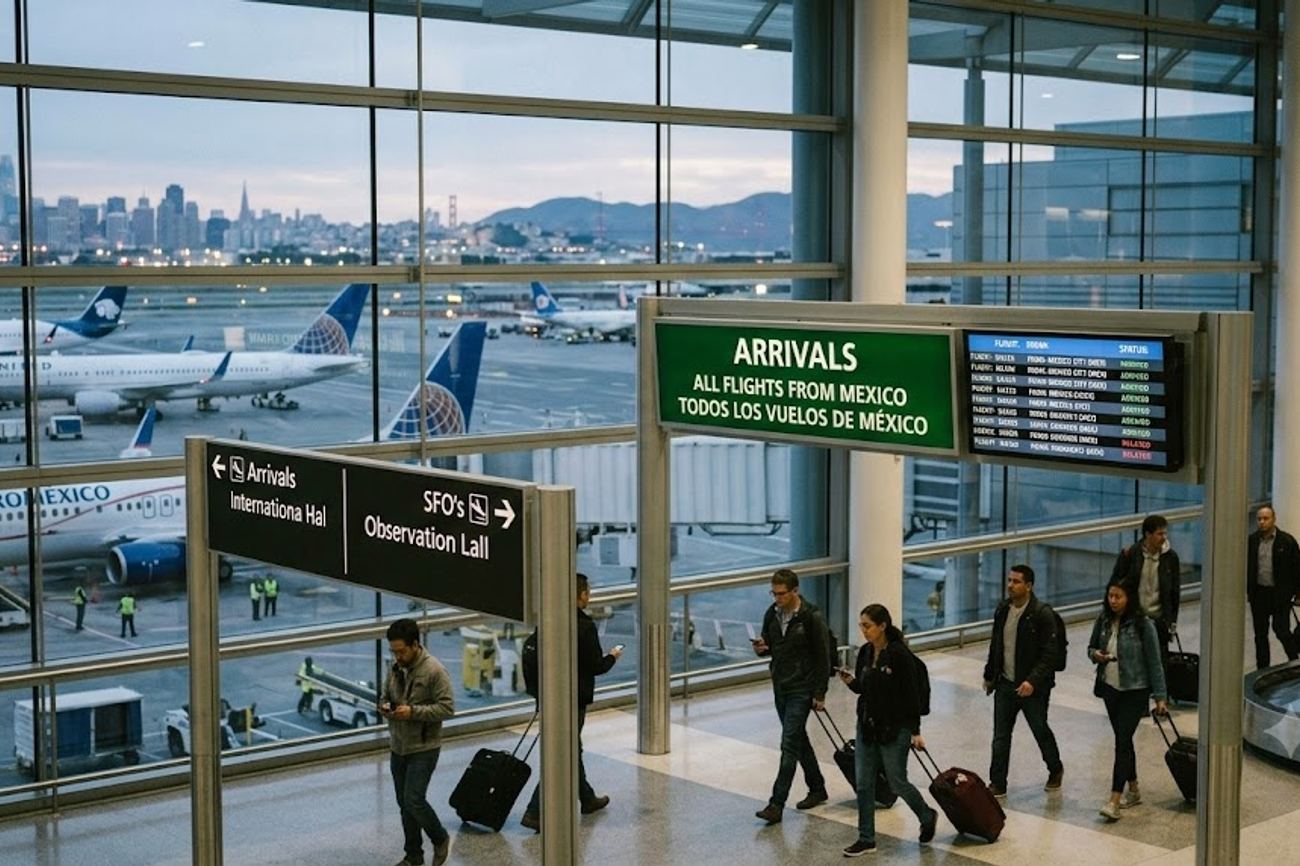
Image generated by AI
A 12.6% contraction in air passenger traffic from four critical US hubs signals a widening fracture in the primary pipeline fueling Mexican tourism. Between January and August 2026, the combined volume of US citizen-originating travelers from San Francisco, Oakland, Phoenix, and New York City plummeted from 1,300,459 to 1,136,898. This loss of 163,561 passengers suggests that the decline is not a random fluctuation but a systemic retreat across diverse geographic regions of the United States.
The Erosion of the US-Mexico Air Corridor
The downturn in 2026 is characterized by a persistent, month-over-month decline in several key metropolitan markets. While Mexico remains a premier destination, the logistical and economic friction points have intensified. The data indicates that the retreat is most severe in the West and Northeast, though the causes are multifaceted. A combination of reduced airline capacity, strategic shifts in carrier network deployment, and the appreciating value of the Mexican peso has made the destination less attractive or less accessible for the average American traveler.
The International Air Transport Association (IATA) often notes that capacity shifts—where airlines move aircraft to more profitable routes—can create a self-fulfilling prophecy: fewer flights lead to higher fares, which in turn suppresses demand. In this instance, the reduction in seat availability between the US and Mexico has acted as a ceiling on growth, forcing travelers to seek alternative destinations or reduce their travel frequency.
Regional Breakdown of Passenger Loss
The impact is not distributed evenly. While Los Angeles showed a 4.7% increase during the same period, other hubs experienced a sustained exodus. San Francisco emerged as the hardest-hit market, with a contraction that accelerated sharply during the spring and summer months.
| US Origin Market | Jan–Aug 2025 | Jan–Aug 2026 | Passenger Decline | YoY Change |
|---|---|---|---|---|
| San Francisco | 381,066 | 313,095 | −67,971 | −17.8% |
| Oakland | 121,780 | 106,682 | −15,098 | −12.4% |
| Phoenix | 422,175 | 375,544 | −46,631 | −11.0% |
| New York City | 375,438 | 341,577 | −33,861 | −9.0% |
| Combined | 1,300,459 | 1,136,898 | −163,561 | −12.6% |
San Francisco's decline was particularly aggressive, peaking in June with a 25.9% drop, as passenger numbers fell from 58,140 to 43,063. Phoenix followed a similar trajectory of instability, recording its steepest plunge in March, where traffic crashed 23.0% from 68,210 to 52,551. New York City exhibited a more gradual but equally persistent decay, with every single month from January to August recording a decline, though it showed slight signs of stabilization in August with a smaller 3.3% dip.
Oakland provided the most volatile data set. The market began 2026 with modest growth—6.7% in January and 7.5% in February—before suffering a severe reversal. Starting in April, the market entered a five-month slide, culminating in a June contraction of 29.6% (dropping from 18,666 to 13,148 passengers) and an August decline of 27.9%.
Expert Analysis: The Convergence of Currency and Capacity
For the seasoned traveler and the industry analyst, these numbers reveal a dangerous convergence of three specific forces: currency valuation, airline hub rationalization, and shifting consumer psychology.
San Francisco stands with New York City and other US cities in experiencing a significant drop in tourist arrivals from Mexico for eight consecutive months in 2026. According to official reports, this decline is largely attributed to changes in travel regulations and economic factors. For the most up-to-date information on travel requirements and restrictions, visitors can check the official website of the US Customs and Border Protection for the latest guidelines and procedures.
First, the strengthening of the Mexican peso is a critical, often overlooked variable. When the peso appreciates against the US dollar, the "on-the-ground" cost of tourism—hotels, dining, and local transport—increases for US citizens. For the price-sensitive leisure traveler, this erodes the value proposition of Mexico compared to other Caribbean or Central American alternatives.
Second, the data from Oakland and San Francisco suggests a strategic reallocation of assets by carriers. The sharp declines in June and August—typically peak travel months—point toward a reduction in flight frequencies or the deployment of smaller aircraft. When airlines reduce capacity, they often raise prices to maximize yield per seat, which further alienates the middle-market traveler.
Third, the geographic disparity (e.g., Los Angeles growing while San Francisco shrinks) indicates that the "Mexico Brand" is not failing, but the "Mexico Access" is. For travelers booking from the Bay Area or New York, the direct consequence is a restricted choice of flight times and a likely increase in ticket costs. The pricing pressure created by this capacity crunch means that Mexico is transitioning from a high-volume, accessible getaway to a more expensive, less convenient option for specific US demographics.
Key Takeaways
- Systemic Decline: Four major US hubs saw a combined loss of 163,561 passengers to Mexico between January and August 2026, a 12.6% drop.
- Bay Area Volatility: San Francisco suffered the most severe contraction at 17.8%, while Oakland saw early growth erased by a massive 29.6% plunge in June.
- Persistent NYC Weakness: New York City recorded eight straight months of declines, totaling a 9.0% overall reduction in passenger traffic.
- Economic Friction: The decline is attributed to a stronger Mexican peso, reduced airline seat capacity, and shifting carrier schedules.
- Uneven Geography: The trend is not universal across the US, as Los Angeles saw a 4.7% increase in traffic, suggesting regional rather than national collapse.
FAQ: Mexico Travel Trends 2026
Why are flights from San Francisco and NYC to Mexico becoming less frequent? Airlines are shifting capacity and network deployment based on profitability and demand. Combined with a stronger Mexican peso, these shifts have reduced the total number of available seats, leading to the recorded declines in passenger traffic.
The decrease in tourist arrivals has also affected passenger logistics, with airlines such as Aeromexico reporting reduced bookings on routes to major US cities. To stay informed about flight schedules and travel advisories, travelers can visit the official website of the US Transportation Security Administration for the latest information on security protocols and travel tips. Additionally, the Mexican Ministry of Tourism provides valuable insights and resources for travelers planning a trip to Mexico, including information on safety, accommodations, and cultural events.
Does this mean it is more expensive to travel to Mexico in 2026? Yes, for many. The combination of reduced airline capacity (which often drives up fares) and a stronger Mexican peso increases both the cost of the flight and the cost of spending money locally.
Which US cities are still seeing growth in travel to Mexico? While San Francisco, NYC, Phoenix, and Oakland are down, Los Angeles has bucked the trend, recording a 4.7% increase in US citizen-originating passenger traffic during the January–August period.
How does the Mexican peso affect my vacation budget? A stronger peso means your US dollars buy fewer pesos. This increases the cost of hotels, meals, and excursions, making the destination more expensive than it was in previous years.
The pipeline is leaking, and unless carriers restore capacity or the currency stabilizes, the "easy getaway" from the US East and West coasts may remain a thing of the past.
Tags: Mexico Tourism 2026, US-Mexico Air Traffic, San Francisco International Airport, JFK Airport, Mexican Peso Valuation, Airline Capacity Shifts
Related Travel Guides
- California Joins Florida and Other States in an Intense Effort to Capture India’s Booming Long-Haul Travel Market to Push US Tourism Amid Declines From Other Markets in 2026
- Egypt Along With Morocco and Other Countries Is in a Massive Race to Boost African Tourism Through New Investment in the Hotel and Hospitality Sector in 2026
- Thailand Unveils Suan Dusit Arun Success as Bangkok’s Largest Rooftop Park Welcomes Thousands of Visitors
Disclaimer
This article is for informational and educational purposes only. It does not constitute legal, financial, or professional advice. While we strive to provide accurate and up-to-date information, travel policies, regulations, and conditions change rapidly. Always verify information with official sources before making travel decisions. Nomad Lawyer makes no representations about the accuracy, reliability, completeness, or suitability of the information provided. Readers should consult qualified professionals for advice specific to their circumstances. The views expressed in this article are those of the author and do not necessarily reflect the views of Nomad Lawyer.
Preeti Gunjan
Contributor & Community Manager
A passionate traveller and community builder. Preeti helps grow the Nomad Lawyer community, fostering engagement and bringing the reader experience to life.
Learn more about our team →