
California Joins Florida and Other States in an Intense Effort to Capture India’s Booming Long-Haul Travel Market to Push US Tourism Amid Declines From Other Markets in 2026
California Joins Florida and Other States in an Intense Effort to Capture India’s Booming Long-Haul Travel Market to Push US Tourism Amid Declines From Other Ma

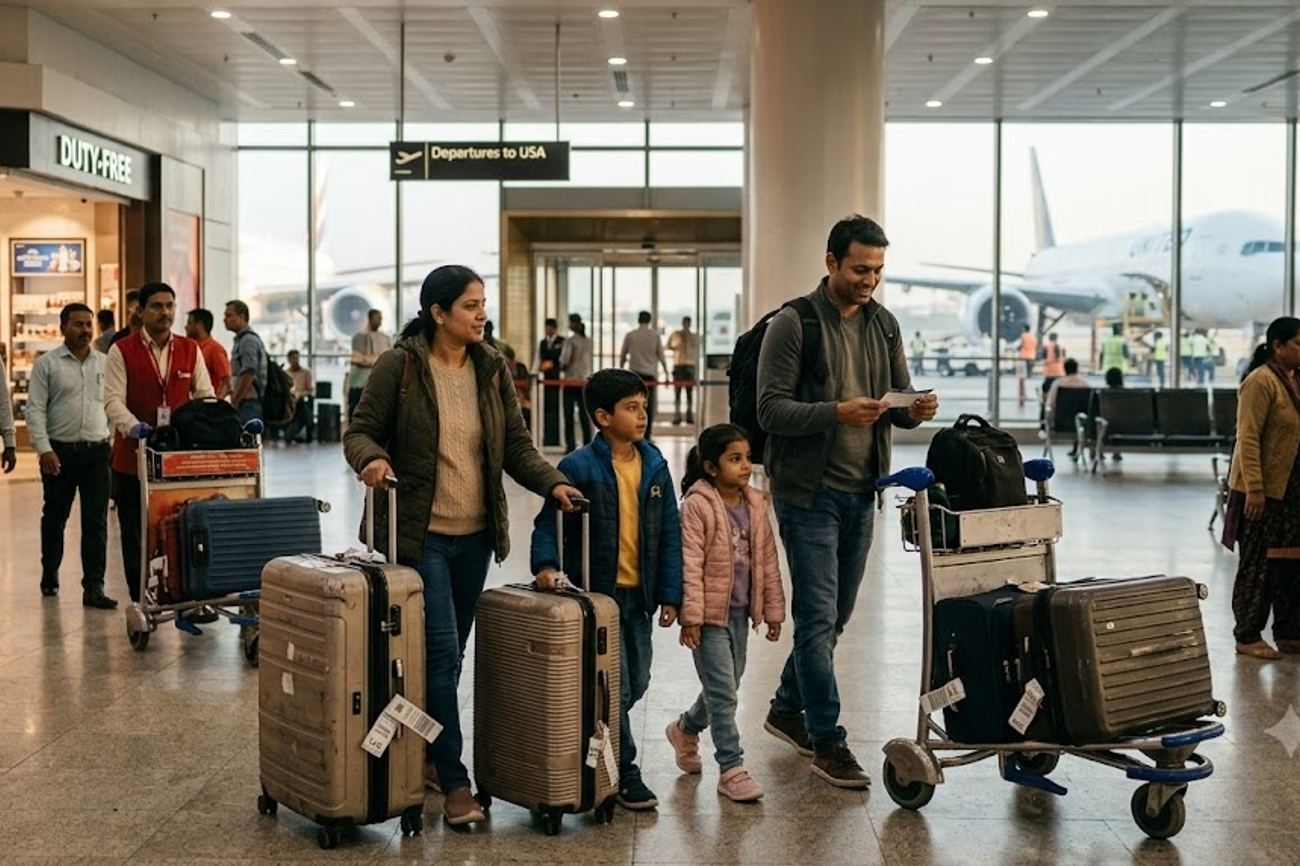
Image generated by AI
[Sacramento, June 2026] — California is aggressively pivoting its tourism strategy toward India's high-spending traveler market to offset a sharp decline in arrivals from traditional Western partners. The state is joining a competitive scramble alongside Florida, New York, and Texas to capture a growing demographic of Indian visitors who are spending more and staying longer than pre-pandemic averages.
The shift comes as the United States faces a cooling trend in international arrivals. Through May 2026, overall overseas visitation to the U.S. dropped 4.8% year-on-year. This downturn is particularly evident in air traffic from legacy markets: passenger volume between the U.S. and Germany plummeted 7.4%, while traffic from Mexico fell 6.7% and the United Kingdom dipped 2.3%. Even the critical U.S.-Canada corridor saw a 0.7% decline. In contrast, the Indian market is surging, with over 2 million Indian visitors entering the U.S. in 2025—a figure roughly 40% higher than levels seen before the pandemic.
The Strategic Pivot to South Asia
The surge in Indian outbound travel has fundamentally altered the U.S. tourism hierarchy. In 2019, Indian travelers represented 4% of all overseas arrivals; by 2024, that share rose to 6%. The financial impact is even more pronounced. According to Brand USA, Indian visitors generated $24.4 billion in spending within the U.S. in 2024, cementing India's position as the second-largest overseas source market for visitor expenditures.
To capitalize on this, Brand USA has integrated India into the core of its international growth framework. In January 2026, the organization launched its first "Travel Week India" in Bengaluru, connecting U.S. destination marketers with Indian tour operators and media agencies. The scale of the opportunity is massive: India currently has approximately 100 million passport holders. For California specifically, the target is a high-net-worth (HNW) segment estimated at 15 million to 20 million individuals.
Regional Impact and Market Share
Different U.S. states are deploying varied tactics to lure these travelers, moving beyond the traditional "Golden Triangle" of New York, Los Angeles, and Orlando.
California’s Dominance California has emerged as a primary beneficiary of this trend. In 2025, the state saw 16.4 million international visitors who spent a combined $25.4 billion. Indian travelers alone accounted for 607,000 of those visits, contributing $1.5 billion to the local economy. Notably, California captured 32.3% of all Indian visitors to the U.S., meaning nearly one in three Indian travelers visited the state.
Florida’s Diversification Florida is using the Indian market to hedge against volatility in its Canadian visitor base. While Florida welcomed 143.3 million total visitors in 2025, Canadian arrivals were revised downward to 3.17 million. To fill this gap, Florida is marketing its "multi-product" appeal—combining Orlando’s theme parks, Miami’s luxury shopping, and Caribbean cruises—to Indian families who prefer long-duration, high-spend itineraries.
New York’s Gateway Role New York continues to serve as the primary entry point due to its superior connectivity via European and Middle Eastern hubs. However, the state is now focused on converting "stopover" visitors into long-term tourists who venture deeper into the American interior.
| Market Indicator | India-US Data (2024/25) | California Specific (2025) | Florida Specific (2025) |
|---|---|---|---|
| Annual Visitors | 2M+ | 607,000 (Indian) | 9.3M (Total Overseas) |
| Total Spending | $24.4 Billion | $1.5 Billion (Indian) | N/A |
| Market Share | 6% of US arrivals | 32.3% of Indian visitors | 6.5% of total visits |
| Growth Trend | +40% vs Pre-Pandemic | 16.4M Total Intl. | +4% Overseas Growth |
Practical Traveler Advisory and Strategic Insights
For passengers booking travel between India and the U.S., this aggressive competition between states will likely manifest in several tangible ways:
- Tailored Tour Packages: Expect a surge in "multi-city" bundles. Instead of just NYC or LA, tour operators are creating itineraries that combine urban hubs with California's national parks, wine regions, and coastal road trips.
California has joined forces with Florida and other states to tap into India's growing long-haul travel market, aiming to boost US tourism amidst declining numbers from other markets in 2026. According to the US Travel Association, this collaborative effort will focus on enhancing air connectivity and promoting tourist destinations. By doing so, the states hope to attract a larger share of Indian travelers and increase overall tourism revenue. 2. Enhanced Luxury Services: With a target audience of 15–20 million high-net-worth individuals, luxury hotels and transport providers in California and Florida are likely to increase specialized concierge services and amenities tailored to Indian preferences. 3. Increased Flight Capacity: As states compete for these visitors, there is pressure on carriers to increase direct connectivity. Travelers should monitor updates from the Federal Aviation Administration (FAA) regarding new route approvals and airport expansions to handle increased long-haul volume. 4. Diversified Destination Options: Travelers are being encouraged to look beyond the "big three" cities. This means more marketing and potentially better deals for secondary cities in Texas, Arizona, and Illinois.
The 2028 Projection
The trajectory for Indian outbound travel shows no signs of plateauing. Brand USA forecasts that visitation from India will climb to 2.3 million by 2028. This growth is critical for the U.S. economy, as international tourism supports millions of jobs; in California alone, travel-supported employment reached 1.2 million in 2025, generating $13.6 billion in state and local tax revenue.
The shift in strategy reflects a broader realization among U.S. tourism boards: the future of long-haul growth is shifting East. While traditional markets in Europe and North America fluctuate, the Indian middle and upper class represents a stable, expanding source of revenue that is less sensitive to the economic headwinds currently affecting other overseas markets.
FAQ: India-US Travel 2026
Why are U.S. states focusing so heavily on India right now? Traditional markets like Canada, the UK, and Germany are seeing declines in air traffic. India is the opposite, with visitation 40% above pre-pandemic levels and a massive pool of 100 million passport holders.
Which U.S. state is the most popular for Indian travelers? California is a leader, capturing 32.3% of all Indian visitors to the U.S. In 2025, 607,000 Indian travelers visited California, spending approximately $1.5 billion.
Are Indian tourists only visiting big cities like New York and LA? No. There is a growing trend toward leisure travel, including coastal road trips, national parks, and theme parks in Florida, moving beyond traditional business and education-related trips.
How much are Indian travelers contributing to the U.S. economy? They are a massive economic driver. In 2024, Indian visitors spent $24.4 billion in the U.S., making India the second-largest overseas source market for visitor spending.
The battle for the Indian traveler is no longer about gateways, but about who can keep them on the ground the longest.
Related Travel Guides
- Egypt Along With Morocco and Other Countries Is in a Massive Race to Boost African Tourism Through New Investment in the Hotel and Hospitality Sector in 2026
- Thailand Unveils Suan Dusit Arun Success as Bangkok’s Largest Rooftop Park Welcomes Thousands of Visitors
- China’s Chongming Island Unleashes Powerful Rural Tourism Wave With Grand Festival, Culture And Nature Wonders
Disclaimer
This article is for informational and educational purposes only. It does not constitute legal, financial, or professional advice. While we strive to provide accurate and up-to-date information, travel policies, regulations, and conditions change rapidly. Always verify information with official sources before making travel decisions. Nomad Lawyer makes no representations about the accuracy, reliability, completeness, or suitability of the information provided. Readers should consult qualified professionals for advice specific to their circumstances. The views expressed in this article are those of the author and do not necessarily reflect the views of Nomad Lawyer.
Raushan Kumar
Founder & Lead Developer
Full-stack developer with 11+ years of experience and a passionate traveller. Raushan built Nomad Lawyer from the ground up with a vision to create the best travel and law experience on the web.
Learn more about our team →