
San Francisco Airport Travel Chaos: 138 Delays, 10 Cancellations Disrupt United, Alaska, SkyWest Across US Cities
San Francisco International Airport experienced massive flight disruptions with 138 delays and 10 cancellations, affecting United Airlines, Alaska Airlines, and SkyWest across major US hubs.

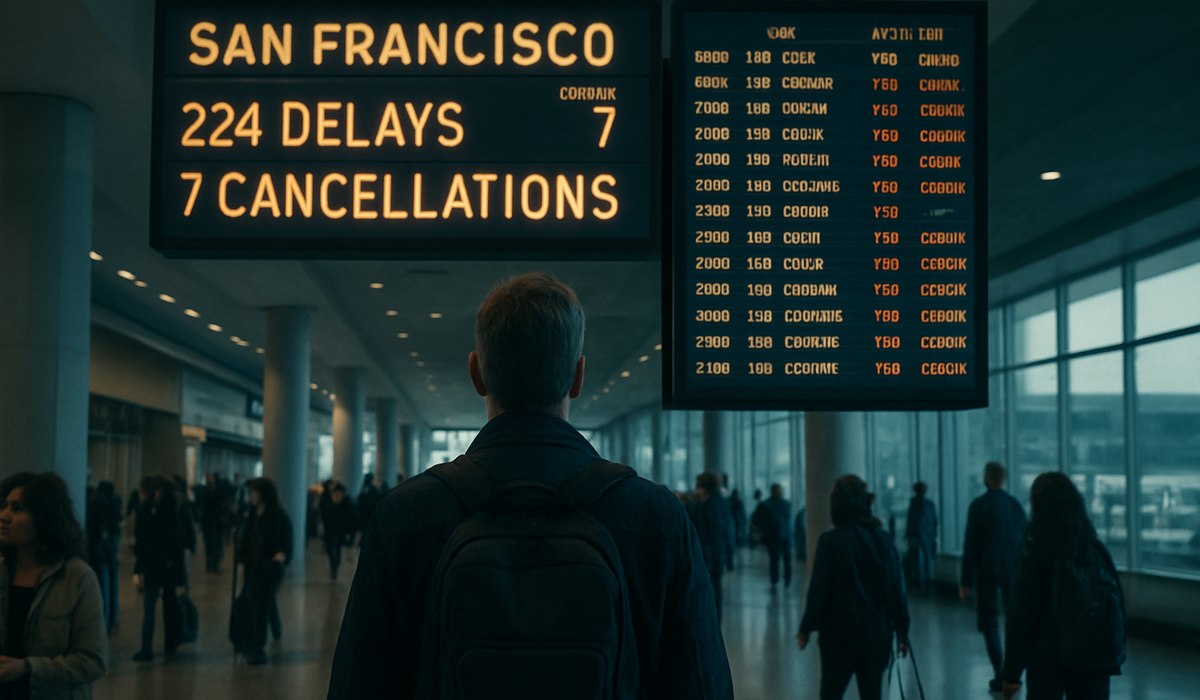
Image generated by AI
San Francisco International Airport descended into travel chaos on April 5, 2026, as 138 flights faced delays and 10 were cancelled, creating a cascading crisis that rippled across the entire United States aviation network. The disruptions struck at one of America's busiest international gateways, immediately impacting thousands of passengers and stranding travelers across Los Angeles, Denver, Dallas/Fort Worth, and beyond. Major carriers including United Airlines, Alaska Airlines, SkyWest Airlines, American Airlines, Air Canada, and British Airways all reported significant operational failures, with the airport's connectivity challenges triggering widespread flight disruptions that extended to international destinations including London Heathrow and Toronto.
The scale of today's airport chaos at San Francisco International Airport underscores the fragility of America's interconnected aviation system. United Airlines bore the brunt of the disruption with 57 delayed flights and 1 cancellation, making it the most severely impacted carrier at the facility. Alaska Airlines reported the highest cancellation count with 3 cancelled flights alongside 8 delays, while SkyWest Airlines, a critical regional operator supporting major airline networks, experienced 23 delayed flights. American Airlines recorded 14 delays with no cancellations, while international carriers Air Canada suffered 2 cancellations and 4 delays, and British Airways reported 2 cancellations affecting transatlantic services. The concentration of disruptions at San Francisco International Airport immediately triggered spillover effects at Los Angeles International Airport, Denver International Airport, and Dallas/Fort Worth International Airport, demonstrating how congestion at a single major hub can paralyze the entire domestic network.
The flight delays today at San Francisco International Airport created immediate chaos for connecting passengers, with travelers facing missed connections across multiple cities. Passengers booked on flights to Los Angeles, Denver, Dallas/Fort Worth, and other major hubs found themselves stranded as the airport's operational capacity collapsed under the weight of cascading delays. Those with international connections to London Heathrow and Toronto faced particularly acute disruptions, as the airport's role as a major transpacific gateway meant that delays rippled across both domestic and international corridors. The situation was exacerbated by the interconnected nature of modern airline scheduling, where a single airport's operational failure triggers a domino effect across the entire network. According to the Federal Aviation Administration's real-time flight tracking data, the disruptions reflected broader network congestion affecting both domestic and international routes, with no single weather event or technical failure accounting for the magnitude of the crisis.
Passengers affected by the travel disruption at San Francisco International Airport faced an urgent need for real-time information and swift action. Travelers were advised to continuously monitor flight status through airline websites and mobile applications, as schedules remained fluid throughout the day with frequent changes. Those impacted by cancellations were instructed to contact their airlines immediately to explore rebooking options, including alternative routes or later departures, while keeping notifications enabled for real-time alerts regarding gate changes and schedule modifications. Passengers with connecting flights were urged to coordinate closely with airline staff to manage missed connections and revised itineraries, while reviewing airline compensation policies for significantly delayed or cancelled flights. Arriving at the airport earlier than usual became essential, allowing extra time for check-in, security screening, and potential rebooking procedures. According to the U.S. Department of Transportation's passenger rights guidelines, affected travelers may be entitled to compensation or travel credits depending on flight duration and cancellation circumstances.
The broader implications of today's travel nightmare at San Francisco International Airport extend far beyond the immediate disruptions to individual passengers. The cascading failures across Los Angeles, Denver, Dallas/Fort Worth, and other major hubs highlight the systemic vulnerabilities in America's aviation infrastructure, where a single airport's operational collapse can trigger widespread disruptions affecting tourism, business travel, and international connectivity. International routes connecting San Francisco with London Heathrow, Toronto, and Asia-Pacific destinations experienced interruptions that will reverberate through global travel networks for days. The concentration of delays among high-frequency carriers like United Airlines and SkyWest Airlines demonstrates how interconnected airline schedules create vulnerability to cascading disruptions, a pattern documented by the International Air Transport Association's operational resilience reports. Today's airport chaos serves as a stark reminder that the aviation industry's efficiency depends on maintaining schedule reliability across busy air travel corridors, and that disruptions at major hubs like San Francisco International Airport pose systemic risks to the entire travel ecosystem.
Related Travel Guides
Disclaimer
This article is for informational and educational purposes only. It does not constitute legal, financial, or professional advice. While we strive to provide accurate and up-to-date information, travel policies, regulations, and conditions change rapidly. Always verify information with official sources before making travel decisions. Nomad Lawyer makes no representations about the accuracy, reliability, completeness, or suitability of the information provided. Readers should consult qualified professionals for advice specific to their circumstances. The views expressed in this article are those of the author and do not necessarily reflect the views of Nomad Lawyer.
Raushan Kumar
Founder & Lead Developer
Full-stack developer with 11+ years of experience and a passionate traveller. Raushan built Nomad Lawyer from the ground up with a vision to create the best travel and law experience on the web.
Learn more about our team →