
San Francisco Airport Chaos: 157 Flights Delayed, 7 Canceled as American Airlines, Delta, United Face Major Disruptions
SFO experiences severe disruptions with 157 delayed flights and 7 cancellations affecting American Airlines, Delta, United, and other carriers on domestic and international routes.

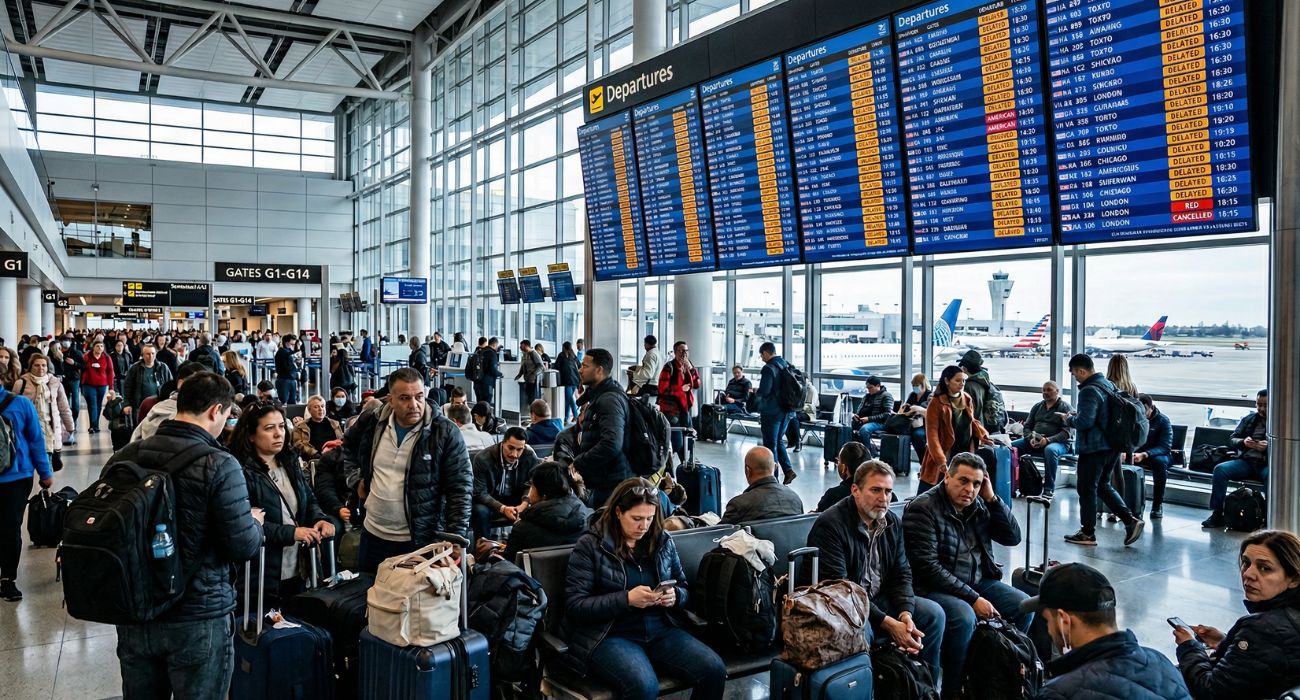
Image generated by AI
Major Disruptions Strike San Francisco International Airport
San Francisco International Airport (SFO) experienced significant operational chaos on April 15, 2026, with 157 flight delays and 7 cancellations affecting major carriers including American Airlines, Delta Air Lines, and United Airlines. The disruptions rippled across both domestic and international routes, impacting connections to key destinations including New York, Chicago, Tokyo, London, and Los Angeles.
Travelers navigating SFO's bustling terminals faced mounting frustration as departure boards flashed continuous delay notices. The cascading disruptions underscored the vulnerability of America's aviation infrastructure when weather and operational constraints converge at one of the nation's busiest aviation hubs.
Weather Conditions Trigger Widespread Flight Delays
Severe meteorological conditions served as the primary catalyst for the widespread disruptions at SFO. Strong thunderstorms and turbulent weather fronts swept across the Bay Area, creating hazardous conditions for flight operations.
The Saturday Evening Ground Stop
On Saturday evening, severe thunderstorms forced air traffic controllers to implement a temporary ground stop that halted both departures and arrivals for nearly one hour. This action triggered a cascading effect across the airport's operations:
- Inbound flights were forced into extended holding patterns
- Departing flights queued for extended periods awaiting clearance
- By 6 p.m., the airport had accumulated hundreds of delayed flights and several cancellations
How Weather Impacts Flight Operations
Thunderstorms directly compromise safe flight operations through multiple mechanisms:
- Reduced runway visibility forces pilots to slow operations significantly
- Wind shear and heavy rainfall require air traffic control to increase spacing between aircraft
- Extended taxi times result from safety protocols requiring greater separation
- Holding patterns delay inbound aircraft waiting for safe landing conditions
Passengers reported waiting anxiously at gates as departure times slipped repeatedly, with some delays extending beyond two hours. The weather-induced disruptions created a domino effect throughout the airport's concourses and across the broader West Coast flight network.
FAA Safety Protocols and Regulatory Constraints Compound Delays
Beyond weather conditions, structural and regulatory factors significantly contributed to the operational bottleneck at SFO. The Federal Aviation Administration (FAA) has been implementing stricter arrival and departure procedures at major hubs nationwide, including San Francisco.
Capacity Reductions and Safety Reviews
Recent federal traffic management documents indicate that arrival capacity at SFO has been deliberately reduced as part of a comprehensive safety review. Key aspects of these regulatory changes include:
- Parallel runway safety protocols requiring enhanced separation standards
- Staggered arrival procedures to reduce collision risks
- Conservative spacing requirements between aircraft movements
- Extended taxi queue management to maintain safety margins
While these measures prioritize aviation safety—a paramount concern—they directly impact passenger schedules. Flights destined for SFO now face added ground delays and extended taxi queues before departure clearance is granted. The regulatory approach, though rooted in legitimate safety imperatives, adds measurable time to flight cycles and passenger journey durations.
Passenger Impact: Stories of Disruption and Uncertainty
The raw statistics of 157 delays and 7 cancellations represent far more than numbers—they reflect real travelers facing significant disruptions to their plans.
Real Traveler Experiences
Inside SFO's terminals, passenger frustration was palpable:
- European-bound families experienced multiple pushbacks, first due to weather and subsequently due to gate scheduling pressures
- Business travelers heading to New York navigated constantly changing departure times across airline apps and gate announcements
- Holiday travelers faced uncertainty about whether their connections would be maintained
- International passengers struggled with rebooking options across multiple time zones
These personal narratives illuminate the human cost of operational disruptions. Travel represents more than logistics—it encompasses parents reaching children, holiday-makers pursuing booked tours, and professionals racing against critical deadlines. When delays and cancellations occur, the experience transforms from routine travel into a personal struggle against uncertainty.
Airline Response and Customer Service Mobilization
Major carriers operating at SFO activated comprehensive customer support protocols to assist affected passengers.
Operational Recovery Measures
Airlines implemented multiple strategies to mitigate disruption impacts:
- Real-time flight status updates via mobile applications
- Continuous customer service support for rebooking and assistance
- Meal vouchers and accommodation for passengers facing extended delays
- Crew schedule adjustments to maintain operational continuity
- Aircraft relocation to ensure service restoration
- Standby pilot deployment to reduce cascading delays
Ground staff fielded continuous passenger inquiries while working to rebook travelers on alternative flights. While these recovery efforts demonstrated operational resilience, they could not fully eliminate the frustration passengers experienced when their travel plans unraveled mid-journey.
Historical Context: SFO's Seasonal Vulnerability
San Francisco International Airport has a documented history of operational challenges during peak travel periods and adverse weather conditions. Analysis of U.S. flight operations reveals strong correlations between seasonal travel surges and delay frequencies.
Geographic and Meteorological Factors
SFO's unique geographic location creates specific operational vulnerabilities:
- Bay Area fog patterns reduce visibility during certain seasons
- Storm systems frequently impact the region with little warning
- Wind patterns create challenging landing and takeoff conditions
- Seasonal weather volatility compounds during spring and holiday periods
When severe weather converges with regulatory safety constraints and elevated travel demand, the combined effects create widespread scheduling bottlenecks. Even without extreme storms, routing changes and slot limitations slow operations across the airport. As travel demand has surged following pandemic-related slowdowns, such congestion episodes highlight vulnerabilities in airport capacity planning and weather forecasting infrastructure.
Official Guidance and Traveler Resources
FAA and Airport Recommendations
According to the FAA's official Air Traffic Report, travelers should implement the following precautions:
- Monitor weather forecasts before heading to airports
- Check flight status through airline apps or official airport tracking tools
- Arrive early for check-in despite delays
- Seek airline guidance if delays extend beyond two hours
- Maintain flexibility with travel plans during severe weather periods
San Francisco International Airport's travel alerts page encourages passengers to utilize airline apps and airport tracking tools for real-time information. These recommendations, while practical, cannot fully alleviate the tension and anxiety passengers experience during prolonged disruptions.
Expert Analysis: Systemic Challenges and Future Solutions
Aviation experts emphasize that SFO's current disruptions reflect larger systemic stresses within U.S. air travel infrastructure. According to industry analysts, multiple factors converge to create vulnerability:
- Increasing weather volatility from climate patterns
- Tightening flight safety protocols reducing operational flexibility
- Capacity constraints at major hub airports
- Limited runway infrastructure at congested facilities
Future Infrastructure Improvements
Industry experts recommend several enhancements to improve resilience:
- Improved real-time meteorological integration into air traffic control software
- Expanded runway usage schemes to alleviate bottlenecks
- Advanced predictive tools for weather impact forecasting
- Enhanced capacity planning at major hub airports
- Investment in airport infrastructure to accommodate growing demand
These improvements could help mitigate future disruptions, though they require significant capital investment and coordination across federal, state, and airport authorities.
What This Means for Travelers
The disruptions at San Francisco International Airport on April 15, 2026, serve as a reminder of aviation's vulnerability to weather and regulatory constraints. For travelers planning trips through SFO or connecting through the airport:
- Build buffer time into connections, particularly during spring and holiday periods
- Monitor weather forecasts actively before travel dates
- Maintain flexibility with booking when possible
- Register for airline alerts to receive real-time status updates
- Understand airline policies regarding rebooking and compensation
- Check the FAA's official traffic management information before traveling
The combination of weather volatility, regulatory safety measures, and seasonal travel peaks creates predictable congestion patterns at major hubs. Informed travelers who understand these dynamics can better prepare for potential disruptions.
Related Travel Guides
Disclaimer
This article is for informational and educational purposes only. It does not constitute legal, financial, or professional advice. While we strive to provide accurate and up-to-date information, travel policies, regulations, and conditions change rapidly. Always verify information with official sources before making travel decisions. Nomad Lawyer makes no representations about the accuracy, reliability, completeness, or suitability of the information provided. Readers should consult qualified professionals for advice specific to their circumstances. The views expressed in this article are those of the author and do not necessarily reflect the views of Nomad Lawyer.
Kunal K Choudhary
Co-Founder & Contributor
A passionate traveller and tech enthusiast. Kunal contributes to the vision and growth of Nomad Lawyer, bringing fresh perspectives and driving the community forward.
Learn more about our team →