
Samoa's Secret Islands: Navigating the Logistics of Manono, Namu’a, and Apolima in 2026
An analysis of Samoa's remote island network, focusing on the logistical challenges and cultural frameworks of Manono, Namu’a, and Apolima for independent travelers.

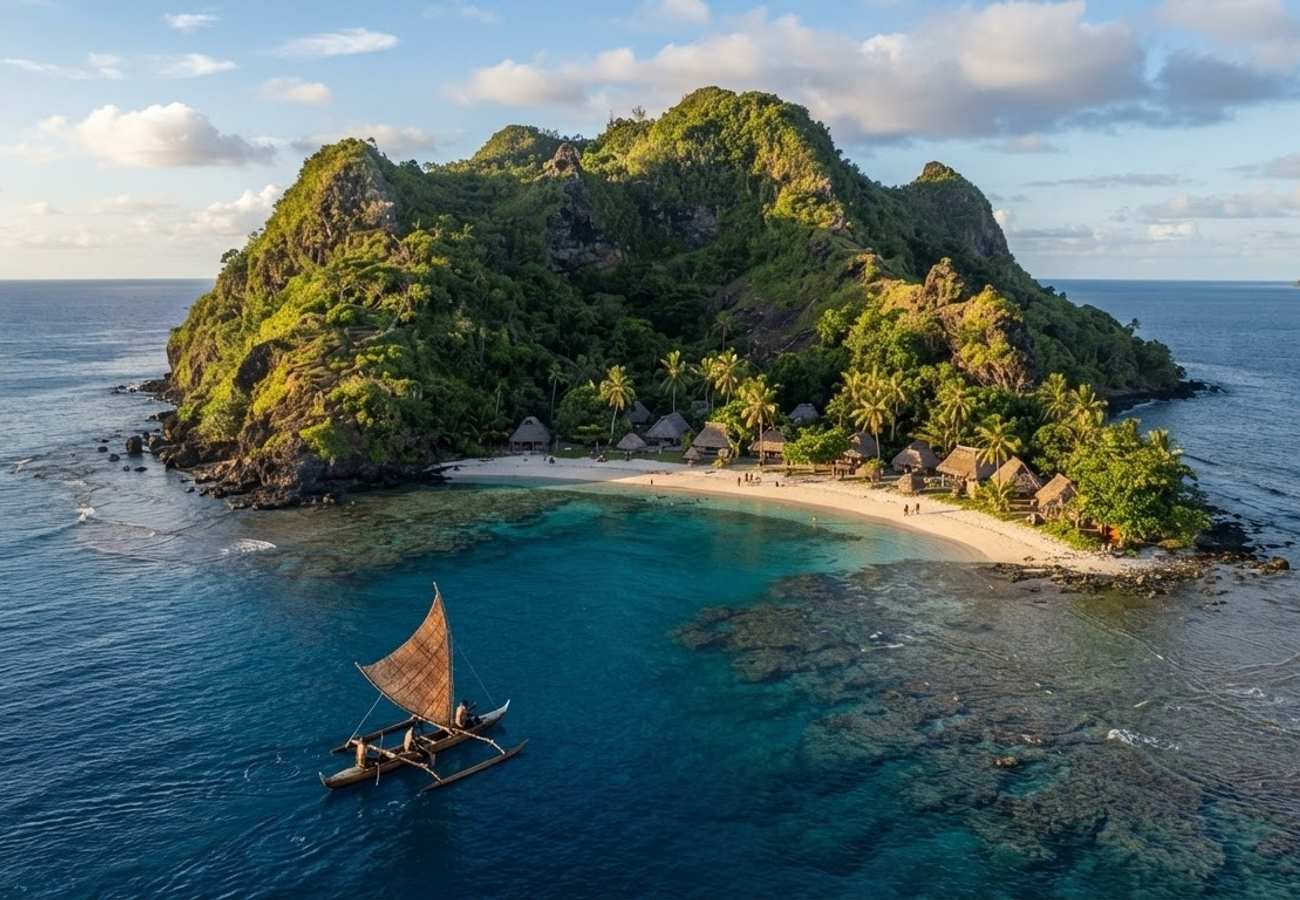
Image generated by AI
Roughly 889 residents inhabit the 3-square-kilometre expanse of Manono Island, a figure that underscores the intimate, low-density nature of Samoa's outer-island network. While mainstream tourism typically concentrates on the primary hubs of Upolu and Savai’i, a shift toward "secret island" exploration is revealing a fragmented logistical landscape where traditional customs dictate the pace of travel. For the modern nomad, these destinations represent a departure from resort-based tourism, moving instead toward a model of community-integrated visitation.
The Geography of Isolation: Manono and Apolima
The Apolima Strait serves as the primary maritime corridor for those seeking the remote fringes of the archipelago. Manono Island, situated less than 4 kilometres from Upolu, operates as a car-free zone. This regulatory absence of motorized transport transforms the island into a pedestrian-centric cultural preserve. Access is primarily via boat from Manono-Uta on Upolu, with a transit time of approximately 20 minutes. However, the lack of a standardized timetable requires travelers to negotiate return trips locally, a logistical hurdle that favors those with flexibility over those on rigid itineraries.
Further into the strait lies Apolima Island, a volcanic frontier covering approximately 5 square kilometres. With a population of around 100 residents, the island is significantly more isolated than Manono. Entry is restricted to a single bay via a narrow channel, a geographical bottleneck that reinforces the island's seclusion. Since 2006, the island has transitioned from diesel generators to a solar power grid, signaling a move toward sustainable, off-grid infrastructure.
Infrastructure and Accessibility Data
The disparity in infrastructure between these islands dictates the type of traveler each can support. While some offer basic overnight stays, others are strictly day-trip destinations due to a total lack of commercial facilities.
| Island | Land Area | Population | Key Feature | Transport Mode | Infrastructure Level |
|---|---|---|---|---|---|
| Manono | 3 sq km | ~889 | Car-free / Ancient Mounds | Boat (20 min) | Low (Village-based) |
| Apolima | 5 sq km | ~100 | Volcanic Crater / Solar Grid | Boat (35 min) | Minimal (Off-grid) |
| Namu’a | Small Islet | Seasonal | Turtle Sanctuary / Fales | Boat (5-10 min) | Basic (Beach Fales) |
| Nu’ulopa | Tiny Islet | Uninhabited | Flying Fox Colony | Guided Boat | None |
Expert Analysis: The "De-Resortification" of Pacific Travel
For travelers booking routes to these outer islands, the direct consequence is a total shift in responsibility regarding sustenance and safety. The absence of "conventional resort tourism" means that the burden of logistics—specifically potable water, emergency communication, and food—shifts from the provider to the visitor.
The pricing pressure here is not found in luxury markups, but in the "informal economy" of boat charters. Because there are no fixed timetables for islands like Manono and Apolima, travelers are subject to local availability and negotiated rates. This creates a market where local knowledge is the primary currency.
Furthermore, the integration of the Samoa Tourism Authority guidelines suggests a strategic push toward high-value, low-impact tourism. By promoting "digital-detox" experiences on Namu’a—where electricity is non-existent—Samoa is positioning itself to attract a demographic that views the lack of infrastructure as a premium feature rather than a deficiency. The reliance on the umu (traditional earth oven) for food preparation further integrates the traveler into the local socio-economic fabric, moving the experience from a transaction to a cultural exchange.
Navigating Wildlife and Ecological Zones
Beyond the human settlements, the outer islands serve as critical biodiversity hubs. Nu’ulopa, known as "Bat Island," provides a specialized wildlife experience centered on the dawn return of hundreds of flying foxes. This destination operates on a strict "leave no trace" ethos, as there are no waste management facilities on the island.
The surrounding marine ecosystem is equally significant. According to official data, the reefs support over 200 varieties of coral and approximately 900 fish species. For those visiting Namu’a, the proximity to Upolu’s south-eastern coast makes it a primary site for turtle encounters. The operational model here is unique: Namu’a Island Beach Fales provides the only private-island accommodation in the country, blending the exclusivity of a private island with the minimalism of open-sided traditional fales.
To ensure these ecosystems remain viable, the International Air Transport Association (IATA) and local regulators emphasize the importance of sustainable arrival patterns, encouraging travelers to use certified local guides who manage the flow of visitors to sensitive sites like the 900-to-1,000-year-old Star Mound on Manono.
Key Takeaways
- Logistical Flexibility: Boat transfers to Manono and Apolima lack fixed schedules; return transport must be confirmed with operators before departing the mainland.
- Infrastructure Gaps: Most secret islands lack electricity and commercial food services; travelers must carry their own water and essential supplies.
- Cultural Norms: Manono is strictly car-free and dog-free, requiring a pedestrian approach to exploration via coastal paths.
- Accommodation Variance: While Namu’a offers private beach fales with inclusive meal packages, Apolima and Nu’ulopa are primarily day-trip destinations.
- Ecological Sensitivity: Wildlife viewing on Nu’ulopa and snorkeling in the reef zones require adherence to non-invasive guidelines to protect 900+ fish species.
FAQ: Samoa Outer Islands 2026
How do I get to Manono or Apolima islands? You must arrange a boat transfer from Upolu (specifically Manono-Uta for Manono). There are no official public timetables; you should coordinate with local boat operators or your resort to secure a round-trip.
Can I stay overnight on these secret islands? Yes, but options vary. Namu’a offers private beach fales with meals included. Manono has limited local village accommodation. Apolima and Nu’ulopa are best visited as day trips from Upolu or Savai’i.
What should I pack for a day trip to Samoa's outer islands? Since there are no convenience stores or restaurants on these islands, bring sufficient drinking water, snacks, sun protection, and a waterproof bag for electronics.
Are there any restrictions on Manono Island? Manono is a car-free and dog-free zone. Visitors are expected to walk the coastal paths and respect the traditional village structures and ancient sites like the Grave of 99 Stones.
The true luxury of the Pacific is no longer the five-star suite, but the silence of a car-free island.
Related Travel Guides
Disclaimer
This article is for informational and educational purposes only. It does not constitute legal, financial, or professional advice. While we strive to provide accurate and up-to-date information, travel policies, regulations, and conditions change rapidly. Always verify information with official sources before making travel decisions. Nomad Lawyer makes no representations about the accuracy, reliability, completeness, or suitability of the information provided. Readers should consult qualified professionals for advice specific to their circumstances. The views expressed in this article are those of the author and do not necessarily reflect the views of Nomad Lawyer.
Preeti Gunjan
Contributor & Community Manager
A passionate traveller and community builder. Preeti helps grow the Nomad Lawyer community, fostering engagement and bringing the reader experience to life.
Learn more about our team →