
Ryanair passenger highlights Tenerife airport queue chaos in 2026
A viral Ryanair passenger complaint exposes systemic queue failures at Tenerife South Airport in 2026, as post-Brexit checks and peak season capacity strain leave travelers stranded and missing flights.

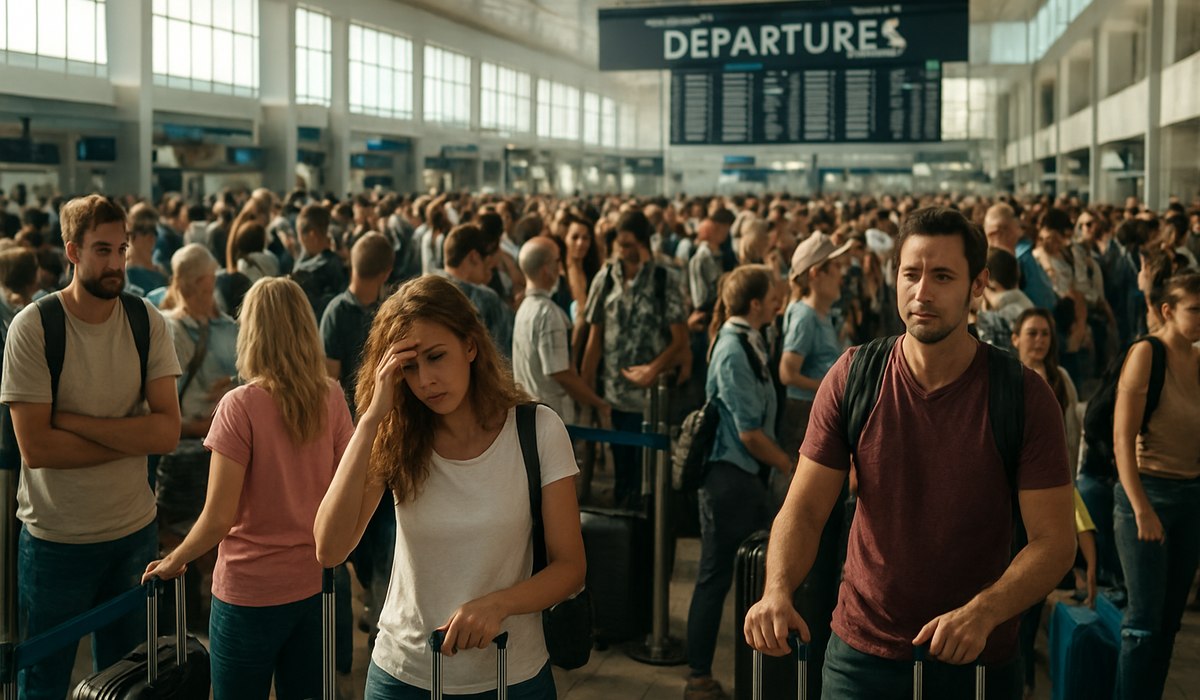
Image generated by AI
Ryanair Passenger Highlights Tenerife South Airport's Escalating Queue Crisis
A Ryanair passenger's stranded experience at Tenerife South Airport has ignited urgent conversations about systemic queue failures threatening timely departures across Spain's busiest holiday gateway. The viral complaint, shared widely on social media and travel forums in April 2026, documents how extended delays at check-in, security, and passport control left a traveler unable to reach their departure gate. This incident underscores mounting pressures where post-Brexit border protocols, constrained infrastructure, and peak-season flight schedules converge, creating dangerous bottlenecks for hundreds of daily passengers.
Viral Complaint Exposes Tenerife South Airport Queue Bottlenecks
Tenerife South Airport has become synonymous with departure hall congestion during high-travel periods. Recent weeks have brought widespread reports of dense lines snaking through terminals, with passengers arriving three to four hours early and still missing flights. The latest Ryanair passenger complaint details queues so severe that families with young children and elderly travelers stood for extended periods without adequate seating or shade.
Social media posts reveal a troubling pattern: passengers watch departure times approach while stationary in queues, unable to proceed toward security or passport control. Aviation analysts tracking operational metrics note that Tenerife South operates near maximum capacity when low-cost carriers like Ryanair ramp up schedules during Easter, summer, and Christmas peaks. Each incident represents not just personal disruption but also cascading effects across flight networks when aircraft depart late or with missed connections.
Post-Brexit Border Checks Compound Departure Hall Congestion
Since the end of free movement, UK nationals face full third-country Schengen checks at Spanish airports, including manual passport stamping. This administrative requirement has fundamentally altered queue dynamics at Tenerife South, where British travelers represent a significant portion of outbound passengers. Industry leaders have publicly warned that without additional border personnel and automated gate infrastructure, non-EU travelers now routinely wait 60 minutes or longer at passport control during peak hours.
The divide between experience types has become stark. EU citizens with biometric passports breeze through e-gates in minutes, while UK, US, and other third-country passport holders queue separately for manual inspection. For departing passengers, this sequential bottleneck feeds directly into security lane congestion and boarding delays, compressing the already-tight windows that budget airlines like Ryanair maintain for turnarounds. Airport authorities and border agencies have struggled to staff additional lanes, leaving structural capacity gaps unresolved.
Infrastructure Strain as Low-Cost Carriers Ramp Up Peak Season Schedules
Ryanair operates among the densest schedules serving Tenerife South from regional European hubs. The airline's business model prioritizes quick turnarounds, strict bag-drop cutoffs, and inflexible boarding windows—practices that work smoothly when airport processes flow normally but create bottlenecks when infrastructure fails to keep pace. Peak-season flight frequency has increased substantially, yet terminal facilities remain largely unchanged from previous decades.
Ground handlers, security contractors, and border force staffing have not scaled proportionally with traffic growth. A single delayed flight can trigger cascading ripple effects across Ryanair's network, affecting passengers across multiple European cities. The airline's response typically emphasizes passenger responsibility to arrive early, but critics argue that even early arrivals cannot overcome structural queue failures beyond individual control.
Systemic Pressure Points Leave Vulnerable Travellers Stranded
Elderly travelers, families with young children, and passengers with mobility challenges face particular hardship during prolonged queue waits. Medical conditions, heat sensitivity, and anxiety disorders can be exacerbated by hours-long standing in crowded departure halls. The Ryanair passenger's complaint included specific concerns about lack of assistance for vulnerable groups despite them being identifiable to airport staff.
Airlines typically argue they cannot extend departure times when airport queues cause delays, citing legal obligations to respect air traffic control slot assignments. Yet passengers increasingly argue that once physically present in a terminal queue, airlines should extend boarding windows or provide targeted assistance. This tension between rigid operational rules and real-world disruption defines much of the current frustration at popular Mediterranean and Atlantic holiday airports.
Key Operational Data: Tenerife South Airport Queue Impact
| Metric | Details | Impact |
|---|---|---|
| Peak Daily Passengers | 35,000–40,000 during summer peaks | Terminal congestion near maximum capacity |
| Average Queue Wait (Non-EU) | 45–75 minutes at passport control | Missed boarding windows, flight delays |
| Ryanair Daily Departures | 18–22 flights during high season | High concentration of budget-conscious passengers |
| Post-Brexit Administrative Requirement | Manual passport stamping for UK/third-country nationals | Additional 2–3 minutes per passenger multiplied across queues |
| Terminal Infrastructure Updates | Minimal expansion since 2015 | No corresponding capacity increases with traffic growth |
| Average Passenger Arrival Time | 2.5–3 hours before departure | Many still miss flights despite early arrival |
What This Means for Travelers: Action Checklist
Navigating Tenerife South Airport successfully requires proactive planning and awareness of real systemic risks:
-
Arrive 4+ hours before international departures: Standard advice (3 hours) no longer provides adequate buffer. Add an extra hour specifically for post-Brexit passport checks if holding a non-EU passport.
-
Check real-time airport status before traveling: Use FlightAware to monitor departure hall congestion reports and recent delay patterns for your specific flight date.
-
Download airline mobile apps: Ryanair and other carriers now send gate assignment notifications. Enable push alerts to receive final boarding calls directly.
-
Identify accessibility support in advance: If traveling with young children, elderly parents, or mobility challenges, contact airport accessibility services 24 hours ahead to arrange assistance through queue areas.
-
Document queue times and circumstances: Photograph timestamps and queue positions. This documentation supports potential compensation claims under EU261 regulations if flights are missed due to airport-caused delays.
-
Request written confirmation of check-in status: If queues prevent timely bag drop, ask ground handlers for written acknowledgment of your attempted arrival time, establishing evidence of your diligence.
Frequently Asked Questions About Tenerife South Airport Delays
Q: Are airlines legally required to hold flights if passengers are delayed by airport queues? Airlines are not obligated to delay departures due to airport queue failures. However, if the airline failed to provide timely information or assistance, passengers may qualify for EU261 compensation. Legal liability depends on whether delays stem from circumstances within the airline's control.
Q: What rights do passengers have if they miss flights due to airport congestion? Passengers held responsible for missing flights due to personal timing typically receive rebooking on later flights rather than full refunds. However, if you can document that the airline failed to provide adequate information about real airport conditions, you may have grounds for compensation claims through national aviation authorities.
Q: Does the Ryanair passenger highlight specific airline failures or primarily airport problems? The viral complaint centers on airport queue infrastructure as the primary cause, though it also raises questions about airline communication and flexibility during predictable peak-season congestion. Ryanair's rigid cut-off times intersect with airport bottlenecks to create heightened disruption risk.
Q: How can travelers distinguish between normal queues and systemic failures warranting compensation? Normal queues are temporary and resolved within published service windows. Systemic failures involve queues extending beyond 60 minutes despite adequate staffing, insufficient passport control lanes, or security areas operating below design capacity. Monitor [official US DOT consumer guidance](https://www.transportation.gov/aircons
Disclaimer
This article is for informational and educational purposes only. It does not constitute legal, financial, or professional advice. While we strive to provide accurate and up-to-date information, travel policies, regulations, and conditions change rapidly. Always verify information with official sources before making travel decisions. Nomad Lawyer makes no representations about the accuracy, reliability, completeness, or suitability of the information provided. Readers should consult qualified professionals for advice specific to their circumstances. The views expressed in this article are those of the author and do not necessarily reflect the views of Nomad Lawyer.
Preeti Gunjan
Contributor & Community Manager
A passionate traveller and community builder. Preeti helps grow the Nomad Lawyer community, fostering engagement and bringing the reader experience to life.
Learn more about our team →