
Ryanair Tenerife Queues Highlight Spain's 2026 Airport Squeeze
Record queues at Tenerife's airports reveal Spain's struggling aviation infrastructure as Ryanair tenerife queues expose terminal overcapacity in 2026. Millions of travelers face extended delays.

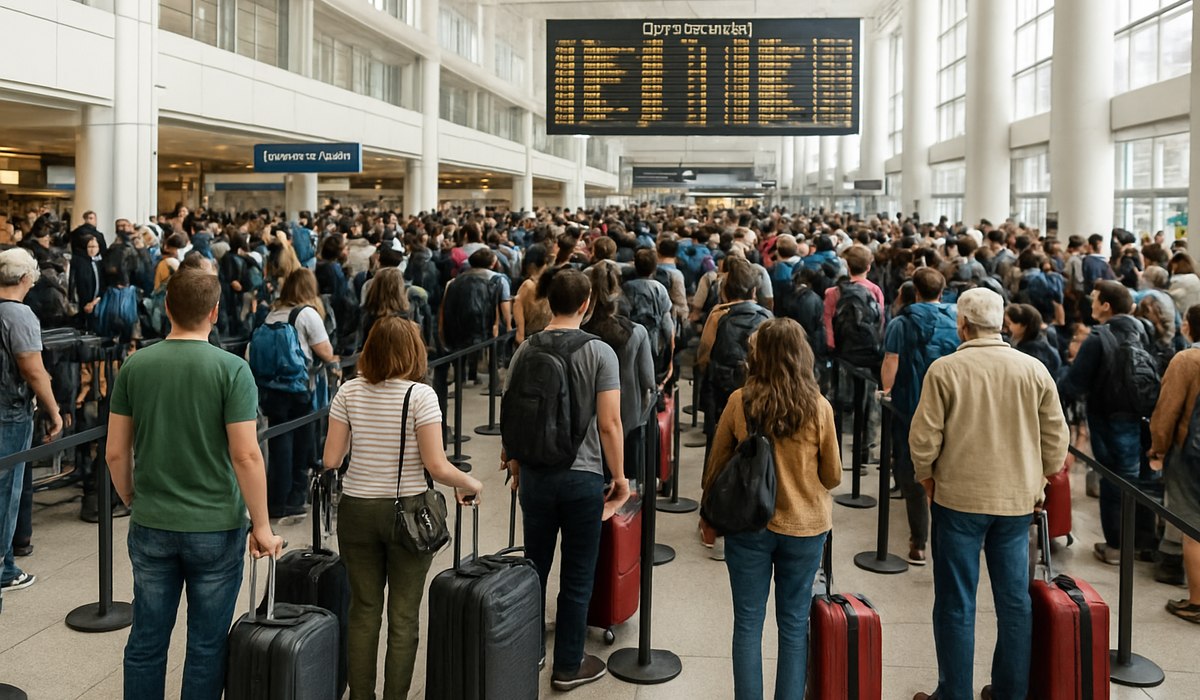
Image generated by AI
Ryanair Tenerife Queues Expose Spain's Aviation Infrastructure Crisis
Ryanair passengers face unprecedented delays at Tenerife's two major airports as spring 2026 operations reveal a critical mismatch between tourism demand and terminal capacity. Social media reports and eyewitness accounts document queues extending through departure halls at both Tenerife South and Tenerife North, with travelers reporting wait times exceeding two hours for basic check-in procedures. This infrastructure squeeze highlights a broader challenge confronting Spain's aviation sector as record passenger volumes overwhelm aging terminals across the Canary Islands.
Ryanair Bottlenecks Overwhelm Tenerife Terminals
The Irish low-cost carrier's high-density operational model concentrates thousands of passengers into compressed timeframes, creating visible congestion at Spain's most tourism-dependent airports. Ryanair's business strategy prioritizes rapid turnaround times and maximum seat utilization, but these efficiencies depend entirely on terminal infrastructure that can process passengers quickly. At Tenerife South, which handled over 12 million passengers in 2024 alone, the older departure hall sections feature narrow circulation areas and insufficient check-in counters for simultaneous Ryanair operations on multiple routes.
When several aircraft depart within a 90-minute window—a common occurrence in Ryanair's schedule—congestion cascades rapidly through security screening and boarding gates. Staff shortages compound the problem, as ground handlers struggle to match seasonal demand with permanent workforce capacity. Even minor delays in baggage handling or aircraft rotation trigger bottlenecks that manifest as hour-long queues visible across social media platforms.
Spain's Airport Capacity Crisis Deepens
Aena, Spain's airport operator managing 46 facilities nationwide, closed 2025 with nearly 385 million passengers across its global network, marking consecutive record years. Within Spain alone, Aena's airports accommodated over 320 million passengers in 2025, with forecasts predicting another 1–3 percent growth through 2026. While major hubs like Madrid-Barajas and Barcelona-El Prat invested in runway and terminal upgrades, regional airports serving tourism-dependent regions received limited expansion funding.
The Canary Islands processed 27 million passengers in the first half of 2025, concentrated heavily on Tenerife's two airports operating near or above design capacity limits. Tenerife North has already exceeded its maximum annual passenger threshold established in Spain's regulatory framework for 2022–2026. This structural imbalance between physical infrastructure and passenger demand creates predictable congestion during peak travel periods, particularly April through September when European tourists dominate inbound flights.
How Budget Airlines Amplify Infrastructure Strain
Low-cost carriers like Ryanair, EasyJet, and Vueling operate fundamentally different business models than traditional network carriers, concentrating passengers densely and scheduling flights during optimal connecting windows. This strategy generates substantial economic benefits for airports through passenger fees and retail revenue, but places extraordinary pressure on shared ground infrastructure. Budget airlines typically operate with 85–95 percent load factors compared to 75–80 percent for legacy carriers, meaning fewer empty seats absorb operational flexibility.
Ryanair's 10–15 minute turnaround targets require perfectly choreographed ground operations: passengers disembarking, cabin cleaning, new passengers boarding, catering reloading, and aircraft pushback must occur in rapid succession. When terminal capacity constraints slow any single step, the entire schedule unravels. Tenerife's older check-in infrastructure lacks modern parallel processing systems, forcing sequential queuing that becomes particularly problematic when multiple flights share check-in corridors during peak morning and evening banks.
What Travelers Can Expect in 2026
Capacity pressures will persist throughout 2026 despite efforts by Aena and airport management to streamline operations. Peak travel periods (Easter holidays, summer school breaks, October half-terms) will generate the most severe congestion. Travelers should anticipate extended waits regardless of flight time, as Ryanair tenerife queues represent a systemic infrastructure issue rather than an airline-specific service failure.
Airport management has implemented some procedural improvements, including extended check-in windows and additional temporary security lanes, but these represent band-aids on a structural problem requiring terminal expansion. Aena's 2027–2031 investment programme allocates billions for regulated aeronautical projects, but construction timelines typically span 3–5 years, offering limited relief during 2026 operations.
Traveler Action Checklist
-
Arrive 3 hours early for all Ryanair departures from Tenerife airports, even for early-morning flights.
-
Use online check-in 24 hours before departure to bypass check-in counter queues entirely.
-
Pack only carry-on luggage when possible to avoid baggage processing delays that intensify overall congestion.
-
Download boarding passes offline before arriving at the airport to eliminate dependence on airport Wi-Fi during peak hours.
-
Check real-time queue status via airport websites or FlightAware before entering terminals; some airports now publish live congestion updates.
-
Monitor flight status continuously using flight tracking apps; ground delays often precede departure changes.
-
Contact Ryanair customer service immediately if delays exceed 3 hours to document potential compensation claims under EU261 regulations.
-
Allow 5+ hours for connections through Tenerife airports, as tight schedules guarantee missed connections during queue periods.
Key Data: Tenerife Airport Capacity Metrics
| Metric | Tenerife South | Tenerife North | 2025 Status |
|---|---|---|---|
| 2024 Annual Passengers | 12.0 million | 4.2 million | Exceeds forecast |
| Regulatory Capacity Threshold | 17.5 million | 4.5 million | North exceeded limits |
| Peak Season Daily Passengers | 65,000–75,000 | 20,000–25,000 | Operating above baseline |
| Check-In Counters Available | 48 | 18 | Insufficient for Ryanair peaks |
| Average Queue Wait Time (peak) | 45–90 minutes | 30–60 minutes | Documented increase 2026 |
| Aena 2027–2031 Investment | €2.8 billion sector-wide | Canary Islands allocation TBD | Construction timelines 2027+ |
What This Means for Travelers
Extended queues at Tenerife airports represent systemic infrastructure constraints affecting all airlines but disproportionately impacting Ryanair passengers due to operational density. Travelers should anticipate delays as a certainty rather than exception during 2026 peak seasons. This infrastructure crisis directly affects your travel planning and compensation rights.
Under EU261 regulations, passengers delayed more than 3 hours on departing EU flights qualify for compensation ranging from €250–€600 depending on flight distance. Airlines cannot cite airport congestion as grounds for exemption, meaning you retain full compensation rights despite systemic delays. Document all delays with boarding passes, gate information, and departure times to support future claims. Consider purchasing travel insurance covering rebooking on alternative flights if your connection schedule proves tight.
FAQ
Q: Can I claim compensation for Ryanair tenerife queues delays?
A: Yes. Under EU261 regulations, delays exceeding 3 hours entitle passengers to €250–€600 compensation regardless of cause. Airport congestion doesn't exempt airlines. File claims directly with Ryanair or through specialized compensation claim services via US DOT for additional guidance on consumer protections.
Disclaimer
This article is for informational and educational purposes only. It does not constitute legal, financial, or professional advice. While we strive to provide accurate and up-to-date information, travel policies, regulations, and conditions change rapidly. Always verify information with official sources before making travel decisions. Nomad Lawyer makes no representations about the accuracy, reliability, completeness, or suitability of the information provided. Readers should consult qualified professionals for advice specific to their circumstances. The views expressed in this article are those of the author and do not necessarily reflect the views of Nomad Lawyer.
Preeti Gunjan
Contributor & Community Manager
A passionate traveller and community builder. Preeti helps grow the Nomad Lawyer community, fostering engagement and bringing the reader experience to life.
Learn more about our team →