
Ryanair Passenger Video Exposes Tenerife South Airport Border Queue Crisis in 2026
Viral footage from a Ryanair passenger at Tenerife South Airport reveals hours-long queues caused by Spain's struggling EU Entry/Exit System rollout, affecting thousands of travelers in 2026.

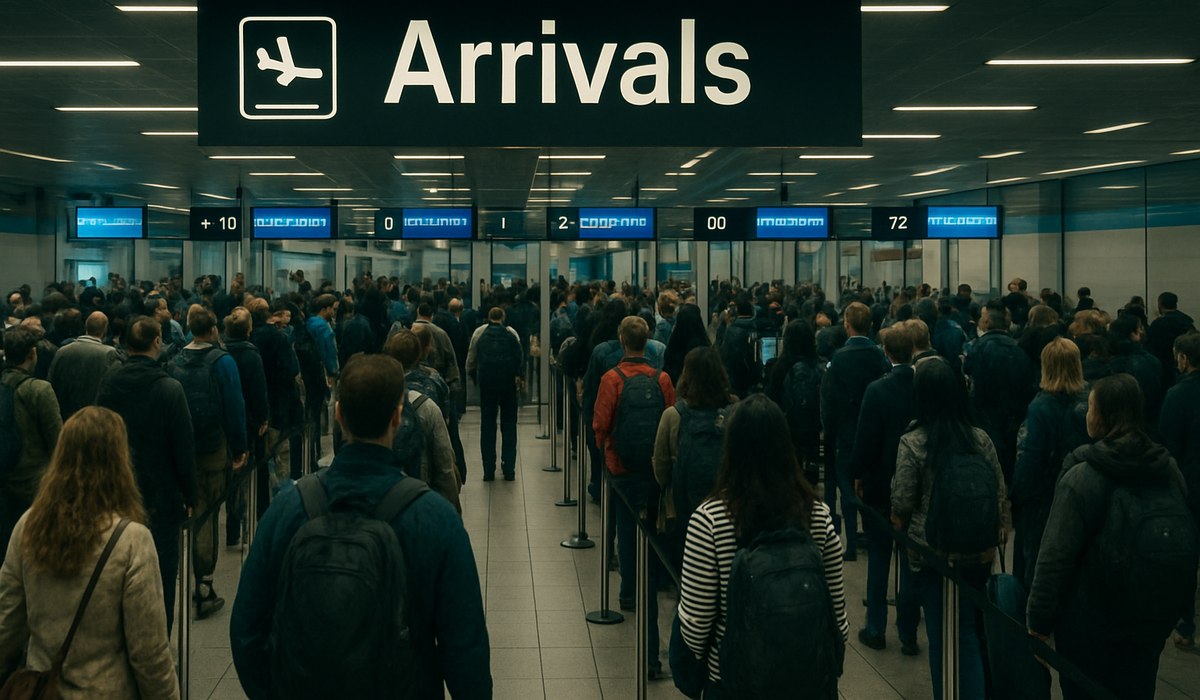
Image generated by AI
Viral Footage Reveals Hours-Long Border Delays at Tenerife South Airport
A Ryanair passenger video circulating across social media has thrust Tenerife South Airport into the travel spotlight, exposing significant congestion at one of Spain's busiest island gateways. The footage, widely shared in March 2026, captures dense queues snaking through arrivals and border-control areas, with travelers reporting waits exceeding one hour during peak arrival windows. Non-EU passengers faced particularly grueling processing times, while families with children and elderly visitors struggled through crowded, confined spaces. The clip has resonated deeply with recent visitors who experienced identical bottlenecks firsthand, suggesting systemic rather than isolated problems plaguing the airport during the early weeks of spring tourism season.
Viral Clip Captures Hours-Long Queues at Tenerife South
The Ryanair passenger video offers an unfiltered glimpse into border-control chaos at Tenerife South Airport during March 2026. The footage shows passengers inching forward through densely packed queues that stretch across multiple arrival channels. Social media comments and travel forum discussions indicate extended processing delays disproportionately affecting non-EU nationals, with wait times frequently exceeding 60 minutes on busy days.
Families highlighted the physical toll of prolonged standing in confined areas during peak arrival times. Multiple travelers have posted similar observations across travel platforms, indicating the problem extends beyond a single busy weekend. Both passport control and security screening areas appear affected, suggesting broader infrastructure challenges rather than isolated bottlenecks. The viral nature of the footage has amplified passenger frustration and drawn attention from tourism authorities and industry stakeholders concerned about destination image. For travelers planning Canary Islands trips, the footage serves as an advance warning about potential delays during spring and summer peak seasons.
Learn more about passenger rights during airport delays on the EU Regulation 261/2004 resources.
New EU Entry/Exit System Blamed for Bottlenecks
Spain's rollout of the European Union's new EU Entry/Exit System has created a perfect storm at Tenerife South Airport during early 2026. This automated border regime records biometric data and travel movements for non-EU nationals, requiring additional processing steps at passport control. While intended to streamline long-term operations, the implementation phase has coincided with inadequate technical infrastructure and partial system failures.
Reports from the Canary Islands reveal that biometric e-gates—central to the new border system—operate at drastically reduced capacity. Door malfunctions and connection issues limit available lanes, forcing passengers through bottlenecked processing points. When multiple international flights arrive within compressed timeframes, backlogs intensify dramatically. Travel specialists note that the system's early rollout phase has overlapped with strong tourism demand, leaving minimal spare processing capacity at the airport.
Airport infrastructure hasn't expanded proportionally with the biometric e-gates deployment. Staff shortages compound technical limitations, preventing manual lane activation during peak periods. The combination of automation failures and insufficient personnel creates compounding delays. Industry analysts predict gradual system stabilization over coming months, but passengers booking spring and summer travel should anticipate extended border-processing windows.
Check official updates on the EU Entry/Exit System implementation.
Traveler Experiences: Families and Elderly Passengers Hit Hardest
The Ryanair passenger video disproportionately highlights vulnerable traveler categories struggling through Tenerife South Airport's queue chaos. Families with young children reported particular distress navigating hours-long waits in crowded, poorly ventilated spaces. Elderly passengers faced physical endurance challenges during extended standing periods with minimal seating or rest facilities.
Social media testimonies reveal the human cost of infrastructure failures. Parents described children becoming fatigued and distressed after 90-minute border waits. Senior travelers expressed frustration arriving at accommodations exhausted before vacations began. Hotel staff noted guests arriving visibly drained and frustrated, affecting early vacation experiences negatively.
Tour operators and travel agents now advise clients to factor extra processing time into itineraries. Flight schedules increasingly strain under potential connection risks. Travelers with tight connections face genuine anxiety about making onward flights. Some passengers report arriving at Tenerife South with only two-hour layovers before regional flights, creating stress during the border-control portion.
Accessibility advocates have raised concerns about inadequate facilities for passengers with mobility restrictions. Lengthy queue times provide minimal accommodation for those requiring frequent breaks. The situation highlights broader EU airport planning gaps regarding passenger capacity, comfort, and dignity during peak travel periods.
What This Means for Summer Travel to the Canaries
Summer 2026 travel planning requires realistic expectations regarding Tenerife South Airport processing times. Tourism demand typically peaks July through August, intensifying existing queue problems. Savvy travelers should build buffer time into arrival windows and connection itineraries.
Critical considerations for Canary Islands bookings:
- Arrive early: Plan airport arrival 3-4 hours before international departures to accommodate unpredictable border delays
- Avoid tight connections: Book flights with minimum 2.5-hour connection windows rather than standard 90-minute transfers
- Document preparation: Ensure passports, visas, and entry paperwork are organized for rapid processing
- Travel timing: Consider off-peak arrival times (early morning or late evening flights) when possible to avoid peak congestion windows
- Accommodation flexibility: Brief hotel check-in delays due to prolonged border waits; notify accommodations of potential late arrivals
- Travel insurance: Confirm coverage for missed connections and EU261 compensation eligibility
The EU Entry/Exit System will gradually improve processing speeds as technical issues resolve. However, 2026 summer travel remains unpredictable. Monitor official Spanish airport updates and airline guidance regularly. Consider alternative airports if connecting through smaller Spanish hubs with less congestion.
Border Control Queue Times: Key Data and Timeline
| Factor | Impact Level | Timeframe | Affected Passengers | Status |
|---|---|---|---|---|
| Biometric e-gate malfunctions | Critical | March-April 2026 | All non-EU nationals | Ongoing |
| Reduced operational lanes | High | Peak hours daily | 60-80% of arrivals | Temporary |
| EU Entry/Exit System rollout | Critical | January-December 2026 | 100% non-EU entry | Phased implementation |
| Staff shortage constraints | High | Weekends/school holidays | Peak demand periods | Unresolved |
| Flight arrival clustering | Medium | 11:00-15:00 daily | 40-50% of daily passengers | Structural |
| Physical queue capacity limits | Critical | Year-round | Overflow situations | Architectural limitation |
| Security screening delays | Medium | Post-border processing | 30-40% of arrivals | Secondary impact |
FAQ: Tenerife South Airport and EU Border System Questions
Q: Will the Ryanair passenger video impact Tenerife South Airport operations?
The viral Ryanair passenger video has amplified tourism authority attention on Tenerife South Airport infrastructure. While the clip didn't directly cause operational changes, it accelerated discussions about resource allocation and biometric e-gate maintenance. Airport officials have promised incremental improvements, though significant capacity expansion remains unlikely before 2027. Tourist board responses suggest enhanced monitoring and communication improvements.
Q: How long are typical waits at Tenerife South Airport in 2026?
Processing times fluctuate dramatically based on arrival patterns and system functionality.
Disclaimer
This article is for informational and educational purposes only. It does not constitute legal, financial, or professional advice. While we strive to provide accurate and up-to-date information, travel policies, regulations, and conditions change rapidly. Always verify information with official sources before making travel decisions. Nomad Lawyer makes no representations about the accuracy, reliability, completeness, or suitability of the information provided. Readers should consult qualified professionals for advice specific to their circumstances. The views expressed in this article are those of the author and do not necessarily reflect the views of Nomad Lawyer.
Kunal K Choudhary
Co-Founder & Contributor
A passionate traveller and tech enthusiast. Kunal contributes to the vision and growth of Nomad Lawyer, bringing fresh perspectives and driving the community forward.
Learn more about our team →