
Ryanair Threatens Massive Flight Cancellations and 20 Route Cuts to Defeat Belgian Tax Chaos
Breaking airline news: Ryanair threatens devastating capacity cuts and flight cancellations at Brussels and Charleroi airports as a deepening European aviation tax battle triggers massive travel chaos.

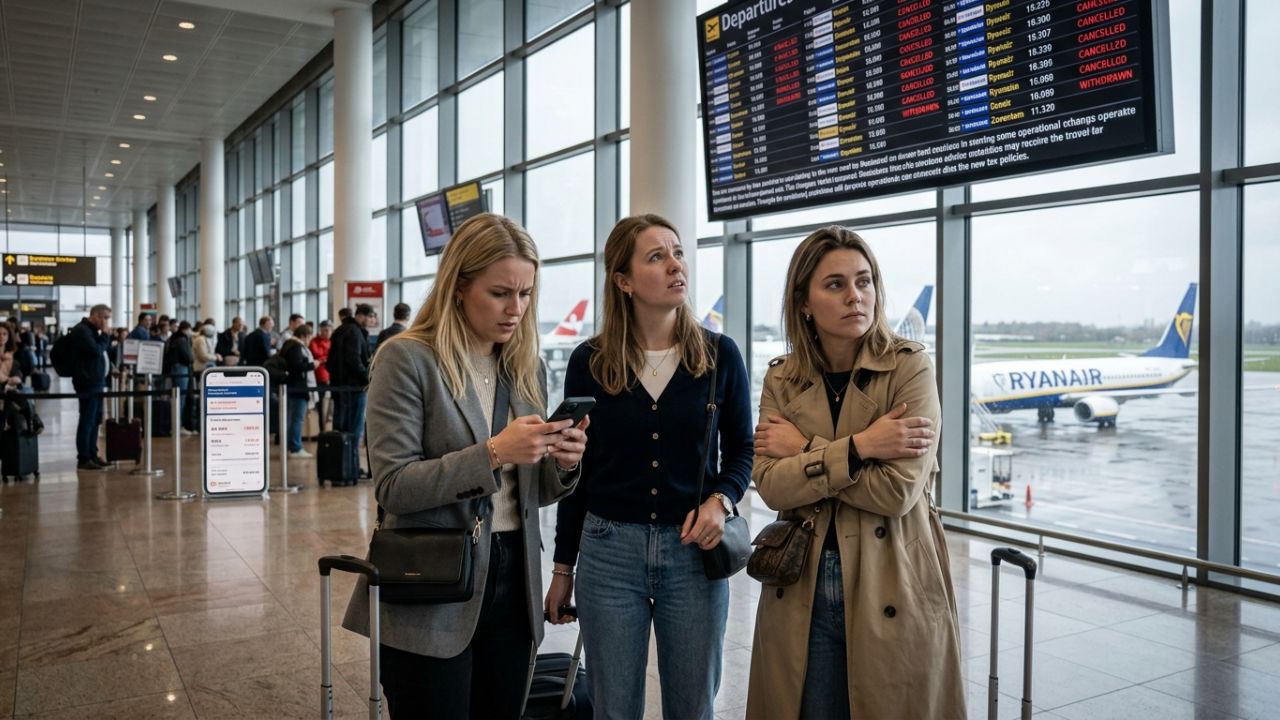
Image representing Ryanair's aggressive threat to slash capacity and pull aircraft from Belgium, a devastating move that will trigger massive flight cancellations and travel chaos across the continent.
Ryanair Threatens Massive Flight Cancellations and 20 Route Cuts to Defeat Belgian Tax Chaos
A Continent-Wide Battle Over Aviation Costs
The European aviation sector is plunging into an unprecedented regulatory crisis that threatens to systematically dismantle regional connectivity and plunge millions of passengers into severe travel chaos. According to the latest breaking airline news, Belgium has violently collided with Ryanair over a proposed aviation tax hike, joining a deepening continental conflict that already involves Germany, the Netherlands, France, the United Kingdom, and Sweden. This escalating showdown has forced the ultra-low-cost carrier to issue a devastating ultimatum: if Belgium pushes forward with its plan to double passenger taxes in 2027, Ryanair will execute massive, deliberate capacity cuts at both Brussels Airport and Charleroi Airport. This aggressive route withdrawal strategy is specifically engineered to protect airline profit margins, leaving governments and passengers highly exposed to widespread airport disruptions and the sudden loss of critical travel infrastructure.
Historically, low-cost airlines utilized sheer passenger volume to absorb minor regulatory fees. Today, that model is dead. Carriers like Ryanair operate on razor-thin margins that demand high aircraft utilization and incredibly fast turnarounds. When governments forcefully impose heavy environmental or passenger taxes, the underlying economics of a route collapse instantly. Rather than operate unprofitable flights and risk cascading flight cancellations, Ryanair is now actively retaliating. The airline has made it explicitly clear: it will no longer accept every European market as a growth market. If operating costs in Belgium, Germany, or the UK become unsustainable, Ryanair will immediately rip its highly expensive aircraft out of those countries and redeploy them to lower-cost, higher-yield destinations in Italy, Poland, Spain, and Portugal.
The Scale of the Belgian Aviation Meltdown
The immediate threat facing Belgium is staggering. The federal government’s proposed 2027 tax increase would violently double the charge on flights longer than 500 kilometers, surging from €5 to €10 per passenger. While this may appear small to regulators, it fundamentally shatters a low-cost airline's business model.
In direct retaliation to this proposed tax hike, Ryanair has outlined a brutal reduction in its Belgian footprint. The carrier has officially warned that it will forcibly remove five of its 19 aircraft currently based at Charleroi Airport from the winter schedule. Furthermore, the airline is preparing to execute a mass culling of its network, threatening to axe 15 routes from Charleroi and five routes from Brussels Airport. This devastating total of 20 route withdrawals would completely annihilate regional air connectivity, instantly ripping around two million passengers from the Belgian air travel market annually. For local economies heavily dependent on transit flows, this aggressive reduction in capacity guarantees severe, long-term travel chaos.
Section-Wise Breakdown: The European Regulatory Crisis
The threat facing Belgium is not an isolated incident; it is part of a massive, continent-wide rebellion by airlines against crushing government regulations:
Charleroi Airport: The Epicenter of the Crisis The strongest and most devastating impact of these proposed flight cancellations will be felt at Charleroi. Over three decades, this airport evolved into a massive low-cost aviation hub precisely because it offered affordable access costs. If Ryanair violently extracts five aircraft from this base, the collateral damage will be absolute. The loss of volume will trigger massive airport disruptions, devastating ground services, retail revenue, local hospitality jobs, and regional tourism flows. Regional authorities are desperately begging the federal government to reconsider the €10 tax, warning that airlines can shift aircraft to Central Europe overnight, leaving Belgium fundamentally uncompetitive.
Germany and the UK: The Cost of Congestion According to recent aviation updates, Germany serves as the ultimate cautionary tale for Belgium. Crushing aviation taxes and astronomical airport charges in Germany have forced several carriers to aggressively slash growth plans. Ryanair has been exceptionally vocal in abandoning German airports, deliberately shifting expansion into lower-cost markets like Poland and Italy. Similarly, in the United Kingdom, the notoriously expensive Air Passenger Duty (APD) continually suppresses demand, forcing airlines to fundamentally restrict capacity and generating highly localized travel chaos as cheaper flights vanish from regional UK hubs.
France and the Netherlands: Environmental Chokeholds The regulatory suffocation extends beyond passenger taxes. In the Netherlands, the government's attempt to forcefully limit aircraft movements at Amsterdam Schiphol due to noise and environmental concerns generated immediate threats of legal retaliation and route slashing from major airlines. In France, the government has banned specific domestic flights where rail alternatives exist. Airlines explicitly warn that these artificial restrictions destroy connectivity, inflate ticket prices, and leave secondary regional airports totally exposed to sudden flight cancellations.
The Swedish Reversal Model The only country to successfully recognize the destructive nature of these policies is Sweden. In 2018, Sweden imposed an aviation tax that was met with brutal industry pushback. After suffering severe economic damage, weakened competitiveness, and virtually zero environmental benefit, the Swedish government was forced to completely abolish the tax. This reversal proves that when aviation taxation generates uncontrollable airport disruptions and crushes passenger growth, the economic damage heavily outweighs the environmental rhetoric.
Operational Infrastructure Details: The European Tax Matrix
To provide exact, factual clarity on the immense scope of this continental aviation crisis, industry analysts track the specific capacity cuts and tax policies driving the disruption. The following factual matrix details the precise breakdown of Ryanair’s threats and the wider European regulatory landscape:
Factual Ryanair Capacity Reduction & European Tax Impact Matrix
| Market / Regulatory Action | Factual Details & Airline Retaliation |
|---|---|
| Belgium (Proposed 2027 Tax) | Tax on flights >500km to double from €5 to €10 per passenger |
| Ryanair Threat (Belgium) | Remove 5 based aircraft from Charleroi Airport |
| Route Cuts (Charleroi) | 15 routes cancelled |
| Route Cuts (Brussels) | 5 routes cancelled |
| Total Belgian Route Cuts | 20 routes cancelled |
| Passenger Loss (Belgium) | Removal of roughly 2 million passengers from the market annually |
| Germany | High taxes forced Ryanair to shift growth to Italy, Poland, Eastern Europe |
| United Kingdom | High Air Passenger Duty (APD) suppresses demand and restricts capacity |
| Netherlands (Schiphol) | Proposed movement limits sparked airline backlash and capacity threats |
| France | Domestic flight restrictions implemented where rail alternatives exist |
| Sweden (The Reversal) | 2018 aviation tax was abolished after damaging competitiveness |
Passenger Impact: The Era of Expensive Transit
For the modern European traveler, this escalating tax war guarantees immediate and severe travel chaos. If airlines like Ryanair follow through on these massive capacity cuts, the era of ultra-cheap intra-European flights will effectively end in high-tax nations.
When a carrier violently slashes 20 routes from a single country, the remaining flights become incredibly expensive. Passengers attempting to commute for business or secure affordable holidays will face a massive reduction in choice. Furthermore, attempting to navigate the remaining, heavily consolidated schedules increases the risk of overbooking and sudden flight cancellations. This aggressive route culling forces travelers back onto slower, more expensive transport modes or heavily restricts their ability to travel entirely.
Industry Analysis: The Ruthless Redeployment of Capital
Industry experts confirm that Europe’s low-cost airline sector has permanently entered a new phase of ruthless capital discipline. Growth is no longer automatic. Because aircraft are incredibly expensive assets, airlines compare every single market against competing bases. If a country artificially inflates operating costs through taxation, carriers will instantly redirect those assets to regions that offer aggressive airport incentives. The underlying message to Belgium is absolute: raise the tax, and Ryanair will rip the capacity out, deploying it to more profitable bases in Spain and Portugal, leaving Belgian airports to face the devastating economic fallout alone.
Conclusion: A Continental Connectivity Crisis
The impending collision between Ryanair and the Belgian government over the proposed 2027 aviation tax doubling is a defining moment for European aviation. By threatening to violently pull five aircraft and execute massive flight cancellations across 20 routes at Brussels and Charleroi airports, Ryanair is demonstrating exactly how airlines will retaliate against aggressive regulatory costs. This dispute mirrors the severe travel chaos already inflicted on Germany, the UK, the Netherlands, and France by similar tax and environmental policies. If Belgium refuses to learn from Sweden’s tax reversal, the resulting removal of two million annual passengers will decimate its aviation economy. As airlines aggressively shift their highly expensive fleets to low-cost markets, high-tax nations will be abandoned, permanently suffering from gutted connectivity and paralyzing airport disruptions.
Key Takeaways
- Massive Retaliation: Ryanair threatens to axe 20 routes across Belgium in response to a proposed 2027 federal tax increase.
- Capacity Culling: The airline will forcefully remove 5 of its 19 aircraft based at Charleroi Airport, crippling the low-cost hub.
- Passenger Annihilation: The cuts would violently remove roughly two million passengers from the Belgian aviation market annually.
- Tax Details: The Belgian proposal would double the tax on flights over 500 kilometers from €5 to €10 per passenger.
- European Context: The crisis mirrors severe capacity shifts in Germany and the UK, while Sweden serves as a cautionary tale where a similar tax was successfully abolished.
🌍 Related Travel Guides & Flight Resources
- Navigate Airport Disruptions Like a Pro Master the art of surviving unexpected travel chaos with our expert strategies.
- Breaking Airline News & Evasion Routes Stay ahead of the delays with our real-time aviation updates and route intelligence.
- Global Flight Cancellation Defense Grid Essential legal rights and compensation tactics when your flight goes down.
⚖️ Disclaimer
The aviation tax intelligence, airline capacity threat metrics, and global route withdrawal statistics provided in this report are for informational purposes only. Airline route schedules, aircraft basing decisions, and European federal tax policies are highly volatile and subject to immediate change based on government negotiations, corporate profitability metrics, and sudden macroeconomic shifts. All capacity reduction threats and tax data have been officially sourced from Ryanair statements and European aviation authorities and remain fluid. NomadLawyer does not guarantee the absolute accuracy or current validity of the information provided and assumes no liability for travel disruptions, sudden flight cancellations, altered itineraries, or any financial consequences resulting from the use of this content. Passengers are strongly advised to independently verify all flight statuses and specific route availability directly with Ryanair prior to booking.
Disclaimer
This article is for informational and educational purposes only. It does not constitute legal, financial, or professional advice. While we strive to provide accurate and up-to-date information, travel policies, regulations, and conditions change rapidly. Always verify information with official sources before making travel decisions. Nomad Lawyer makes no representations about the accuracy, reliability, completeness, or suitability of the information provided. Readers should consult qualified professionals for advice specific to their circumstances. The views expressed in this article are those of the author and do not necessarily reflect the views of Nomad Lawyer.
Kunal K Choudhary
Co-Founder & Contributor
A passionate traveller and tech enthusiast. Kunal contributes to the vision and growth of Nomad Lawyer, bringing fresh perspectives and driving the community forward.
Learn more about our team →