
Russia's Voronezh Railway Hub Targeted: Atesh Claims Destruction of Rare EDK-300/5 Recovery Crane
Atesh partisan movement claims destruction of rare EDK-300/5 railway recovery crane at Voronezh station, targeting Russia's rear-area repair infrastructure and logistics resilience.

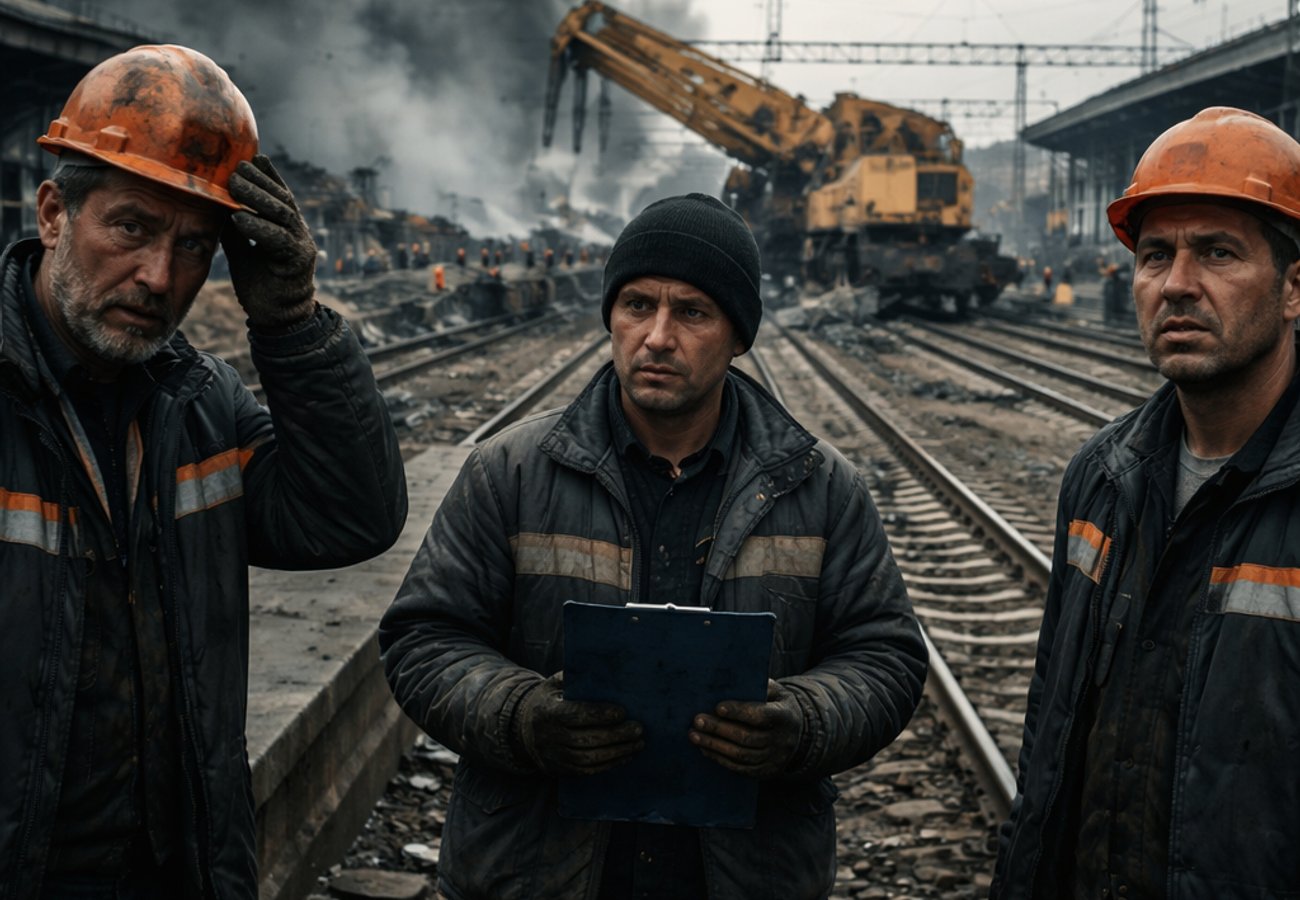
Image generated by AI
A Strike on Russia's Hidden Repair Network
Russia's railway system just faced a fresh logistics shock. The Atesh partisan movement claimed that its operatives destroyed a rare EDK-300/5 railway recovery crane stationed at a railway facility in Voronezh, deep inside Russian territory. If verified, this would mark a strategic pivot—moving beyond attacks on tracks and trains to target the specialized repair equipment that keeps freight corridors operational after accidents, derailments, or infrastructure damage.
The incident remains unconfirmed by Russian official sources. However, the operational significance of the alleged target reveals a clear message: Atesh is now pressuring Russia's rear-area transport resilience, not just immediate rail movement.
Why Voronezh Matters More Than You Think
Voronezh sits hundreds of kilometers from the front line, which makes this claim particularly telling. Railway hubs far from active combat zones carry massive logistical weight—they support regional freight movement, military mobility, repair operations, and the broader transport infrastructure that keeps Russia's economy moving.
Any disruption here draws immediate attention to Russia's internal security vulnerabilities. The location was not accidental. Reddit: "Targeting rear-area logistics is smarter than hitting frontline tracks—it forces Russia to spend resources on recovery instead of offensive operations." — r/military
The EDK-300/5: More Than Just a Machine
The EDK-300/5 is a heavy-duty railway recovery crane, capable of lifting loads up to 300 tonnes. This is not a routine maintenance vehicle. It is specialized emergency engineering equipment used when ordinary machinery cannot handle damaged rolling stock, large debris, or complex infrastructure repairs.
Such cranes are force multipliers in railway operations. They decide how quickly a blocked junction can reopen, how fast a derailed train can be cleared, and whether a damaged track section can return to service. In wartime logistics, this translates to operational speed and flexibility.
If the crane was destroyed as claimed, the immediate loss is one heavy-lift asset. The wider impact is far more serious: reduced repair capacity forces Russian Railways to reroute equipment from other regions, weakening recovery reserves elsewhere, extending repair timelines, and creating cascading vulnerabilities across the network.
A Shift in Sabotage Strategy
Rail sabotage is typically associated with damaged tracks, signal systems, or trains themselves. This alleged operation targets the invisible repair chain behind the network. That marks a strategic evolution.
A railway can absorb track damage if it has adequate repair teams, spare parts, working cranes, and rerouting options. But when repair assets themselves become targets, the entire recovery equation changes. According to railway industry experts, recovery equipment scarcity is one of the most difficult logistics problems to solve quickly.
Every fresh disruption becomes harder to manage when repair capacity is limited. A blocked line stays blocked longer. A damaged junction takes more time to reopen. Freight schedules lose flexibility. This compounds operational stress across the entire system.
The "Rare Equipment" Problem
Here is where the crane's scarcity becomes critical: Atesh specifically claimed the EDK-300/5 is "rare and no longer in production." If that is accurate, replacement options are severely limited.
Russian Railways cannot simply order a new crane from an assembly line. Instead, options include:
- Moving another crane from a different region (weakening backup capacity elsewhere)
- Attempting repairs on the damaged unit (likely slow or impossible if destroyed)
- Using smaller, less capable equipment (requiring more support vehicles and time)
Each choice carries operational costs. That is precisely why Atesh targeted this specific machine—not for its size alone, but for its irreplaceability in the current logistics chain.
Rear-Area Security Under Pressure
Voronezh is not a frontline location. That detail cuts to the heart of why this claim matters. If partisan operatives can conduct sabotage operations inside Russia's rear areas—targeting specialized equipment at railway stations—it signals vulnerability where Russia assumed relative safety.
The psychological impact is immediate. It suggests that no railway facility, however distant from combat, is fully secure. The operational impact follows: Russia must now allocate additional security resources to rear-area repair infrastructure, diverting personnel and attention from other priorities.
Atesh's Consistent Operational Pattern
Atesh identifies itself as a resistance movement composed of Ukrainians and Crimean Tatars. Its track record shows a clear focus on Russian military-linked infrastructure, movement routes, and logistics support systems. The Voronezh claim fits this established pattern precisely.
The movement's messaging is consistent: Russia's rear is not fully secure, and systems supporting military mobility and infrastructure repair remain vulnerable. In modern conflict, logistics often determines endurance. Weapons, fuel, spare parts, troops—all depend on reliable transport. Railways are central to this system because they handle massive volumes. But every railway also needs recovery capacity. Without repair equipment, a network becomes exponentially more fragile under pressure.
The Verification Question
Here is the critical caution: This incident should not be presented as confirmed fact. At present, Atesh has claimed the destruction. Russian authorities, Russian Railways, or independent sources have not verified the loss.
That distinction matters for credibility. Conflict claims move fast, and both sides use information strategically to influence morale and perception. Responsible reporting separates verified facts from claims. The confirmed element is that Atesh published the claim through its channels. The unconfirmed element is the crane's physical status and the full operational disruption in Voronezh.
Multiple international media sources have covered Atesh's previous claims, establishing the movement's pattern of releasing detailed operational statements before independent verification occurs. Some claims have been verified; others remain disputed.
What This Means for Russian Railway Logistics
If the crane destruction is verified, Russia faces a cascading logistical problem. Voronezh's recovery capacity drops. Equipment must be relocated or workarounds improvised. Regional freight reliability declines. Military supply chains experience greater vulnerability.
But even without verification, the claim itself has strategic value. It demonstrates that rear-area railway assets remain targeted, that specialized equipment is vulnerable, and that Russia's internal logistics security continues under pressure.
The broader implication is clear: Russia's railway system must now operate with heightened uncertainty about repair capacity. Every incident, every damaged section, every derailment becomes more costly to resolve. That is the pressure point Atesh appears to be exploiting—not sudden catastrophic failure, but the slow grinding down of logistical resilience through targeted strikes on the hidden infrastructure that keeps everything moving.
Railway sabotage has entered a new phase—one that targets not movement, but the machinery that restores movement.
Related Travel Guides
Disclaimer
This article is for informational and educational purposes only. It does not constitute legal, financial, or professional advice. While we strive to provide accurate and up-to-date information, travel policies, regulations, and conditions change rapidly. Always verify information with official sources before making travel decisions. Nomad Lawyer makes no representations about the accuracy, reliability, completeness, or suitability of the information provided. Readers should consult qualified professionals for advice specific to their circumstances. The views expressed in this article are those of the author and do not necessarily reflect the views of Nomad Lawyer.
Raushan Kumar
Founder & Lead Developer
Full-stack developer with 11+ years of experience and a passionate traveller. Raushan built Nomad Lawyer from the ground up with a vision to create the best travel and law experience on the web.
Learn more about our team →