
Emirates, Etihad, British Airways and Air France Suspend Middle East Routes as Conflict Strands Thousands in 2026
Major airlines including Emirates and British Airways have suspended routes across the UAE, Qatar, Kuwait, Israel, and Bahrain due to airspace closures and escalating regional conflict.

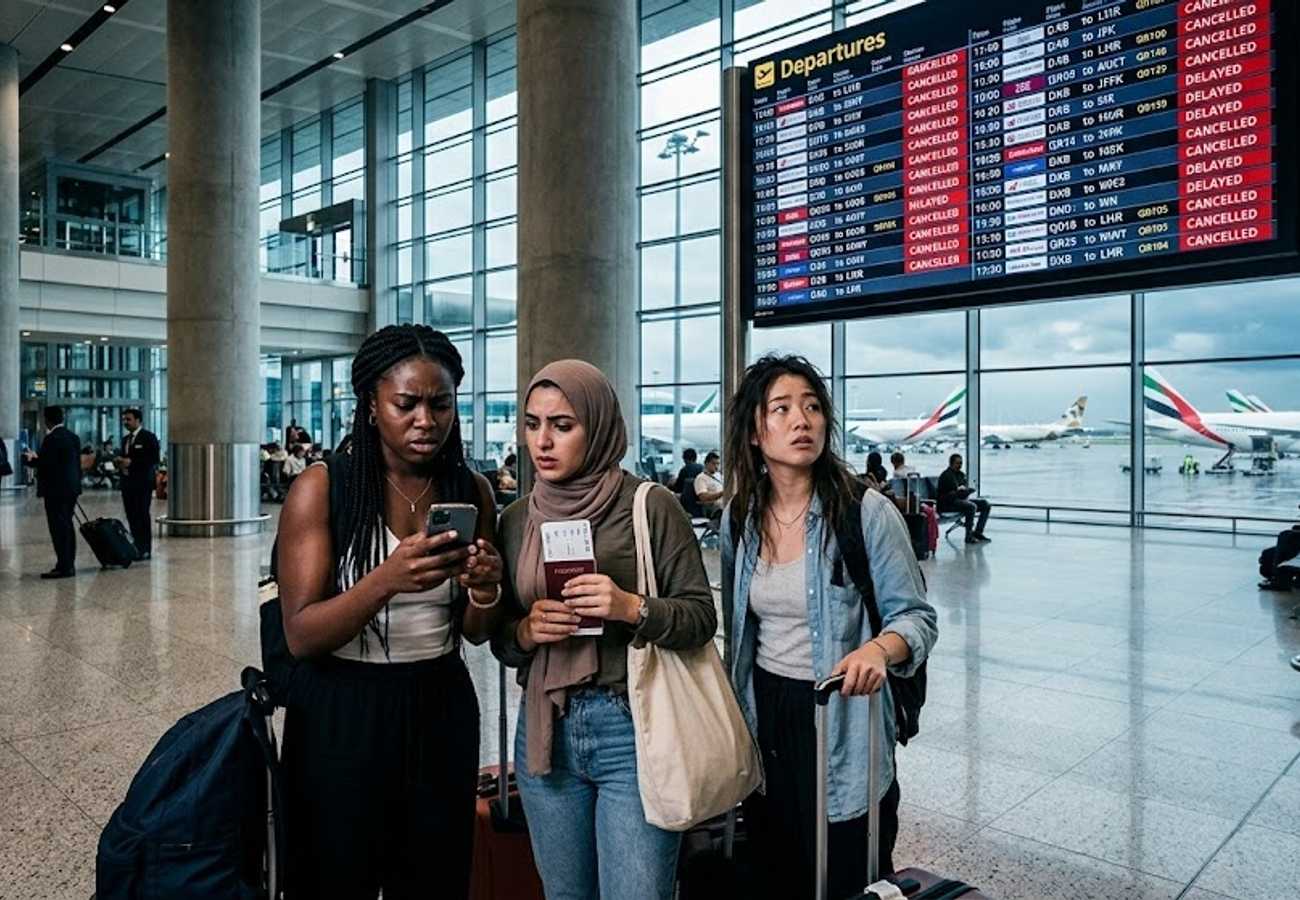
Image generated by AI
Airspace closures and escalating regional conflict have triggered a massive operational collapse across Middle Eastern aviation hubs, with over 1,600 cancellations and 7,500 delays reported in the last ten days.
The United Arab Emirates, Kuwait, Qatar, Israel, and Bahrain are currently experiencing severe flight disruptions. Major carriers, including Emirates, Etihad, Air France, and British Airways, have suspended critical routes due to heightened missile and drone activity, leading to the stranding of thousands of transcontinental passengers.
Our analysis of current aviation data indicates that the European Union Aviation Safety Agency (EASA) and the U.S. Federal Aviation Administration (FAA) have issued urgent safety bulletins. These coincide with a U.S. State Department "Worldwide Caution" issued on July 20, 2026, creating one of the most significant operational bottlenecks in the history of Middle Eastern air corridors.
Flight & Airport Impact Breakdown
The disruption is concentrated across the GCC and Levant hubs, where GPS interference and overflight bans are forcing aircraft into lengthy southern bypass detours over Saudi Arabia and Egypt.
United Arab Emirates (DXB, AUH)
- Emirates & flydubai: Suspended select regional services, including Dubai to Kuwait; long-haul flights are utilizing extended bypass routings.
- Etihad Airways: Targeted cancellations on regional sectors to Kuwait and Bahrain.
- British Airways: All London–Dubai flights suspended until October 25, 2026.
- Air France: Dubai suspensions extended through late July.
- Lufthansa Group: Services paused into September.
Kuwait (KWI)
- Kuwait Airways & Jazeera Airways: Operating under heavily revised schedules.
- Qatar Airways: All commercial passenger flights into Kuwait City paused until further notice.
- UAE Carriers: Emirates, Etihad, and Air Arabia have suspended multiple daily rotations into Kuwait.
Qatar (DOH)
- Qatar Airways: Rerouting transcontinental paths through Saudi Arabia and Oman; short-haul services to Kuwait suspended.
- British Airways: Resumption of Doha services pushed back to August 1, 2026, with reduced weekly frequencies.
Israel (TLV)
- British Airways: London Heathrow to Tel Aviv flights suspended through October 25, 2026.
- Lufthansa & North American Carriers: Direct services paused pending dynamic risk assessments.
- El Al: Maintaining core links using specialized anti-missile defense protocols.
Bahrain (BAH)
- Gulf Air: Implementing routing revisions to bypass restricted sectors.
- Etihad Airways: Targeted cancellations on Abu Dhabi–Bahrain rotations (specifically EY641/EY642).
- British Airways: London Heathrow to Bahrain flights halted through October 25, 2026.
Airline Suspensions and Affected Destinations
| Country / Destination | Airline | Impacted Routes | Suspension Window | Operational Status |
|---|---|---|---|---|
| UAE | Air France | Paris (CDG) ↔ Dubai (DXB) | Through July 27 (Inbound) / July 28 (Outbound) | Temporary pause; subject to safety re-evaluation |
| UAE | British Airways | London (LHR) ↔ Dubai (DXB) | Through October 25, 2026 | Full suspension |
| Bahrain | Etihad Airways | Abu Dhabi (AUH) ↔ Bahrain (BAH) | Specific Rotations (EY641/EY642) | Targeted cancellations |
| Bahrain | British Airways | London (LHR) ↔ Bahrain (BAH) | Through October 25, 2026 | Full suspension |
| Israel | British Airways | London (LHR) ↔ Tel Aviv (TLV) | Through October 25, 2026 | Full suspension |
Passenger Rights & Advisory
Travelers caught in these disruptions have specific legal entitlements depending on the jurisdiction of the airline and the nature of the cancellation.
Compensation and Refunds Under EU Regulation 261/2004 (for flights departing the EU or arriving in the EU on an EU carrier), passengers are generally entitled to a full refund or rerouting. However, "extraordinary circumstances"—such as airspace closures due to conflict—often exempt airlines from paying additional cash compensation.
Right to Care Regardless of the cause of the delay, airlines are mandated to provide "Right to Care." This includes:
- Communication: Two phone calls or emails.
- Sustenance: Food and refreshment vouchers commensurate with the waiting time.
- Accommodation: Hotel lodging and transport between the airport and hotel if an overnight stay is required.
Actionable Steps for Stranded Passengers
- Verify Bookings: Do not proceed to the airport without a confirmed "Flight Operational" status from the carrier.
- Document Everything: Keep all receipts for food, water, and hotels if the airline fails to provide vouchers.
- Request Written Notice: Ensure you have the official cancellation notice stating the reason for the disruption to support future insurance claims.
- Explore Waivers: Check for flexible fare waivers currently offered by international partners for itineraries transiting through Doha.
Industry Analyst View
The current situation represents a systemic failure of the "hub-and-spoke" model in the Middle East. By relying on a few hyper-efficient gateways like DXB and DOH, the global aviation network has created a single point of failure.
The shift toward southern corridors over Saudi Arabia and Egypt is not merely a logistical hurdle but a financial one. Increased fuel burn and extended block times are inflating operational costs, which will likely lead to a surge in ticket prices across all transcontinental routes for the remainder of 2026. Carriers are now forced to balance safety protocols against the immense pressure of managing tens of thousands of displaced passengers.
Travelers are advised to monitor FlightAware and official ministry advisories for real-time airspace updates.
Related Travel Guides
Disclaimer
This article is for informational and educational purposes only. It does not constitute legal, financial, or professional advice. While we strive to provide accurate and up-to-date information, travel policies, regulations, and conditions change rapidly. Always verify information with official sources before making travel decisions. Nomad Lawyer makes no representations about the accuracy, reliability, completeness, or suitability of the information provided. Readers should consult qualified professionals for advice specific to their circumstances. The views expressed in this article are those of the author and do not necessarily reflect the views of Nomad Lawyer.
Raushan Kumar
Founder & Lead Developer
Full-stack developer with 11+ years of experience and a passionate traveller. Raushan built Nomad Lawyer from the ground up with a vision to create the best travel and law experience on the web.
Learn more about our team →