
Rome Establishes High-Security 'Red Zone' Around Colosseum
Rome implements a fortified security Red Zone around the Colosseum and Imperial Forums from Aug 24 to Dec 24, 2026. Learn about new ID checks and transit rules.

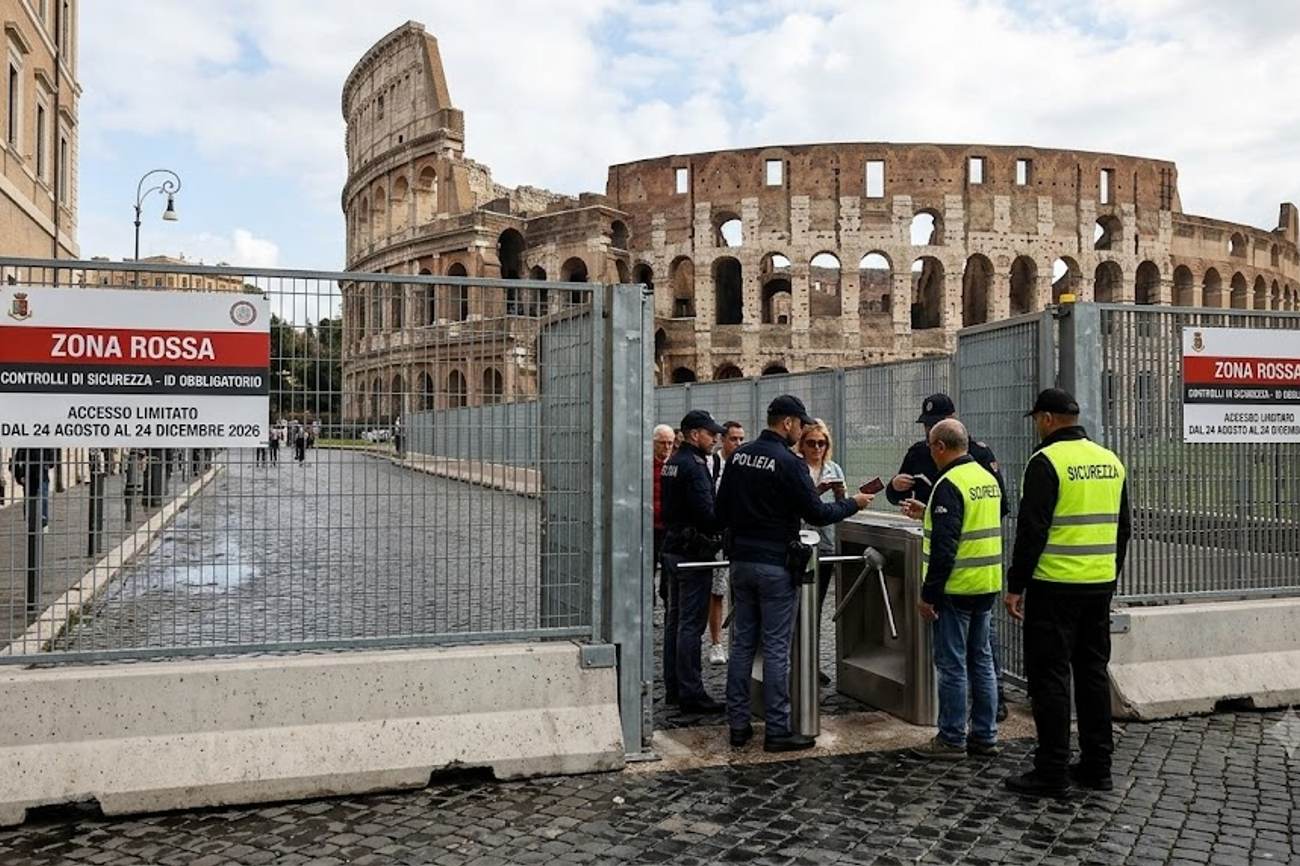
Image generated by AI
Municipal authorities in Rome have officially designated a high-security sector around the city's most prominent archaeological sites following an escalation in public order challenges. The "Red Zone" is a direct response to increased rates of petty theft, mobile phone snatches, and localized drug distribution within the historic center.
The decision follows a critical spike in tensions, including an unauthorized gathering in the main square that resulted in injuries to law enforcement officers. City officials have specifically noted that the opening of the new Roma Colosseo metro station on Line C has altered transit patterns, facilitating easier access for marginalized groups from peripheral districts into the high-density tourist corridor.
Under the current decree, the zone is subject to a permanent 24-hour security presence consisting of local police and military personnel. Law enforcement officers now possess expanded legal powers to conduct rapid identity verifications, disperse suspicious gatherings, and execute immediate arrests.
Security Zone Specifications
| Parameter | Detail |
|---|---|
| Effective Date | August 24, 2026 |
| Expiration Date | December 24, 2026 |
| Duration | 4 Months |
| Geographic Scope | Colosseum Perimeter, Fori Imperiali, Colle Oppio |
| Security Personnel | Local Law Enforcement & Military |
| Operational Hours | 24 Hours / 7 Days a Week |
Traveler Logistics Guide
From a ground-level perspective, navigating the historic center now requires a more disciplined approach to documentation and transit. The introduction of the Roma Colosseo station on Line C is the most efficient way to enter the district, but travelers should be prepared for immediate security screening upon exiting the turnstiles.
Practical Navigation Tips:
- Documentation: Carry a physical passport or a government-issued photo ID at all times. Security personnel are conducting frequent identity checks; lacking documentation may lead to temporary detention for verification.
- Checkpoint Management: Expect temporary perimeter controls. If you have pre-booked timed entry tickets for the Colosseum, allow an additional 30–45 minutes for security queues beyond the standard entry window.
- Transit Strategy: While Line C provides direct access, avoid lingering in the immediate vicinity of the station exits during peak hours to bypass the highest concentrations of security activity and crowd congestion.
- Digital Safety: Despite the military presence, maintain high vigilance regarding mobile devices. Use crossbody bags or secure pockets to prevent "snatch-and-run" thefts, which remain a primary target of the Red Zone initiative.
Infrastructure Impact Assessment
This intervention marks a strategic shift in Rome's urban management. Previously, security efforts were concentrated on transit hubs like Termini station (Esquilino and San Lorenzo districts) or peripheral areas such as Valle Aurelia-Cornelia. By shifting these resources to the archaeological epicenter, the city is treating heritage tourism as a matter of national security.
Analysts suggest this "fortified sector" model may serve as a blueprint for other European capitals struggling to balance mass tourism with urban decay. The move signals that Rome is prioritizing the reputation of its primary assets over unrestricted urban movement to protect tourism revenue.
Related Travel Guides
Disclaimer
This article is for informational and educational purposes only. It does not constitute legal, financial, or professional advice. While we strive to provide accurate and up-to-date information, travel policies, regulations, and conditions change rapidly. Always verify information with official sources before making travel decisions. Nomad Lawyer makes no representations about the accuracy, reliability, completeness, or suitability of the information provided. Readers should consult qualified professionals for advice specific to their circumstances. The views expressed in this article are those of the author and do not necessarily reflect the views of Nomad Lawyer.
Naina Thakur
Contributor & Travel Specialist
Travel enthusiast and legal writer covering visa regulations, responsible tourism, and cultural journeys across global destinations.
Learn more about our team →