
Rare British Columbia Storm Sparks 50 New Wildfires and Cripples Vancouver International Airport (YVR) Flights in 2026
A powerful storm system delivering 7,000 lightning strikes has ignited dozens of wildfires across B.C. and caused massive flight cancellations at YVR.

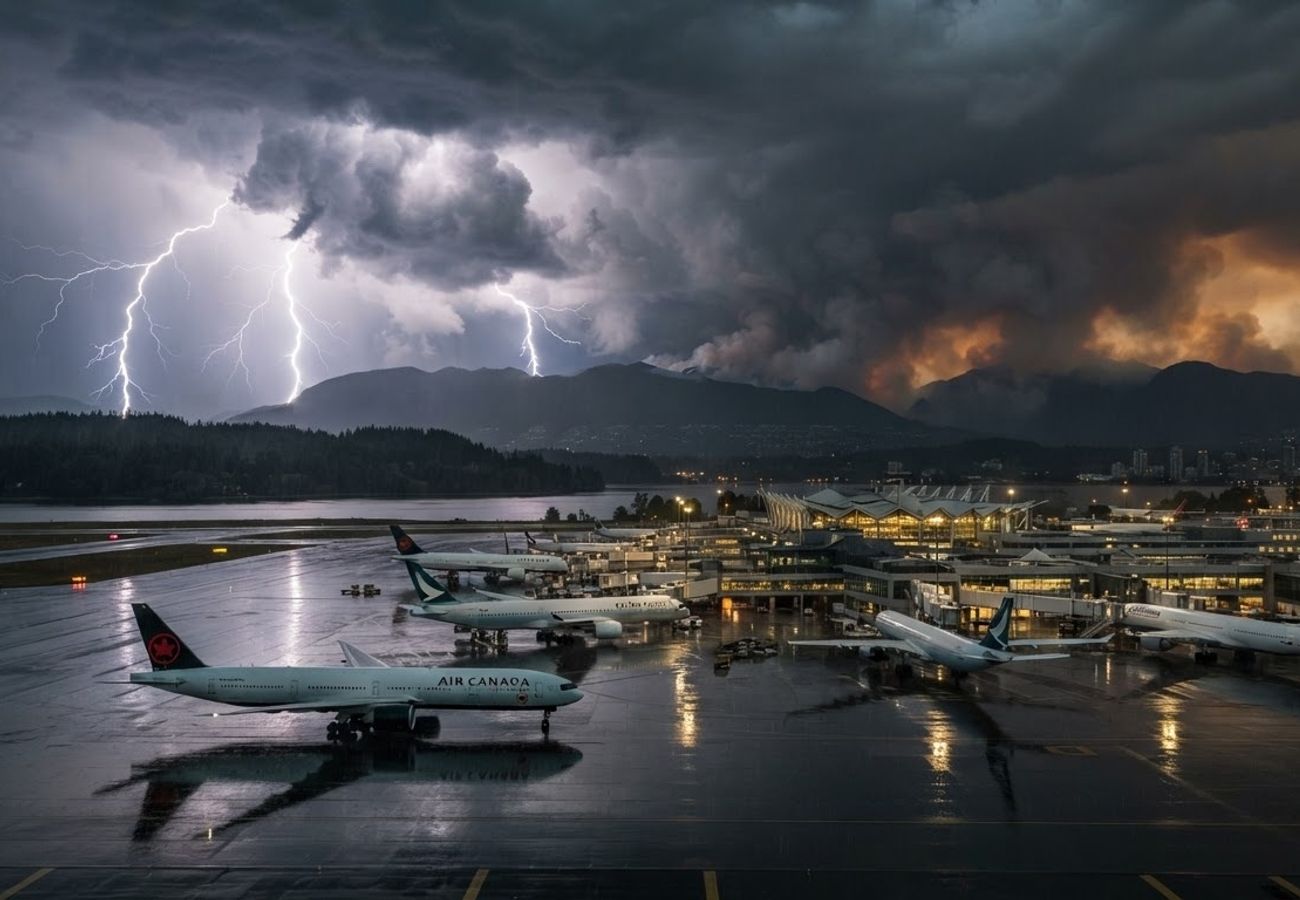
Image generated by AI
A rare late-summer storm system has delivered over 7,000 lightning strikes across southern British Columbia, igniting roughly 50 new wildfires and triggering a near-total halt of ground operations at Vancouver International Airport (YVR).
Storm Impact and Aviation Disruption
Between 9 p.m. Saturday and 3 a.m. Sunday, Vancouver International Airport (YVR) experienced a severe operational collapse. Lightning activity over the South Coast forced the implementation of strict safety protocols, preventing ground crews from servicing aircraft and halting taxiway movements.
Flight tracking data and airport reports indicate that by midday Sunday, the disruption resulted in:
- Cancellations: At least 50 flights were cancelled.
- Delays: More than 50 flights faced significant delays.
- Ground Stalls: Arriving aircraft were held on taxiways, and departing passengers remained stranded in terminals.
The disruption is expected to ripple through the network into Monday, affecting trans-Pacific hubs and domestic connections to the B.C. Interior and Northern Canada due to displaced aircraft and crew rotations.
Wildfire Surge in Southern British Columbia
The storm system, characterized by Environment Canada as unusual for its intensity and timing, recorded more than 1,800 lightning events over the Lower Mainland alone. Province-wide, the 7,000+ strikes have exacerbated an already volatile wildfire season.
The BC Wildfire Service reported approximately 50 new blazes in the 24 hours leading up to Sunday, August 23. Key data points regarding the fire activity include:
- Bald Range Wildfire: Located near Summerland in the Okanagan Valley, this blaze now exceeds 17,000 hectares.
- Ignition Source: A significant proportion of the new fires are classified as lightning-caused, which historically account for a larger percentage of total area burned compared to human-caused fires.
- Precipitation: While Horseshoe Bay recorded over 40 millimetres of rain, analysts warn this moisture is insufficient to ease the severe drought conditions in the Interior.
Passenger Rights & Advisory
For passengers affected by the YVR disruptions and regional wildfire closures, the following legal and practical frameworks apply. Our analysis of current aviation policy suggests these steps for recovery:
Flight Cancellations and Delays Because these disruptions were caused by "Acts of God" (severe weather/lightning), airlines typically classify them as extraordinary circumstances. Under the Air Passenger Protection Regulations (APPR) in Canada:
- Rebooking: The airline must rebook you on the next available flight. If the airline cannot provide a flight within 48 hours, they may be required to endorse your ticket to another carrier.
- Refunds: If you choose not to travel due to a significant delay or cancellation, you are entitled to a full refund of the unused portion of the ticket.
- Standards of Treatment: For delays within the airline's control, food and beverage vouchers are mandatory; however, for weather-related events, these are provided at the airline's discretion.
Travel Insurance and Contingencies For those traveling to the Okanagan or Interior regions:
- Evacuation Alerts: Monitor official wildfire dashboards. If a destination is under an evacuation alert, check if your travel insurance covers "trip interruption" due to natural disasters.
- Road Safety: Motorists are advised to carry emergency supplies and check highway status, as new lightning-ignited fires may cause sudden road closures.
Industry Analyst View
The synchronization of extreme weather and high-fuel dryness in British Columbia highlights a growing vulnerability in Western North American infrastructure. The "hold" rules at YVR—where ramp workers are cleared only after a specific window of lightning-free activity—demonstrate that even a few hours of atmospheric instability can paralyze a major international hub.
The emergence of "holdover" fires (blazes that smoulder in root systems before erupting) means the risk to transportation corridors will remain elevated even after the storm cells dissipate. This pattern suggests that late-summer travel in the region now requires a higher degree of flexibility and comprehensive insurance coverage.
The intersection of climate volatility and aviation safety protocols is creating a new baseline for travel disruption in the Pacific Northwest.
Related Travel Guides
Disclaimer
This article is for informational and educational purposes only. It does not constitute legal, financial, or professional advice. While we strive to provide accurate and up-to-date information, travel policies, regulations, and conditions change rapidly. Always verify information with official sources before making travel decisions. Nomad Lawyer makes no representations about the accuracy, reliability, completeness, or suitability of the information provided. Readers should consult qualified professionals for advice specific to their circumstances. The views expressed in this article are those of the author and do not necessarily reflect the views of Nomad Lawyer.
Raushan Kumar
Founder & Lead Developer
Full-stack developer with 11+ years of experience and a passionate traveller. Raushan built Nomad Lawyer from the ground up with a vision to create the best travel and law experience on the web.
Learn more about our team →