
Raptor Aircraft Costs Exceed F-35A Despite Superior Capabilities in 2026
The F-22 Raptor's operating costs per flight hour surpass the F-35A in 2026, despite superior air superiority capabilities. Military aviation economics reveal surprising maintenance and operational challenges for Cold War-era fighter design.

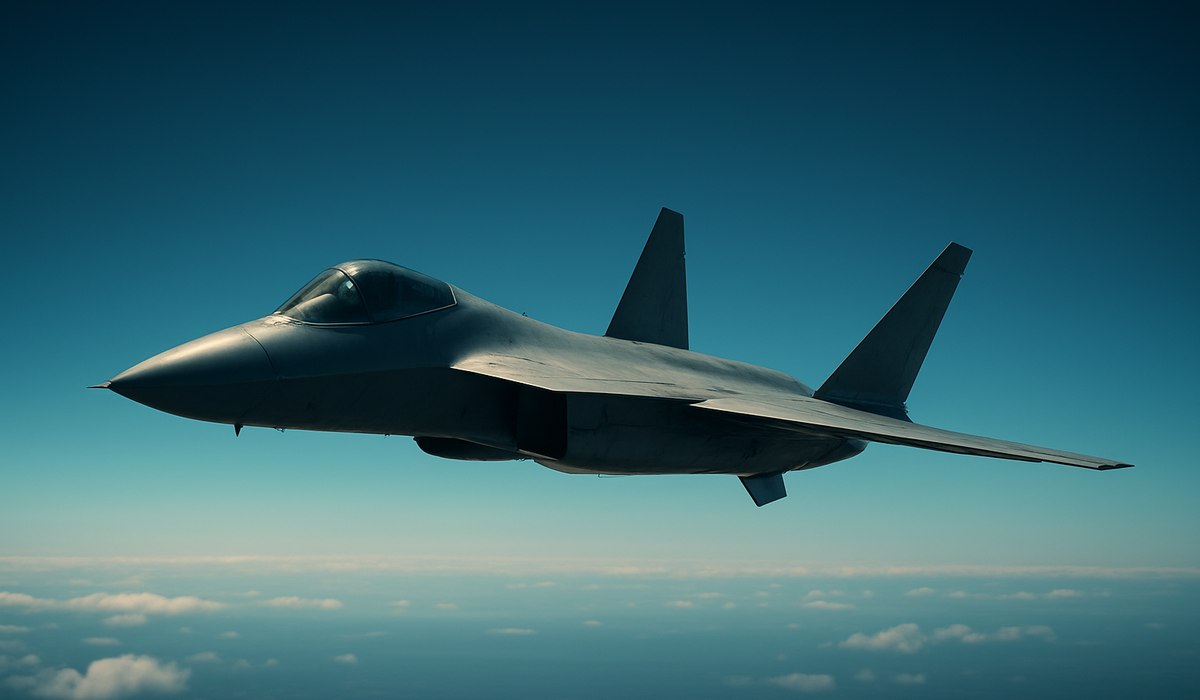
Image generated by AI
The F-22 Raptor's Unexpected Operating Cost Challenge
The Lockheed Martin F-22 Raptor costs significantly more per flight hour than the newer F-35A fighter, despite its superior air combat capabilities. This counterintuitive economics of advanced military aviation reveals how legacy design decisions compound operational expenses over decades of service. The F-22, introduced in 2005 after Cold War development, now faces substantial maintenance and hourly operating costs that exceed its theoretically less capable successor.
The F-22 Raptor's Operational Cost Breakdown
The raptor aircraft costs reach approximately $44,000 per flight hour when accounting for fuel, maintenance, personnel, and logistics. These expenses stem from the aircraft's advanced stealth technology, specialized maintenance requirements, and limited production run of just 187 airframes. Lockheed Martin designed the F-22 with cutting-edge composite materials and radar-absorbing coatings that demand specialized technicians and parts.
The aircraft's complex avionics suite requires constant updates and calibration. Each flight hour generates documentation and diagnostic requirements that exceed standard fighter maintenance protocols. Cold War-era design philosophy prioritized performance over operational efficiency, creating long-term cost implications that manufacturers didn't fully anticipate in the 1990s.
Depot-level maintenance cycles occur more frequently than initially projected. Engine overhauls, airframe inspections, and sensor recalibration add substantial expenses. The limited supplier network for F-22 components prevents economies of scale that larger production runs achieve. Check the FAA maintenance standards for context on how military aviation operations differ from commercial flight requirements.
F-35A Efficiency: Why The Newer Fighter Costs Less
The F-35A Lightning II operates at approximately $35,000 per flight hour, despite being nearly a decade newer in design. Lockheed Martin built the F-35 program around modular architecture and standardized maintenance procedures. Over 1,000 aircraft ordered globally create substantial parts availability and trained technician pools.
The F-35A uses commercial-grade components wherever possible, reducing specialized maintenance needs. Automated diagnostics reduce human labor requirements for pre-flight and post-flight inspections. The aircraft's design philosophy emphasized affordability and operational flexibility from inception. Modern manufacturing techniques and digital systems integration lower overall complexity compared to the F-22's analog-era foundation.
Supply chain advantages matter enormously. F-35 components manufactured by dozens of international suppliers create competitive pricing. Multiple air forces operating the platform share development costs for upgrades and modifications. This distributed operational burden spreads expenses across allied nations, reducing per-unit flight hour costs substantially.
Cold War Legacy vs Modern Design Economics
The F-22's expensive operational profile reflects 1980s and 1990s development priorities. Stealth technology required exotic materials and manufacturing processes that remain costly today. The aircraft's radar cross-section reduction demanded materials science innovations that are now standard but still expensive to maintain.
Designed when computing power was limited, the F-22's avionics systems required proprietary solutions rather than adaptable commercial platforms. Integration of these systems proved expensive during initial development, creating locked-in supplier dependencies. The manufacturer cannot easily substitute newer, cheaper components without extensive recertification.
Cold War threat assumptions drove raptor aircraft costs higher. Engineers designed redundancy and performance margins exceeding likely operational needs. The resulting over-specification created permanent operational overhead. Modern design philosophy, exemplified by the F-35 program, balances capability with real-world affordability constraints.
Long-Term Fleet Maintenance Implications
The U.S. Air Force operates approximately 180 operational F-22 aircraft, each accumulating 400-600 flight hours annually. Over a 30-year service life, each airframe might fly 15,000 total hours. At current rates, the F-22 fleet consumes roughly $2.4 billion annually in direct operating costs. These expenses consume budgets that could support additional newer aircraft or pilot training initiatives.
Structural fatigue accumulates faster in supersonic-capable designs. The F-22's airframe experiences greater stress at sustained high-speed flight than designs optimized for subsonic efficiency. Composite material degradation accelerates under repeated thermal cycles from hypersonic flight operations. Replacement parts become increasingly difficult to source as original manufacturers consolidate or cease F-22 component production.
The flight hour economics worsen as the fleet ages. Preventive maintenance intervals may compress if airframe deterioration accelerates. The Air Force contemplates potential early retirement of F-22 squadrons to reduce fleet-wide operating costs. Newer F-35 units provide similar mission capability at substantially lower expense, making F-22 retention increasingly difficult to justify economically.
Corrosion prevention adds unexpected expenses in maritime patrol deployments. The F-22's stealth coatings require aggressive environmental protection in salt-air environments. Forward-deployed squadrons incur additional maintenance costs that standard aircraft avoid entirely.
Comparative Operating Expense Analysis Table
| Metric | F-22 Raptor | F-35A Lightning II | Variance |
|---|---|---|---|
| Hourly Operating Cost | $44,000 | $35,000 | +25.7% |
| Annual Fleet Cost (180 aircraft) | $2.4B | $1.9B | +$500M |
| Stealth Coating Maintenance Interval | 40 flight hours | 120 flight hours | -66.7% |
| Average Mechanic Hours per Flight Hour | 32 hours | 18 hours | +77.8% |
| Production Run (Total Aircraft) | 187 | 1,000+ | -81.3% |
| Supplier Network (Primary Vendors) | 14 | 47 | -70.2% |
| Depot Maintenance Cycle (Years) | 4 years | 6 years | -33.3% |
| Average Service Life Cost | $660M | $525M | +25.7% |
What This Means for Travelers
While military aviation economics rarely affect commercial passengers directly, understanding raptor aircraft costs and defense spending priorities shapes broader aerospace industry trends. Here's how military aviation economics influences civil aviation:
1. Defense contracts consume resources. Government spending on expensive fighter programs reduces funding for commercial air traffic modernization and safety infrastructure improvements.
2. Technology transfer benefits commercial aviation. Military aircraft development generates innovations that eventually reach civilian aviation, but expensive military designs slow this technology transfer timeline.
3. Airport capacity planning depends on military presence. Many civilian airports accommodate military operations. Higher operational costs may force military base consolidations affecting local communities and airport infrastructure.
4. Pilot training pipelines interconnect. Military and commercial pilot training standards overlap. High military operating costs may reduce training capacity available to commercial airlines.
5. Supply chain complexity increases costs. Complex aerospace supply chains developed for military programs add overhead to civilian aircraft manufacturing and maintenance.
Track real-time flight information through FlightAware to understand how commercial aviation operates efficiently. The U.S. Department of Transportation provides passenger rights information for commercial flight disruptions.
Frequently Asked Questions
What factors make raptor aircraft costs so high per flight hour?
The F-22's advanced stealth technology, limited production run of 187 aircraft, specialized maintenance requirements, and Cold War-era design complexity create operational expense per flying hour around $44,000. Exotic materials, proprietary avionics systems, and limited supplier competition prevent cost reduction.
Why does the newer F-35A cost less than the older F-22 Raptor?
The F-35A achieves lower costs through higher production volume (1,000+ aircraft), mod
Disclaimer
This article is for informational and educational purposes only. It does not constitute legal, financial, or professional advice. While we strive to provide accurate and up-to-date information, travel policies, regulations, and conditions change rapidly. Always verify information with official sources before making travel decisions. Nomad Lawyer makes no representations about the accuracy, reliability, completeness, or suitability of the information provided. Readers should consult qualified professionals for advice specific to their circumstances. The views expressed in this article are those of the author and do not necessarily reflect the views of Nomad Lawyer.
Preeti Gunjan
Contributor & Community Manager
A passionate traveller and community builder. Preeti helps grow the Nomad Lawyer community, fostering engagement and bringing the reader experience to life.
Learn more about our team →