
Longer Airline Routes Arrive Faster: Why Pilots Ignore Straight Lines
Pilots intentionally fly longer airline routes that arrive faster than direct shortcuts. Jet streams, atmospheric physics, and weather optimization reveal why curved flight paths beat straight-line logic in 2026 aviation.

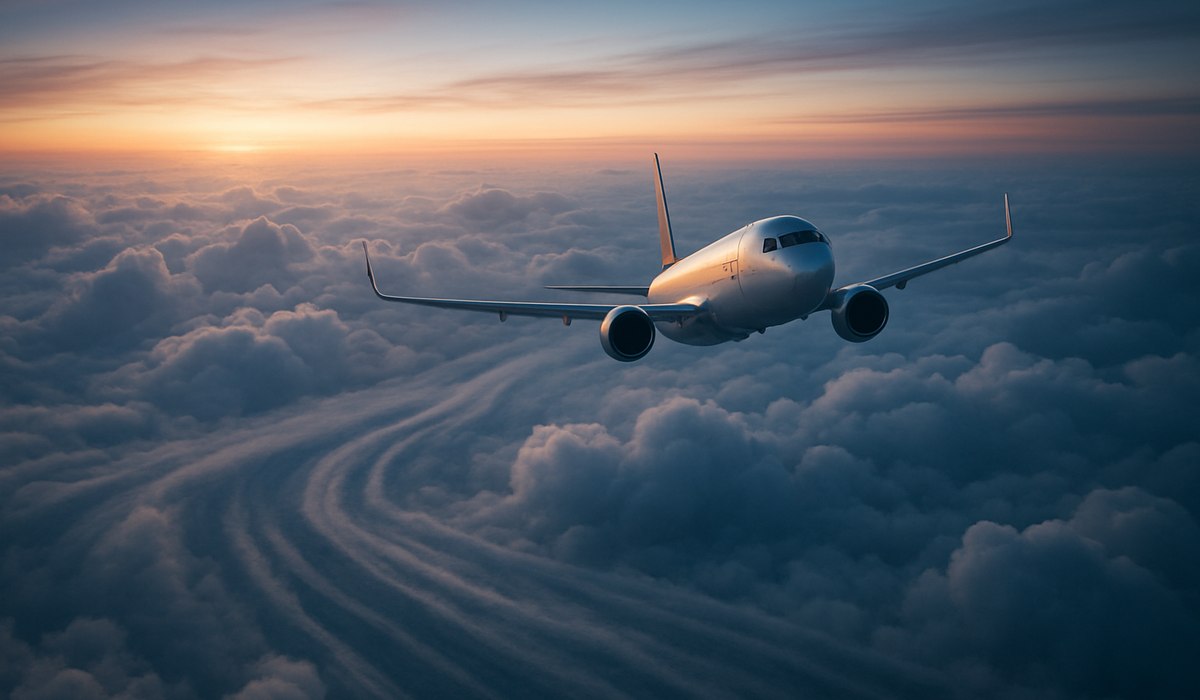
Image generated by AI
Why Longer Airline Routes Defy Flat-Map Logic
Glancing at real-time flight tracking on a flat-map display reveals an counterintuitive mystery: longer airline routes frequently arc northward or southward instead of following what appears as the shortest distance between two points. Passengers checking FlightAware during transatlantic or transpacific journeys often notice their aircraft path curves dramatically compared to the direct line on their phone screens. This phenomenon isn't pilot error or inefficient routing. Rather, it represents a sophisticated understanding of atmospheric physics that makes these longer routes demonstrably faster, cheaper, and more fuel-efficient than straight-line shortcuts.
Modern aviation has mastered the art of trading distance for speed. Aircraft traversing intercontinental corridors regularly fly extended routes that shave hours off scheduled flight times while reducing fuel consumption simultaneously. The key to understanding this counterintuitive strategy lies in recognizing that aviation operates in three dimensions within a dynamic atmosphere constantly shaped by wind patterns, temperature gradients, and pressure systems.
The Great Circle Route Illusion
The most common misconception travelers hold involves Mercator projection maps. Flat representations of our spherical Earth distort distances dramatically near the poles. What appears as an obvious straight line on your phone actually represents a longer path through three-dimensional space. The shortest route between any two points on a sphere follows a great circle—an arc that pilots have understood for decades.
However, even when accounting for spherical geography, the shortest distance isn't always the fastest route. Airlines today employ sophisticated algorithms analyzing hundreds of variables beyond mere mileage. These calculations factor wind direction, altitude efficiency, fuel pricing, weather avoidance, and regulatory airspace considerations. A longer airline route following a great circle that intersects favorable wind patterns will consistently deliver passengers faster than a slightly shorter path encountering headwinds.
Transatlantic flights exemplify this principle perfectly. Westbound aircraft departing European airports frequently route north toward Greenland and Canada rather than following the most direct southern path. This extended trajectory positions jets to capture powerful jet streams flowing eastbound during return journeys. The time savings outweigh the additional distance by 30 to 45 minutes on typical 7-hour transatlantic crossings.
How Jet Streams Accelerate Flight Times
Jet streams represent rivers of rapidly moving air circling Earth at altitudes between 30,000 and 40,000 feet. These narrow bands of extreme wind sometimes exceed 250 knots, capable of accelerating aircraft groundspeeds beyond typical cruise velocities. An aircraft traveling at a true airspeed of 490 knots encounters a 120-knot jet stream tailwind, effectively reaching 610 knots groundspeed—a dramatic velocity increase.
Flight planners obsess over jet stream positioning because the fuel and time calculations prove dramatic. An extra 100 nautical miles flown within a powerful jet stream often costs less fuel and arrives sooner than a shorter route avoiding the wind corridor. Airlines measure these tradeoffs in thousands of dollars per flight and minutes of passenger time. Modern flight planning systems like those used by major carriers continuously analyze projected jet stream positions, reconsidering routes as departure times approach.
Conversely, pilots deliberately circumvent jet streams when flying westbound or southbound. Routing beneath or around a headwind jet stream adds distance but preserves fuel reserves and maintains schedule integrity. The optimization equation constantly shifts based on season, weather patterns, fuel prices, and operational variables. No two days feature identical "optimal" routing, explaining why the same airport pairs produce varied flight paths week to week.
Weather, Safety, and Efficiency Trade-offs
Beyond atmospheric dynamics, safety considerations fundamentally reshape routing decisions. Aircraft must maintain continuous proximity to adequate diversion airports. Longer airline routes extending over water or remote terrain require specific operational approvals and aircraft certification. ETOPS (Extended Twin Operations) regulations limit how far twin-engine jets may operate from emergency landing sites, constraining routing options on ultra-long-haul flights.
Weather avoidance drives substantial route variations. Turbulence, thunderstorms, and icing conditions force deviation from optimal paths. Pilots and automated systems coordinate with meteorological services, adjusting courses to circumvent hazards. These safety-first decisions occasionally extend flight times despite the longer route ultimately proving more efficient under severe weather conditions.
Airline dispatch centers weigh fuel availability, crew duty limitations, airport congestion, and connecting passenger considerations. A longer route arriving 20 minutes earlier serves little purpose if that flight misses a crew rest window or creates cascading delays for subsequent legs. The holistic optimization equation encompasses remarkably complex interdependencies. Airlines invest millions in sophisticated flight operations planning systems analyzing thousands of potential routing variations daily.
Modern Flight Planning Technology
Contemporary flight planning represents the convergence of meteorology, physics, aviation regulations, and computational power. Airlines employ specialized software accessing real-time weather data, wind forecasts, fuel pricing, aircraft performance profiles, and airspace constraints. Machine learning algorithms now predict optimal routing by analyzing historical patterns across thousands of completed flights.
Pilots themselves remain integral to this process despite automation's expansion. They review computer-generated routing recommendations, apply operational judgment, and maintain authority for final decisions. Commercial pilots train extensively on performance optimization, understanding how subtle altitude changes, speed adjustments, and route variations impact flight outcomes. The captain's experience reading weather patterns complements algorithmic precision.
Modern aircraft equipped with advanced avionics continuously recalculate optimal routing en route. Systems monitor actual wind conditions compared to pre-flight forecasts, automatically suggesting altitude or heading adjustments capturing efficiency gains discovered after departure. Continuous descent planning optimizes fuel burn during approach phases. These granular optimization decisions collectively save airlines millions annually while improving on-time performance.
Travelers benefit from extended flight planning capabilities through more consistent schedules and environmental improvements. Fuel efficiency directly translates to reduced emissions. Airlines flying optimization-focused longer routes demonstrate 3-5% better fuel consumption than carriers prioritizing strict distance minimization. The business case for sophisticated routing extends beyond economics to corporate sustainability commitments.
Longer Airline Routes: Key Performance Data
| Factor | Impact | Example Metric |
|---|---|---|
| Jet Stream Tailwind | +120 knots ground speed | Eastbound transatlantic |
| Headwind Avoidance Distance | +200 nautical miles | 30-45 minute time savings |
| Fuel Efficiency Gain | -3 to -5% consumption | $2,000-$5,000 per flight |
| Great Circle Routing | -2-3% vs. flat map distance | 150-200 NM savings |
| Diversion Airport Requirement | +150-300 NM routing | ETOPS certification compliance |
| Seasonal Jet Stream Variation | ±200 NM | Winter vs. summer routes |
What This Means for Travelers
Understanding longer airline routes empowers passengers to become informed travelers appreciating the sophisticated optimization underlying modern aviation.
-
Verify actual flight paths before departure using FlightAware, which displays real-time routing and atmospheric conditions. Compare your booked routing against historical patterns to identify optimization strategies specific to your flight.
-
Set realistic arrival expectations based on wind conditions rather than published distance. Westbound transatlantic flights routinely take 1-2 hours longer than eastbound returns despite identical routing distances. Jet stream seasonality explains this asymmetry.
-
Request specific seating near windows during overnight flights to observe actual flight paths. Modern aircraft cabins often feature moving map displays showing your location, altitude, and ground speed—educational entertainment revealing real-time optimization in action.
-
Understand that longer routes reduce carbon emissions compared to inefficient straight-line routings. Supporting airlines implementing sophisticated flight planning demonstrates commitment to sustainability. Check airline websites for environmental reporting metrics.
-
Accept altitude and heading changes gracefully during flight. Pilots continuously optimize routing based on actual conditions. Unexpected adjustments typically indicate capturing unexpected efficiency gains benefiting your arrival time and fuel consumption.
Disclaimer
This article is for informational and educational purposes only. It does not constitute legal, financial, or professional advice. While we strive to provide accurate and up-to-date information, travel policies, regulations, and conditions change rapidly. Always verify information with official sources before making travel decisions. Nomad Lawyer makes no representations about the accuracy, reliability, completeness, or suitability of the information provided. Readers should consult qualified professionals for advice specific to their circumstances. The views expressed in this article are those of the author and do not necessarily reflect the views of Nomad Lawyer.
Raushan Kumar
Founder & Lead Developer
Full-stack developer with 11+ years of experience and a passionate traveller. Raushan built Nomad Lawyer from the ground up with a vision to create the best travel and law experience on the web.
Learn more about our team →