
Quintana Roo Tourism Slows as Sargassum and Changing Market Trends Impact Mexican Caribbean
Soft summer demand and persistent sargassum seaweed arrivals along the Mexican Caribbean coastline lead to a decline in hotel occupancy across Quintana Roo.

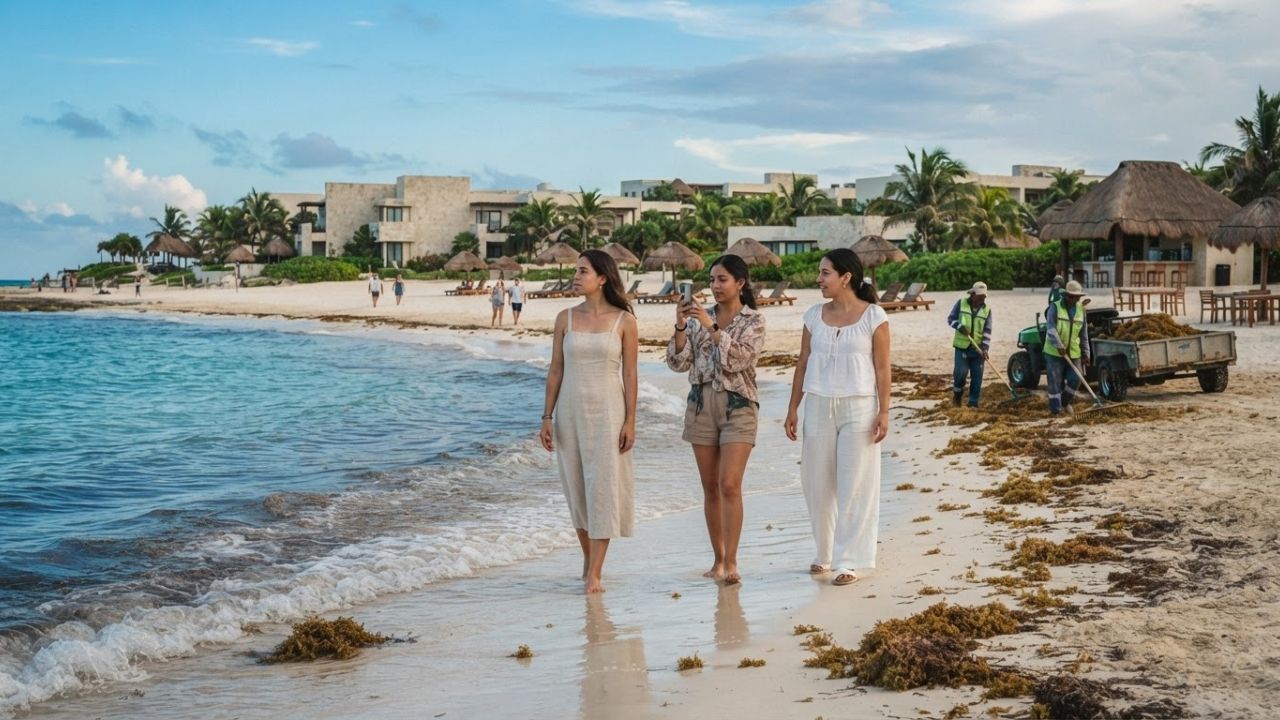
Image generated by AI
Soft summer demand and persistent sargassum seaweed arrivals along the Mexican Caribbean coastline have led to a decline in hotel occupancy across Quintana Roo, forcing operators to adjust their guest strategies.
Environmental Bottlenecks: Sargassum Accumulation on Caribbean Beaches
One of the primary factors affecting Quintana Roo's tourism performance is the recurring arrival of sargassum seaweed along the coast. The accumulation of seaweed impacts the visual appeal of beaches in destinations like Cancun, Tulum, and Playa del Carmen, which rely on clear waters to draw international travelers.
Dealing with sargassum has increased operational costs for resorts and municipal authorities, who must invest in manual beach cleaning, mechanical sweeps, and offshore barrier nets. Because seaweed movement depends on unpredictable ocean currents and water temperatures, predicting seasonal volumes remains difficult, causing some travelers to seek alternative beach destinations.
Financial Adjustments: Hotel Occupancy Drops in Peak Summer
The summer travel season is historically a key revenue generator for the regional hospitality economy. In August 2026, however, hotel operators across the state reported lower-than-average occupancy levels, creating financial strain that extends beyond lodging to restaurants, tour agencies, and retail shops.
To manage the drop in revenue, hospitality businesses are focusing on cost control, administrative efficiency, and flexible pricing structures. Because the tourism sector is the largest employer in Quintana Roo, maintaining business stability is vital to protecting the livelihoods of thousands of local hospitality workers.
Diversification Beyond the Beach: Cultural and Eco-Tourism
While the Mexican Caribbean benefits from international flight connections and modern hotel infrastructure, changing travel patterns are forcing the industry to adapt. Modern travelers are placing higher value on environmental protection, authenticity, and diverse activities.
In response, the Quintana Roo Tourism Board (CPTQ) and local operators are promoting attractions beyond traditional beach resorts. This includes developing birdwatching tours in jungle reserves, promoting wellness tourism, and highlighting Mayan cultural heritage in the state's southern interior.
Community Support and Mayan Heritage Conservation
Ecotourism initiatives help circulate tourism spending directly into local communities. Travelers can support the regional economy by hiring certified local guides at archaeological sites like Coba and Tulum, and purchasing handmade crafts directly from Mayan artisans.
The National Commission of Natural Protected Areas (Conanp) highlights the importance of protecting the Mesoamerican Barrier Reef and local cenotes. Visitors can support these efforts by utilizing biodegradable, reef-safe sunscreens and avoiding single-use plastics during their stay.
Local Insider Travel Strategies
- Sargassum Monitoring: Check daily sargassum monitoring maps (Red de Monitoreo del Sargazo de Quintana Roo) before planning beach outings to find clean coastal areas.
- Optimal Travel Windows: Plan your trip during the dry winter months (November to April) when sargassum levels are historically at their lowest and weather is cooler.
- Savor Regional Cuisine: Try traditional Yucatecan dishes like Cochinita Pibil (slow-roasted pork marinated in achiote and bitter orange) or Tikinxic (fish marinated in achiote and grilled in banana leaves).
- Respect Historical Sites: Do not climb on roped-off structures at archaeological reserves. Keep to designated paths to prevent soil erosion.
- Under-the-Radar Spot: Take a ferry to Isla Mujeres' Playa Norte, which is historically sheltered from sargassum currents, or explore the inland cenotes for swimming.
Long-Term Outlook for Mexican Caribbean Tourism
The current slowdown demonstrates the vulnerability of relying solely on mass beach tourism. As the region navigates market shifts, investing in environmental solutions and diversifying destination offerings will remain central to rebuilding visitor demand. Balancing economic growth with marine conservation will ensure that Quintana Roo retains its position as a leading destination in Latin America.
Related Travel Guides
Disclaimer
This article is for informational and educational purposes only. It does not constitute legal, financial, or professional advice. While we strive to provide accurate and up-to-date information, travel policies, regulations, and conditions change rapidly. Always verify information with official sources before making travel decisions. Nomad Lawyer makes no representations about the accuracy, reliability, completeness, or suitability of the information provided. Readers should consult qualified professionals for advice specific to their circumstances. The views expressed in this article are those of the author and do not necessarily reflect the views of Nomad Lawyer.
Raushan Kumar
Founder & Lead Developer
Full-stack developer with 11+ years of experience and a passionate traveller. Raushan built Nomad Lawyer from the ground up with a vision to create the best travel and law experience on the web.
Learn more about our team →