
Qatar Showcases 650-Sqm Immersive Pavilion and Heritage Crafts at Arabian Travel Market 2026

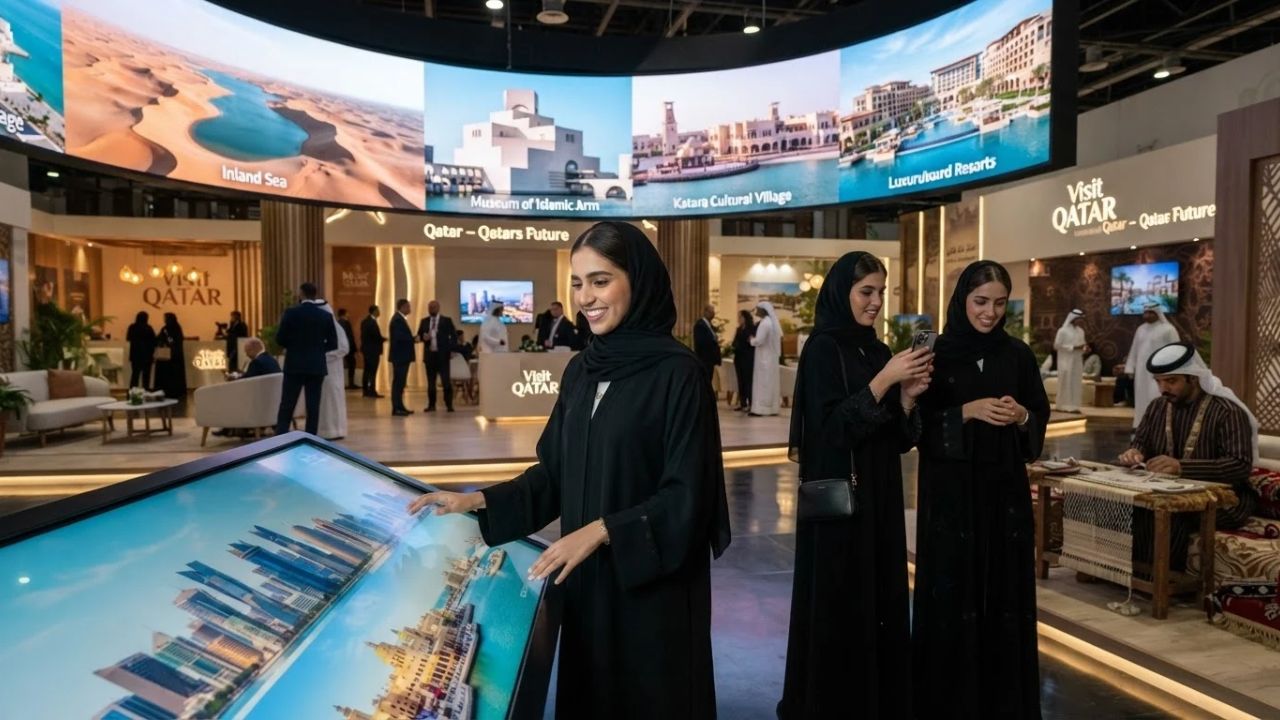
Visit Qatar officially unveiled its comprehensive destination presentation on September 13, 2026, anchoring its presence at the 33rd edition of Arabian Travel Market with a massive 650-square-metre double-deck pavilion and a 50-partner trade delegation. Scheduled from 14 to 17 September 2026 at the Dubai World Trade Centre, the showcase combines multi-sensory digital installations, living artisanal craft demonstrations, and an expanded year-round events calendar to accelerate Qatar’s emergence as a premier Middle Eastern cultural, business, and luxury capital.
Positioned in Saeed Hall at Stand ME1520, the expansive exhibition space reflects Qatar's determined pivot toward diversified, high-yield global tourism. By uniting half a hundred hoteliers, destination management companies, and regional tour operators under a single architectural structure, the Gulf state is demonstrating how cutting-edge technological presentation and deeply anchored maritime and desert traditions can jointly inspire international visitor itineraries.
The Local Trend: Immersive Storytelling Meets Gulf Heritage
The architecture of the Qatar Pavilion at ATM 2026 marks an evolution in international destination marketing. Rather than relying solely on static sales desks and collateral distribution, Visit Qatar has transformed Stand ME1520 into an experiential environment. Central to this concept is the dedicated "Immersive Room," an enclosed multi-sensory chamber that utilizes synchronized high-resolution projection mapping, surround acoustics, and subtle atmospheric climate controls to transport travel trade professionals into the heart of the Qatari peninsula.
Within the chamber, guests experience the golden sand dunes of Khor Al Adaid—Qatar’s rare "Inland Sea" where tidal marine waters encroach directly into desert dunes—alongside the sleek coastal skylines of West Bay and Lusail. The sensory presentation moves from the shaded alleyways of Souq Waqif to the geometric courtyards of the Museum of Islamic Art, giving global buyers a realistic preview of the varied geographic and architectural environments available to their clients.
This immersive technology directly reflects Qatar’s broader domestic tourism infrastructure. Following the infrastructure expansion of the past decade, the destination is focusing on experiential depth, targeting affluent travelers, cultural enthusiasts, and stopover transit passengers eager for authentic encounters during brief layovers.
Living Traditions: Showcasing Qatari Artisanal Craftsmanship
Complementing its high-tech interactive displays, the Qatar Pavilion places living ancestral traditions at the forefront of the exhibition floor. Rather than presenting heritage as preserved artifacts behind glass, master craftspeople are conducting continuous live demonstrations of three foundational cultural arts:
- Arabic Calligraphy: Artisans demonstrate the discipline of classical Arabic script, showing visitors the historical use of bamboo reeds (qalam) and artisanal natural inks to transform poetry, architectural inscriptions, and sacred texts into visual masterworks.
- Misbah Making: Craftspeople display the delicate assembly of misbah (traditional Islamic prayer beads), shaping semi-precious stones, amber, camel bone, and fragrant agarwood beads into exquisite ceremonial and daily keepsakes that represent centuries of regional devotional craft.
- Agal Crafting: Master weavers demonstrate the meticulous shaping and corded braiding of the agal, the double black ring woven from tightly bound wool or goat hair that anchors the ghutra headcloth. Understanding how the firmness, thickness, and knotting of the agal reflect local identity provides international travel planners with profound cultural context.
These live demonstrations convey Qatar’s distinctive national identity, highlighting the deliberate preservation of Bedouin and seafaring pearl-diving traditions amid lightning-fast urban development.
Mobilizing 50 Tourism Partners for Global Alliances
The presence of 50 tourism partners within the double-deck pavilion underscores the unified commercial push behind Qatar’s international marketing. The delegation spans ultra-luxury hospitality brands, boutique desert resorts, destination management agencies, and cultural institutions.
This collaborative presence addresses key international travel segments:
- Luxury Hospitality: Showcasing recent resort developments along the Pearl-Qatar, Katara Cultural Village, and the newly established coastal retreats of Simaisma and Ras Abrouq.
- MICE and Corporate Travel: Promoting world-class conference facilities, including the Qatar National Convention Centre (QNCC) and Doha Exhibition and Convention Center (DECC), designed to attract major international congresses and corporate symposiums.
- Transit Stopovers: Deepening commercial distribution for the Qatar Airways stopover initiative, which allows transit passengers through Hamad International Airport (DOH) to convert layovers into affordable luxury mini-breaks starting from competitive entry rates.
Through structured bilateral meetings between 14 and 17 September 2026, the Qatari delegation aims to finalize seasonal contract rates, group touring agreements, and air-land package combinations with key outbound operators from Europe, North America, India, and East Asia.
The Qatar Calendar: Promoting Year-Round Travel Appeal
A primary strategic objective highlighted at Stand ME1520 is the promotion of the Qatar Calendar, a coordinated digital repository detailing cultural festivals, sporting championships, and artistic performances scheduled throughout the year.
Historically perceived by some international markets primarily as a winter destination, Qatar is actively reshaping global perception by showcasing its climate-controlled indoor attractions, year-round water sports along the Arabian Gulf, and packed cultural seasons. The calendar features premier international events, including the Qatar International Food Festival, the Doha Jewellery and Watches Exhibition, elite equestrian tournaments at Al Shaqab, Formula 1 racing at the Lusail International Circuit, and international art retrospectives across Qatar Museums' institutional network.
By emphasizing this dense event scheduling, tourism officials aim to extend average visitor length of stay and encourage repeat visitation among regional and intercontinental travelers.
Local Insider Tips for Exploring Qatar
For travelers inspired to visit Qatar, local specialists offer essential guidance to ensure seamless, respectful, and culturally rich exploration:
- Ideal Visiting Months: The best window for travel spans from November to late March, when daytime temperatures hover between a comfortable 20°C and 26°C. During this winter period, outdoor café culture thrives along the Doha Corniche, and desert overnight camping expeditions are at their annual prime.
- Efficient Metro Transit: Doha boasts one of the world's most advanced, driverless rapid transit systems: the Doha Metro. Fast, clean, and fully air-conditioned, the network connects Hamad International Airport directly to central hubs, including Souq Waqif, Msheireb Downtown, Katara Cultural Village, and Lusail. Purchasing a Gold Club pass grants access to luxury carpeted club carriages for only a small surcharge.
- Cultural Etiquette and Public Dress: While Qatar is welcoming and cosmopolitan, modest attire is respected in civic spaces, traditional souqs, and government buildings. Both men and women should ensure shoulders and knees are covered when exploring public areas outside private hotel beach resorts. Always accept tea or Arabic coffee (gahwa) with your right hand as a sign of courteous respect.
- Navigating Souq Waqif: Visit the historic marketplace in the late afternoon and early evening when the mud-rendered passageways awaken with life. Don’t miss the Falcon Souq, where prized hunting falcons are cared for in air-conditioned galleries, or the adjacent camel pen where royal mounted police stable their mounts.
- Local Culinary Specialties: Qatar’s cuisine combines Arabian, Persian, and Indian coastal spice influences:
- Machboos: The beloved national dish consisting of fragrant basmati rice cooked in rich meat broth seasoned with black dried limes (loomi), cloves, cardamom, and cinnamon, topped with tender slow-roasted lamb, chicken, or freshly caught sea bass (hamour).
- Harees: A hearty, comforting dish prepared by slow-simmering coarse ground wheat with tender meat until smooth, then whipped with rich clarified butter (ghee).
- Balaleet: A traditional sweet-and-savory breakfast dish featuring thin vermicelli noodles sweetened with sugar, cardamom, and saffron, topped with a delicate savory spiced egg omelet.
- Luqaimat: Golden, crisp fried dough spheres soaked in rich date syrup and sprinkled with toasted sesame seeds, served warm alongside steaming cups of cardamom-spiced Arabic coffee.
- Karak Chai: The ubiquitous local black tea simmered with evaporated milk, crushed cardamom pods, and saffron, readily available at street-side stalls for just a few riyals.
Architectural Icons and Cultural Heritage
Travelers exploring Doha will find world-class architecture housing ancient history:
- National Museum of Qatar (NMoQ): Designed by Pritzker Prize-winning architect Jean Nouvel, the building's dramatic interlocking curved disks replicate the crystalline formations of a desert rose mineral. Inside, immersive exhibits trace the peninsula’s history from prehistoric geological eras through maritime pearling heritage to the modern era.
- Museum of Islamic Art (MIA): Situated on its own standalone artificial island off the Corniche, this architectural masterpiece by I.M. Pei houses fourteen centuries of Islamic ceramics, glasswork, manuscripts, and metalwork arranged around a soaring central atrium.
- Msheireb Downtown Doha: The world’s first sustainably regenerated downtown smart district, blending traditional Qatari architectural proportion, shaded wind corridors, and contemporary green building standards, linked by a quiet vintage-style electric street tram.
Tourism Outlook: Sustainable Long-Term Growth
Qatar’s high-profile presentation at Arabian Travel Market 2026 demonstrates how the country is translating international event infrastructure into sustainable, long-term leisure appeal. By emphasizing authentic regional crafts, accessible desert and marine environments, and high-standard hospitality, Visit Qatar is solidifying the nation’s status as a distinct, culturally grounded travel destination.
For international travelers, the ongoing expansion promises an enriched travel experience where historic desert traditions, warm Arabian hospitality, and futuristic urban innovation coexist harmoniously along the shores of the Arabian Gulf.
Related Travel Guides
- Dorset Adopts 10-Year Sustainable Tourism Blueprint to Protect Jurassic Coast and Durdle Door Heritage
- France Expands Grande Randonnée Hiking Network: How the GR Trail System Is Driving Sustainable Slow Travel
- British Virgin Islands and Puerto Rico Forge Strategic Alliance to Boost Sustainable Boating and Blue Economy
Disclaimer
This article is for informational and educational purposes only. It does not constitute legal, financial, or professional advice. While we strive to provide accurate and up-to-date information, travel policies, regulations, and conditions change rapidly. Always verify information with official sources before making travel decisions. Nomad Lawyer makes no representations about the accuracy, reliability, completeness, or suitability of the information provided. Readers should consult qualified professionals for advice specific to their circumstances. The views expressed in this article are those of the author and do not necessarily reflect the views of Nomad Lawyer.
Raushan Kumar
Founder & Lead Developer
Full-stack developer with 11+ years of experience and a passionate traveller. Raushan built Nomad Lawyer from the ground up with a vision to create the best travel and law experience on the web.
Learn more about our team →